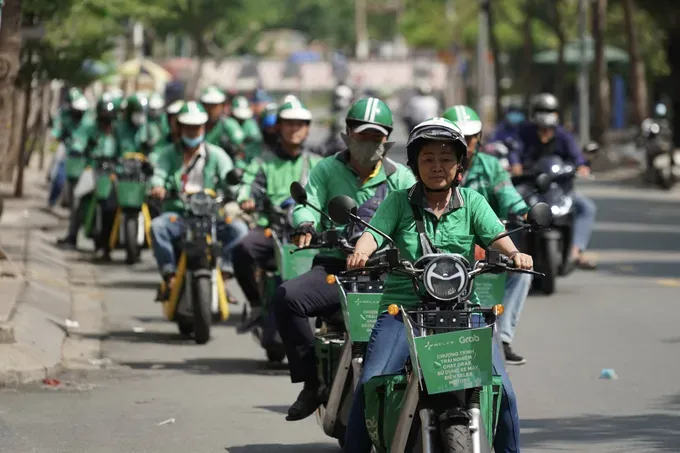
Beyond the obvious financial benefits compared to gasoline-powered counterparts, electric motorcycles are increasingly viewed as a vital solution to improving urban air quality. The market in Ho Chi Minh City is heating up as consumer interest reaches new heights.
Dang Tan Hau, a resident of An Nhon, recently swapped his gasoline motorcycle for an electric model for his daily commute. Beyond the noticeable reduction in fuel expenses, Hau notes the smoother, quieter ride as a major benefit. The increasing availability of charging stations has further eased his transition to electric power. Crowds of buyers are flocking to the Quang Phuong motorcycle dealership on Nguyen Tri Phuong Street in An Dong, where the showroom is bustling with activity as customers browse and negotiate for new models. The showroom's staff estimates that the number of customers inquiring about and purchasing electric motorcycles is now three to four times higher than at the beginning of the year.
Industry insiders report that major manufacturers in Vietnam are aggressively expanding their electric vehicle portfolios. Yamaha Vietnam has launched discount programs to boost competitiveness and market share. Honda has also introduced several electric models to the domestic market, including the PCX, Benly e:, ICON e:, and CUV e:, with manufacturers now offering battery-swapping services directly at their dealerships.
According to the Vietnam Association of Motorcycle Manufacturers (VAMM), approximately 700,000 electric motorcycles were sold in 2025. VinFast led the sector with over 406,000 units sold, an increase of nearly 500 percent compared to 2024. Other brands also saw strong growth: Yadea rose by 61.6 percent, Pega by approximately 60 percent, and Dibao by 75 percent. Emerging brands such as Dat Bike and Selex Motors are also showing positive momentum. Experts project that total electric motorcycle sales this year could reach 1.2 to 1.3 million units, a growth rate of up to 150 percent compared to 2025. This would mark a record-breaking year and signal a full-scale market boom.
Chairman Pham Cuong of the Vietnam Association of Automotive, Motorcycle and Bicycle Manufacturers noted that air pollution in major cities like Ho Chi Minh City and Hanoi has become increasingly critical due to millions of gasoline-powered motorcycles. Transitioning to electric vehicles is not merely a cost-saving choice but an urgent requirement for public health.
Nguyen Anh Tuan, former Director of the Electricity Regulatory Authority under the Ministry of Industry and Trade, emphasized that the development of charging stations must be synchronized with electrical infrastructure planning. This is essential to prevent spontaneous installations that could cause local grid overloads, particularly in densely populated residential areas.
Furthermore, he noted that future charging systems must be integrated into a smart grid framework.