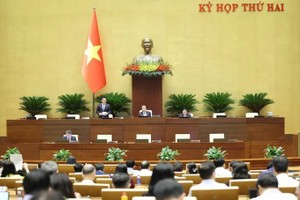
Merely ten days after the Government finalized procedures requesting the National Assembly to establish Dong Nai Province as a centrally administered city, the Ministry of Construction officially recognized it as a Class-I urban area on April 16, having successfully fulfilled all seven prerequisite criteria. It’s anticipated that during the second phase of the first session this late April, the 16th National Assembly will deliberate and pass the draft resolution officially elevating the province to a centrally administered municipality.
Dong Nai Province has, in reality, fully converged the essential conditions to function as a formidable national growth pole. In 2025, the province’s Gross Regional Domestic Product (GRDP) expanded by 9.63 percent, ranking seventh nationwide. The GRDP scale reached approximately VND678 trillion (US$25.7 billion), while its state budget revenue exceeded VND102 trillion ($3.9 billion), securing the fourth position nationally (trailing only Hanoi, HCMC, and Hai Phong City).
Notably, Dong Nai Province stands among the few localities capable of autonomously balancing its budget without requiring central subsidies. Possessing such impressive economic scale, robust financial resources, autonomous capacity, and extensive developmental headroom, It has definitively crossed the threshold of a regional-level metropolis.
However, its economic structure remains heavily reliant on outsourced industrial manufacturing, with the foreign direct investment (FDI) sector constituting 75 – 85 percent of its export turnover. Meanwhile, the service sector accounts for a mere 26.42 percent of the GRDP, significantly lower than that of current centrally administered cities. This represents a substantive gap between “industrial conditions” and authentic “urban characteristics” that the new Dong Nai City must meticulously overcome post-establishment to ensure sustainable growth.
Dong Nai Province shares a deeply symbiotic relationship with HCMC, a dynamic previously delineated by the Central Government. HCMC serves as the epicenter for finance and innovation, whereas Dong Nai functions as the premier hub for industry, logistics, and airport urbanism associated with the Long Thanh international gateway.
However, this “symbiosis” currently suffers from evident institutional asymmetry. Disparities in jurisdictional authority lead to uncoordinated regional administration, resulting in a scenario where HCMC exerts more “pull” while Dong Nai lacks sufficient “push.” Numerous linked projects are facing frustrating bottlenecks right at the administrative boundaries due to incompatible coordination mechanisms.
Consequently, upgrading Dong Nai Province to a centrally administered city will endow it with appropriate authority. This fundamentally empowers the city to operate on an equal footing with HCMC in coordinating regional planning and synchronizing mechanisms pertaining to finance, budgeting, investment, land, urban development, and the environment, a feat exceedingly difficult under the current provincial model.
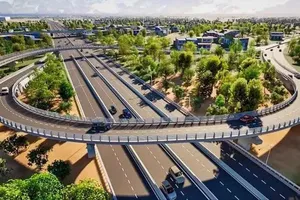
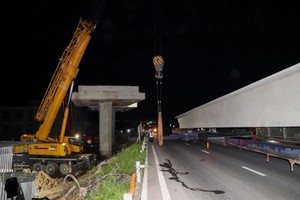
Another salient point is the emergence of a massive strategic infrastructure complex along the HCMC – Dong Nai corridor. Such elements as inter-regional road and rail networks, the Long Thanh – Tan Son Nhat aviation cluster, the Cai Mep – Thi Vai seaport system, and the envisioned Long Thanh free trade zone collectively forge a crucial foundation. This infrastructure enables the region to integrate more seriously into the global value chain and significantly enhance its logistics competitiveness.
In practice, however, the majority of these projects are still in the implementation phase; many remain incomplete or merely at the planning stage. Several focal projects in Dong Nai Province face tangible hardships, including severe fluctuations in construction material prices, sluggish site clearance progress, and unsatisfactory public investment disbursement rates. Without tailored mechanisms to unblock these hurdles accompanying the city’s establishment, there is a substantial risk that this “connectivity mega-construction site” could drag on for decades.
Taking a long-term perspective on sustainable growth, elevating Dong Nai Province is an absolute necessity for forming a highly competitive HCMC – Dong Nai mega-metropolis on a regional scale. When HCMC and Dong Nai are structurally organized as a twin-hub city-region growth pole, Vietnam will witness an economic entity boasting a consolidated GRDP of approximately VND3.7 quadrillion ($140 billion). This powerhouse will contribute over 28 percent of the national GDP, attract more than half of the total FDI, and command a massive proportion of the nation’s export volume.
Also, the multi-centric, multi-polar growth model supported by four strategic corridors of aviation-seaport-logistics-modern services; industrial-agricultural-ecotourism-energy connectivity; border gates-border trade-cross-border logistics; and aviation-seaport-highland-coastal linkages will perfectly complement HCMC’s positioning as a financial, service, and innovation center. This forges an unstoppable dual-engine structure where HCMC acts as the financial and intellectual “brain” and Dong Nai serves as the manufacturing, logistics, and international gateway “heart.”
To actualize this tremendous potential, Dong Nai Province necessitates equal coordinating authority and highly suitable financial and investment mechanisms to efficiently absorb large-scale projects geared towards airport urbanism, Transit-Oriented Development (TOD), and smart city paradigms. Acquiring specific, superior, and synchronous mechanisms that are entirely compatible with HCMC will be the ultimate condition for the developmental spaces of both localities to become genuinely interconnected and sustainably robust.