Section-by-section construction
Despite scorching heat, construction sites for key national infrastructure and industrial projects in Quang Ngai and Gia Lai remain bustling.
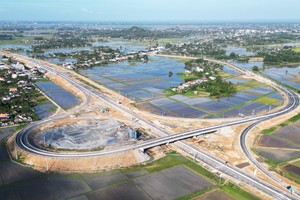
At the Quy Nhon – Pleiku Expressway project, hundreds of workers and heavy machinery are focused on earthworks, embankment filling, and pile drilling for bridges.
Mr. Nguyen Thanh Cong, an operations officer for Package 1 of the project, said that rising fuel prices have increased transportation and equipment costs. To maintain the overall schedule, construction teams are concentrating operations and limiting machinery movement.
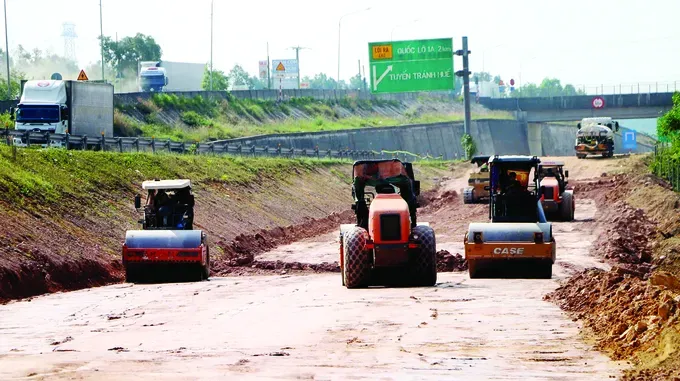
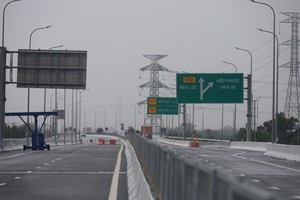
At the Cam Lo – La Son section of the North–South Expressway linking Quang Tri and Hue, machinery and manpower are mobilized to accelerate work across more than 40 construction sites. Representatives of the contractor consortium for the XL2 section at Km37+300 to Km102+200 noted that section-by-section work, especially installing piles before stormy and rainy period this year, reduces fuel expenses and ensures continued progress on the remaining sections.
At the construction site of the La Son – Hoa Lien Expressway connecting Hue and Da Nang, contractors operate in three rotating shifts per day with four teams to recover delays caused by prolonged flooding in late 2025.
Mr. Tran Duc Hiep, Director of the Project Management Board, shared that more than 85 percent of the contract value has been completed, with 50 bridges fully cast and many basic works finished.
Support for enterprises
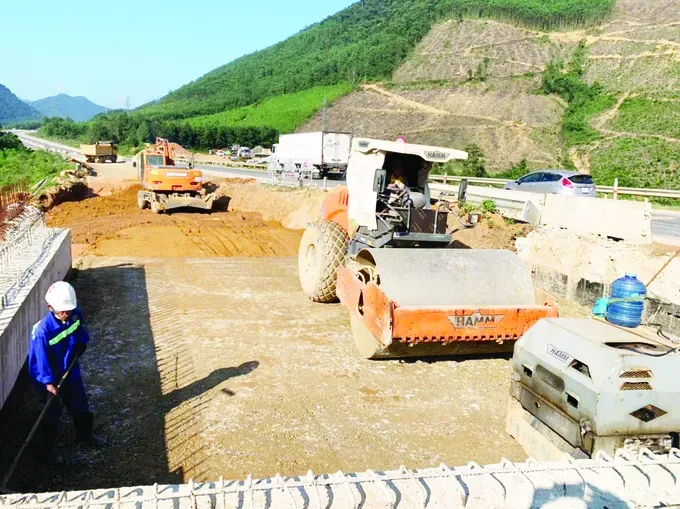
At the site of Phu Cat Airport’s second runway and ancillary works, over 1,000 workers, engineers and nearly 600 machines are operating continuously. Following the Prime Minister’s directive to shorten the schedule by three months and target completion by June 30, 2026, contractors are accelerating across the entire route.
According to Mr. Luu Nhat Phong, Director of Gia Lai Province’s Project Management Board for Traffic and Civil Works, noted that contractors regularly report fuel price fluctuations and their impact on each construction stage.
With adjustable-price contracts, contractors can request government support for unexpected fuel spikes, while project owners stand ready to apply guidelines when issued.
Initially, the contractors are carefully coordinating construction to ensure safety, quality and schedule adherence.
Regarding support for businesses facing rising fuel and material costs, Mr. Nguyen Vu Quy, Director of the Ho Chi Minh Road Project Management Board, emphasized that the unit has instructed contractors to continue construction while updating local unit prices to ensure accurate and fair cost calculation. The Ministry of Construction has also issued guidance to local authorities, requesting that material prices be updated to reflect actual market conditions.
In Hue, the coastal road and Thuan An sea-crossing bridge (Phase 1) project has largely overcome land clearance issues and is being accelerated to achieve technical completion by April 30, 2026. The project spans approximately 7.785 kilometers, including a 2.36 kilometers sea-crossing bridge and 5.3 kilometers of roadway.
These efforts demonstrate the determination of contractors and authorities to overcome cost pressures and keep key national projects on track.