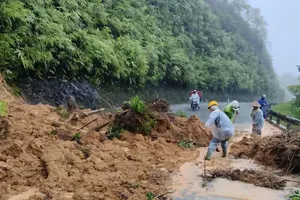
At the foot of Dong Thach Mountain in Lac Tien Village, large volumes of soil, rocks, and fallen trees remain scattered across hundreds of meters, covering areas 30-70 meters wide after repeated landslides.
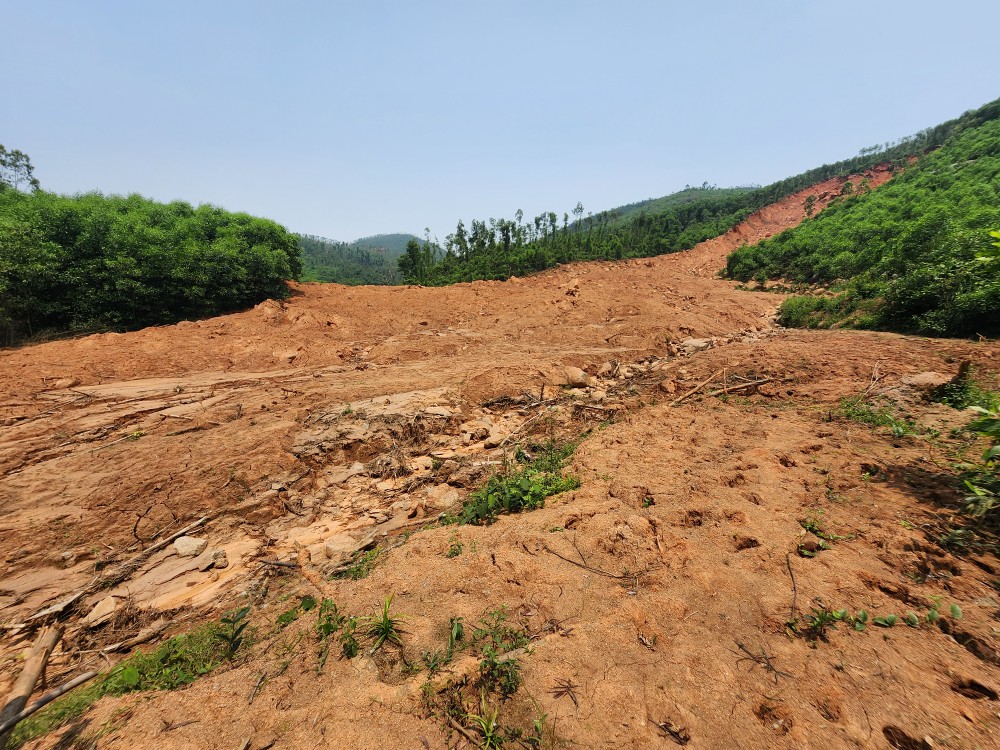
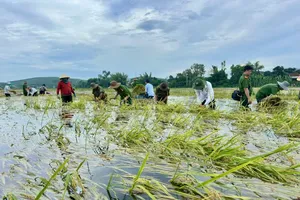
Pham Van Thuan, a 55-year-old resident of Lac Tien Village, said the area previously contained productive farmland and the Ba Ho irrigation canal, which carried water from mountain streams to downstream rice fields. However, landslides in 2025 have buried the canal and surrounding fields under thick layers of debris, severely disrupting agricultural production.
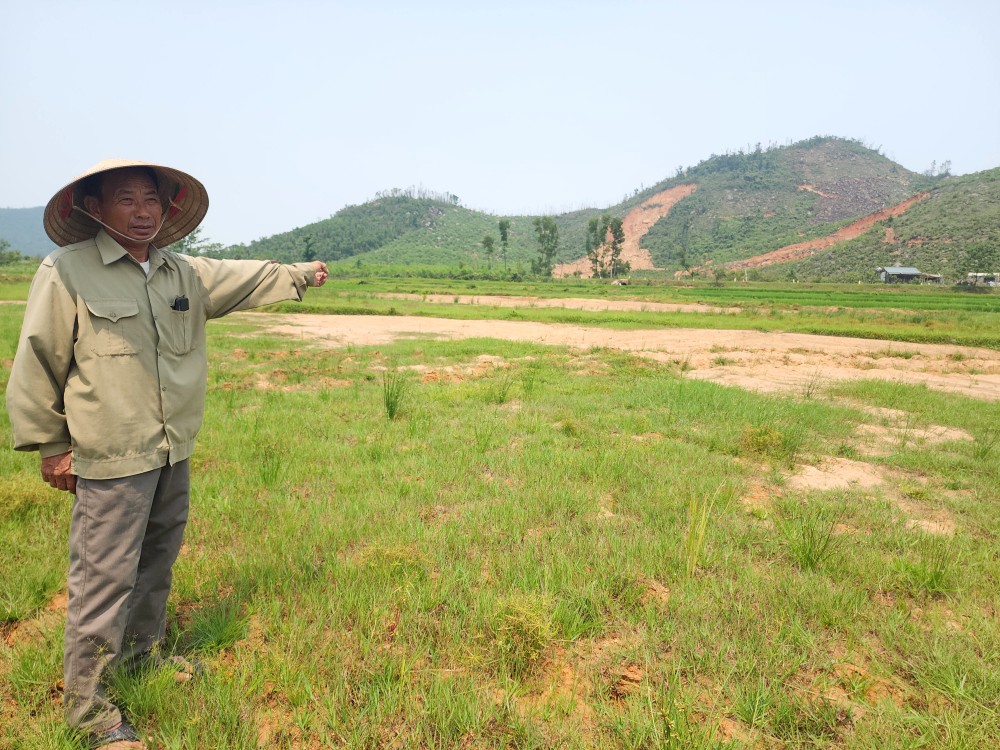
According to Thuan, nearly 2 hectares of his family’s rice fields were buried under 70 centimeters to more than one meter of soil and rocks. He has spent significant sums hiring machinery to clear and rehabilitate just over 1 hectare, while the remaining land remains unusable.
Nguyen Thi Hoa, 59, another resident of the village, said many rice fields have been abandoned after being buried by landslides, making livelihoods increasingly difficult. She called on authorities to provide financial assistance and allow farmers to shift to more suitable crops.
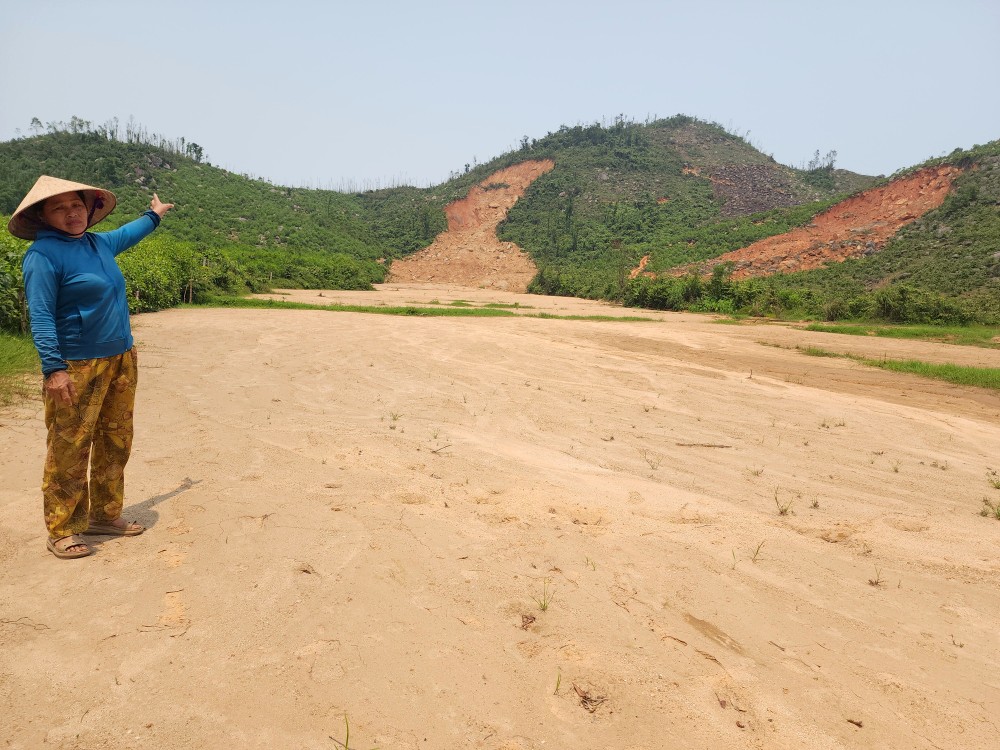
Mr. Nguyen Dinh Hao, Head of the Economic Department under the Ky Xuan Commune People’s Committee, said that natural disasters in 2025 had caused multiple mountain landslides across the area, burying farmland belonging to more than 50 households, mainly in Lac Tien Village.
Local authorities have encouraged residents to mobilize labor and machinery to restore lightly damaged land. For heavily buried areas with little chance of recovery, officials are advising farmers to restructure crops to better suit local conditions. The commune also plans to seek financial support from higher authorities to help residents resume production.
A similar situation has emerged in Tri Le Commune in Nghe An Province, where disasters since 2025 have caused severe erosion, burying large tracts of farmland.
Mr. Lo Minh Diep, Chairman of the Tri Le Commune People’s Committee, said about 34 hectares of farmland owned by around 40 households had been damaged beyond recovery and abandoned. Although authorities considered supporting crop conversion and land rehabilitation, they warned that future rainy seasons could trigger further erosion. As a long-term solution, the commune has proposed seeking new areas for reclamation to help residents stabilize agricultural production sustainably.