In Hanoi, families raising autistic children often face limited educational opportunities and uncertain futures in the labor market. Out of this reality, Vietnam’s Autism Projects (VAPs) have emerged. Founded by Nguyen Duc Trung, the initiative integrates a restaurant, supermarket, laundry service, garden café, and bookstore; each staffed by workers with autism trained to deliver professional service.
From stigma to strength: Hanoi’s autism projects redefine inclusion
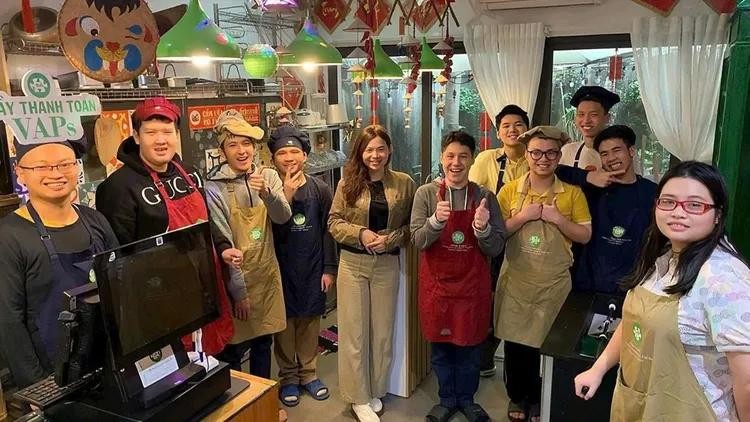
Experiencing services at VAPs, customers were struck by the staff’s friendliness, warmth, and ability to communicate in English when welcoming international guests. Although productivity may be lower than that of neurotypical workers, individuals with autism here generate economic value and contribute to building an independent ecosystem.
The idea for VAPs was conceived by Nguyen Duc Trung (41) in late 2015, following an encounter with an autistic individual during a conflict at a resort. Motivated to learn more, he spent six months visiting families of autistic individuals across Vietnam, documenting their stories through short narratives and reportage.
During this period, Trung observed that many families lacked effective educational solutions due to limited understanding of autism, financial constraints, a shortage of training services, and persistent social stigma. In many cases, a lack of patience led to conflict between parents and children, leaving autistic individuals isolated and without a shared voice.
After six years of research and repeated efforts to seek corporate partnerships, Trung chose to build the initiative independently. In 2019, he established VAPs Heart Company Limited. With four initial models—restaurant, supermarket, bookstore, and homestay—the project became a pioneer in Vietnam, raising public awareness through direct service experiences delivered by autistic workers, while supporting families and reshaping perceptions of disability.
Mai Thuy Duong, who was born in 1991 in Lai Chau Province, is the mother of an eight-year-old child with severe autism. She moaned that her husband, family members, and many other relatives did not understand autism. Being a mother, she is often blamed by default by many people around her. As a result, without support, she had to constantly push herself to maintain the energy to teach her child and learn from online parent communities.
During the Covid-19 pandemic, Ms. Duong enrolled in multiple online courses costing around VND1 million per session, but still struggled to make progress. Overwhelmed by options and financial limitations, she left her teaching career and moved to Hanoi to pursue a master’s degree in special education, hoping to better support her child and others in her hometown.
Hands-on training at Hanoi’s autism projects transforms lives and challenges stigma
Unlike theory-based training programs, VAPs offer hands-on learning through direct interaction with autistic individuals. After four months back in her hometown, Duong shared: “I used to fear my child’s aggressive behaviors. Now, I can regulate those behaviors, encourage communication, and support integration. Trung has created a highly practical model that benefits many families.”
According to Trung, understanding autism requires in-depth study of both psychology and brain function. Training methods are built around structured routines that align with autistic behavioral patterns, from organizing items to serving customers.
The training process is not without challenges. Trainees may exhibit destructive or negative behaviors due to low tolerance and past trauma. Trung and his team invest significant time helping them regain emotional stability and transform negative behaviors into healthier forms of expression.
“Despite the costs and effort, I find happiness in helping autistic individuals work,” Trung said. “Their strength is not productivity, but sincerity—they work with honesty and joy.”
Among the staff, Quang Anh (23), once prone to emotional breakdowns and destructive behavior, is now a confident and energetic host at VAPs.
“I feel happy working here and hope to serve more customers,” he said.
Vu Thi (32, Hanoi) noted: “I’ve seen families under immense pressure raising autistic children. Seeing them work here as sales staff or receptionists shows that VAPs is an effective model that can support many others.”
In early 2026, after relocating to a new facility six times larger, VAPs expanded into an integrated economic complex, adding a studio, event rental spaces, garden café, laundry service, restaurant, supermarket, bookstore, and homestay. With 11 autistic employees aged 18 to 32, the model serves a broad customer base, including those unfamiliar with autism.
Nguyen Duc Trung emphasized: “We must prove the service capability of autistic workers so that customers come for quality, not just compassion. This requires strong capacity, health, and endurance. The most effective way to raise awareness is through direct experience.”
Today, VAPs collaborates with schools, education centers, social enterprises, and non-profit organizations to support autistic individuals and promote public awareness. As demand grows, Trung plans to involve parents directly in operations.
“Parents must be part of the process—they cannot outsource responsibility to society. They will supervise and coordinate, forming a self-supporting community that strengthens the model’s sustainability,” he said.
Having welcomed more than 10,000 visitors, VAPs stands as a resilient economic ecosystem—empowering autistic individuals to join the workforce, reducing the burden on families and society, and helping to break down stigma surrounding vulnerable communities.