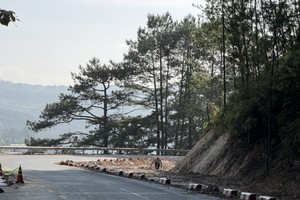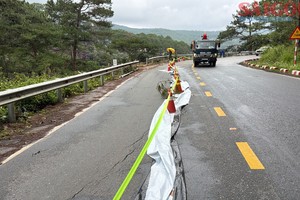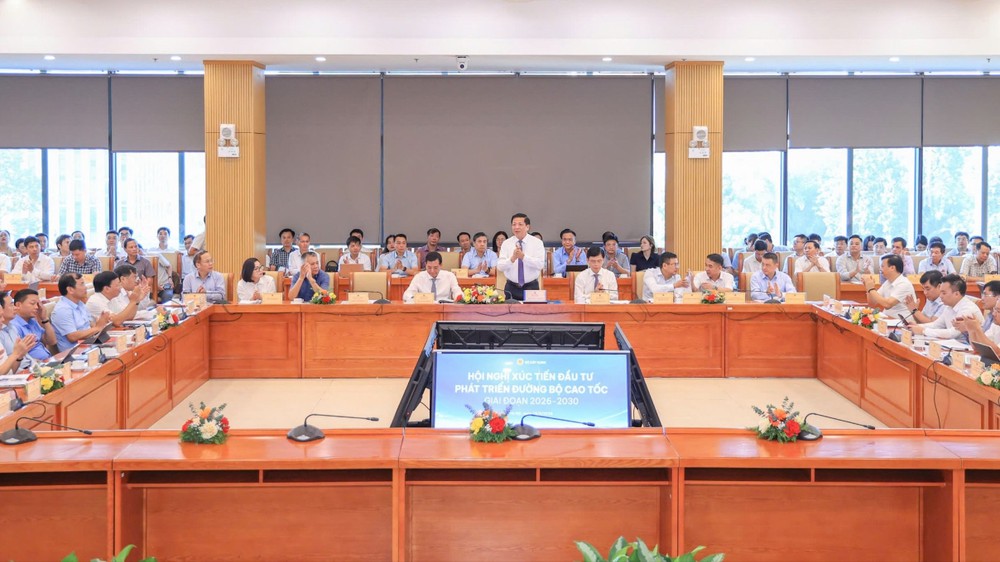
The Ministry of Construction held a conference in Hanoi on September 29 to promote investment in road infrastructure for the 2026-2030 period, bringing together nearly 170 representatives from the National Assembly, Government, ministries, local authorities, banks, consulting organizations, experts, businesses, and investors.
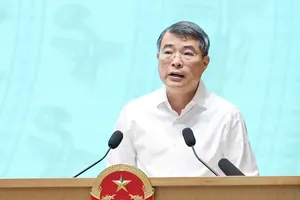
Opening the event, Minister of Construction Tran Hong Minh said the conference aimed to mobilize the maximum possible amount of social capital to develop a modern, integrated transport network, with a particular focus on expressways.
Vietnam's 14th National Party Congress has set a target of average annual GDP growth of more than 10 percent between 2026 and 2030, Minister Tran Hong Minh said. Achieving that goal will require transport infrastructure to stay ahead of demand, creating new development space, improving regional connectivity, shortening travel distances, reducing logistics costs, and strengthening the competitiveness of the economy.
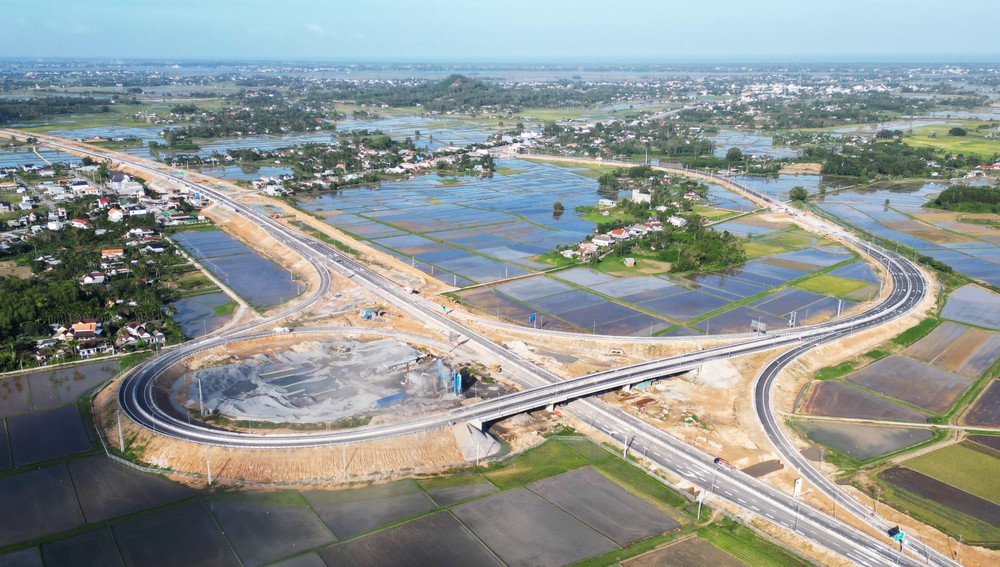
Vietnam currently has 3,345 kilometers of expressways in operation, exceeding the 3,000-km target set for 2021-2025. Another 1,252 km is under construction.
The more than 2,000-km North-South Expressway East, stretching from Lang Son in the north to Ca Mau in the south, has also been largely connected, creating a continuous transport backbone across the country.
Despite this progress, Vietnam's expressway density remains relatively low compared with developed economies.
Over the next five years, the country needs to build 2,829 km of new expressways and upgrade another 1,187 km of existing routes, requiring an estimated investment of more than VND1.2 quadrillion, Mr. Tran Hong Minh said.
The State budget is expected to provide only about VND423 trillion, leaving approximately VND846 trillion to be mobilized from non-budget sources.
Minister Tran Hong Minh described the funding gap as a major challenge but also a significant investment opportunity for businesses and financial institutions.
The Ministry of Construction has announced a list of 29 priority projects seeking investment under public-private partnership (PPP) arrangements, with a preliminary combined investment requirement of VND923 trillion.
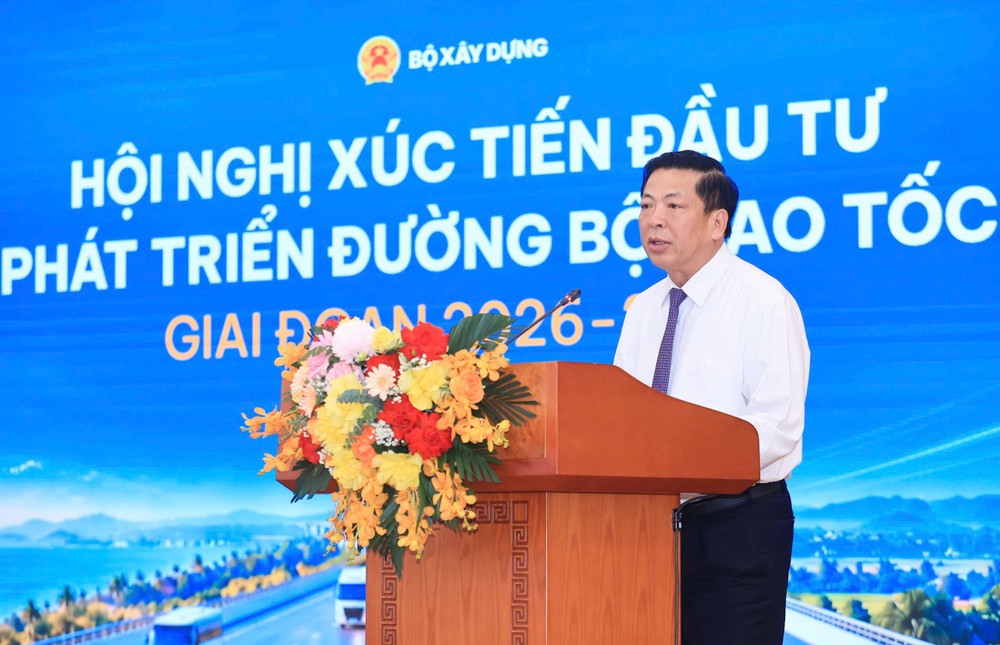
For investors to commit long-term capital and banks to provide long-term credit, the policy framework must continue to be refined to ensure transparency, predictability, and equal treatment, Minister Tran Hong Minh said.
He called on major corporations and investors to study and register for participation in the 29 priority PPP projects.
He also urged major commercial banks, including BIDV, VietinBank, Vietcombank, Agribank, MB, and Techcombank, to work with potential investors to develop long-term credit packages at reasonable interest rates and provide stronger financial backing for infrastructure projects.
He called on central ministries and agencies and local authorities to work together to ensure timely land clearance and simplify administrative procedures.
"Investors' difficulties should also be regarded as our difficulties," he said, urging authorities to take a proactive approach to resolving obstacles during project implementation.
Several major projects in southern Vietnam are included in the first priority group among the 29 expressway projects being offered for PPP investment between 2026 and 2030.
They include the 74-km North-South Expressway West section from Duc Hoa to My An, with preliminary investment estimated at VND29.3 trillion.
Another major project is the 551-km expansion of the North-South Expressway East between Quang Ngai and Dau Giay, with estimated investment of VND78.2 trillion.
The proposed 87-km Ha Tien-Rach Gia section of the Ha Tien-Rach Gia-Bac Lieu Expressway has an estimated investment of VND56 trillion.
The investment list also includes the 149-km Pleiku-Buon Ma Thuot section of the North-South Expressway West, estimated at VND23.4 trillion, and the 105-km Buon Ma Thuot-Gia Nghia section, estimated at VND18.9 trillion.
In the Central Highlands and South Central Coast, the proposed 81-km Nha Trang-Da Lat section of the Nha Trang-Lien Khuong Expressway is estimated to require VND25 trillion.
The 75-km Phan Thiet-Bao Loc section of the Phan Thiet-Bao Loc-Gia Nghia-Bu Dang Expressway is expected to cost about VND26 trillion.
The expansion of HCMC Ring Road 3 from four to eight lanes over its 76-km length is estimated to require VND38 trillion.
The 23-km My Thuan-Can Tho section of the North-South Expressway East is estimated at VND6.4 trillion.
Meanwhile, the proposed 77-km Vinh Long-Can Tho section of the Ho Chi Minh City-Vinh Long-Can Tho-Ca Mau Expressway is expected to require more than VND41.4 trillion.