A draft version of the Urban Development Law proposes establishing a single integrated master plan for each city, merging and replacing current separate urban and general planning frameworks. The move is expected to optimize the organization and utilization of urban space.
Foundation for a unified urban development strategy
Under the draft law, the comprehensive city master plan will strictly align with and operationalize the vision, targets, and strategic orientation of national and regional development plans. Rather than merely consolidating existing frameworks, the master plan integrates extensive datasets into a streamlined, cohesive system—laying the groundwork for a unified urban development strategy.
The proposal also provides incentives and favorable conditions to attract investments in underground, low-altitude, and high-altitude space development. Strategic functional zoning will be established to ensure the systematic management, development, and utilization of multi-layered urban space.
This multi-tiered approach unlocks new urban development frontiers, enabling cities to monetize and leverage underutilized or under-managed space. Because these spatial layers are deeply interconnected, they must be managed as a cohesive system. Below ground, infrastructure like metro networks and underground parking must be seamlessly integrated with adjacent developments. Above ground, housing and commercial structures should harmonize with the surrounding landscape to enhance livability.
At low altitudes, the operation of unmanned aerial vehicles (drones) and logistics services requires the designation of flight routes, altitude levels, and air corridors, all of which must be managed through smart technologies. The ultimate goal of connecting these layers of airspace is to improve management efficiency, unlock additional resources, and, above all, better serve people’s daily lives.
Connecting underground infrastructure
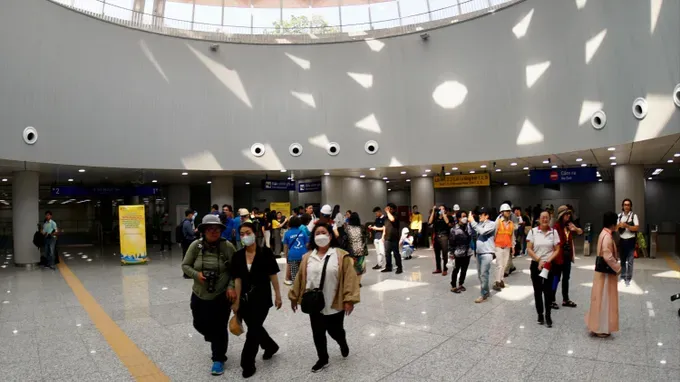
Developing underground space is an inevitable shift as land grows increasingly scarce while demands for transportation, commerce, and public space continue to surge. Ho Chi Minh City’s downtown area already features underground assets, including Metro Line 1 (Ben Thanh–Suoi Tien) and multi-level basements under high-rise commercial buildings, offices, and shopping centers.
However, these facilities currently operate as isolated units. Developing interconnected underground complexes would allow pedestrians to seamlessly and safely move between metro stations and adjacent basements. To turn this vision into reality, urban planners emphasize that connection points between high-rise basements and the broader underground network must be designed directly into initial project frameworks.
Streamlining urban governance
Regulatory frameworks and property rights must be explicitly defined for each spatial layer. This includes setting precise depth boundaries and usage thresholds for underground structures, as well as clarifying the scope, rights, obligations, and operational terms for low- and high-altitude space.
In addition, establishing efficient capital-mobilization mechanisms is crucial. Leveraging public-private partnerships (PPPs) alongside targeted policy incentives can unlock private capital to supplement municipal budgets. This would help mitigate project delays and execution bottlenecks that undermine investor confidence and public trust.
Private investment can be channeled into vital urban infrastructure and services, including transit links, logistics networks, and high-potential redevelopment zones. Within a transparent planning framework, such private participation delivers mutual benefits—maximizing land-use efficiency while alleviating strains on limited public resources.
To bring the comprehensive master plan to fruition, administrative models must evolve to suit integrated planning—an approach that demands seamless interagency coordination. Projects can no longer operate in departmental silos; instead, they require multi-agency participation, collaboration, and data sharing. Ministries and municipal departments must continuously feed data into a centralized, shared system while upgrading workforce capacity to meet modern technological demands.

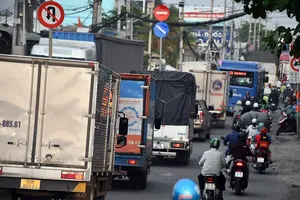
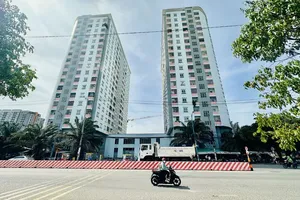
For years, Ho Chi Minh City’s rapid urban expansion has outpaced its urban renewal efforts, according to Mr. Do Duc Hien, a member of the National Assembly’s Law and Justice Committee. The southern metropolis continues to grapple with pressing challenges, including housing shortages, dilapidated apartment block renovations, traffic congestion, flooding, environmental pollution, and climate change adaptation—issues directly impacting residents' quality of life. The draft Urban Development Law marks a major step forward by establishing a unified master plan to operationalize the city's long-term development targets.
Under this overarching framework, the city will gain greater autonomy to introduce policies for managing underground, low-altitude, and high-altitude space, balancing growth demands with the legal rights and interests of land users.
The draft legislation also provides a firmer legal foundation for Ho Chi Minh City to proactively develop social housing, low-income residential projects, and worker dormitories. Additionally, it empowers municipal authorities to fast-track the renovation of old apartment buildings, urban regeneration, and the rehabilitation of the city's canal system.
These critical urban issues have been pursued for years but met with sluggish progress, largely due to a lack of robust enforcement mechanisms and incentives to mobilize private capital. While granting Ho Chi Minh City broader autonomy, the draft law simultaneously assigns greater accountability to local authorities. Should Parliament pass the legislation, its success will hinge on the municipal government’s execution capabilities. Effective implementation will equip Ho Chi Minh City with vital tools to resolve long-standing bottlenecks, mobilize key resources, and deliver tangible improvements to residents' quality of life.

Merging municipal and general development plans into a single comprehensive master plan will help eliminate policy overlap, according to Mr. Hoang Minh Tri, former Deputy Director of the Ho Chi Minh City Institute for Development Studies. This unified approach fosters a cohesive, scientifically grounded alignment between socio-economic development targets and urban spatial planning.
Under the draft law, the City People's Council will be granted authority to establish guidelines on documentation, cost norms, procedures, and approval processes for formulating and adjusting the master plan.
To ensure feasibility and real-world applicability, the draft mandates consultations with key ministries, including Public Security, Defense, Finance, Construction, and Agriculture and Environment, as well as neighboring provincial governments, local communities, and relevant stakeholders before final approval.
This approach provides a rigorous and systematic management framework while promoting decentralization and the delegation of authority and ensuring that the exercise of such powers remains subject to legal oversight. The draft law also proposes specific provisions on the management, development, and use of underground space, low-altitude airspace, and high-altitude airspace in line with the city’s master plan. Any adjustments to the planning of these spaces would also be subject to consultation with relevant ministries and sectors, local communities, agencies, organizations, and individuals.
The Ho Chi Minh City master plan is expected to clearly delineate various urban spaces with different functions, including underground space comprising the metro system and building basements; public green spaces; riverside green spaces; urban technical infrastructure facilities; and reserved areas.
By embedding incentives for spatial and infrastructure investments while safeguarding the legal rights of organizations and individuals, the draft Urban Development Law provides a firm foundation for the city to tailor governance frameworks for each spatial tier. Once fully implemented, the comprehensive master plan will bridge socio-economic strategy with spatial design, optimizing land use, infrastructure efficiency, and urban resources.