Under the scorching heat of the dry season, the trip started from Lao Bao Border Gate in Quang Tri Province, Savannakhet Province, Laos, about 250 kilometers along National Highway 9.
Yet, the harsh weather conditions did little to dampen the vibrant and jubilant atmosphere among the Vietnamese community living in Laos.
A sense of anticipation and pride was palpable as crowds gathered, eagerly awaiting the official inauguration of the restored Ho Chi Minh President Historical Site—a project imbued with profound historical and cultural significance, contributing to the preservation of President Ho Chi Minh’s legacy in Laos.
By the Mekong River, remembering President Ho Chi Minh
Situated along the Mekong River, Savannakhet stands as a major economic, commercial, and cultural hub of Laos. The locality also bears important historical imprints associated with President Ho Chi Minh’s revolutionary journey.
Revisiting the years of his journey seeking a path for national salvation, in June 1929, President Ho Chi Minh—then operating under the alias Thau Chin—was active in northeastern Thailand. From Mukdahan, he secretly crossed the Mekong River into Savannakhet town to survey the situation, disseminate revolutionary ideas, and raise political awareness among the Vietnamese community and local people, thereby laying the groundwork for the revolutionary movement in the region.
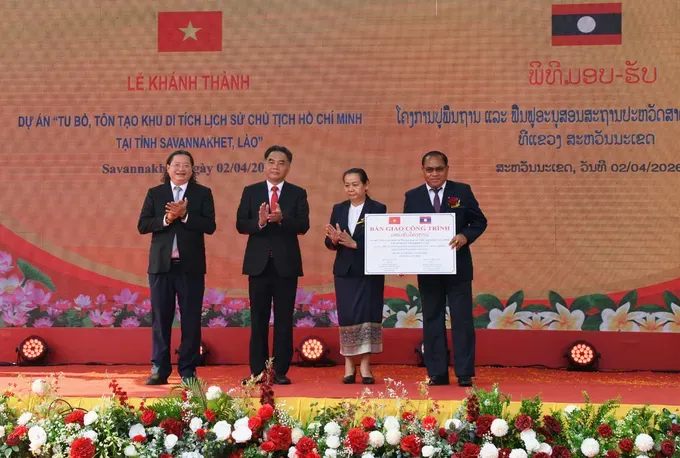
In recognition of his immense contributions and to express profound reverence, in 2013, the Lao Government and people constructed the President Ho Chi Minh Historical Site in Savannakhet Province. More than a decade later, as several structures showed signs of deterioration, the Ho Chi Minh City People’s Committee decided to undertake restoration and upgrading works. After nearly six months of construction, the project was officially inaugurated on April 2.
From the early morning, large numbers of visitors flocked to the site, notably students from the Laos–Vietnam Friendship High School in Savannakhet Province.
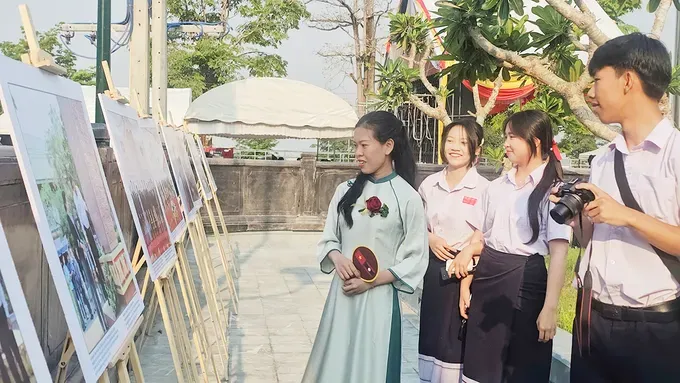
Dressed in traditional Ao dai (Vietnamese traditional dress), teacher Tran Thi Dau accompanied her 11th-grade students to attend the inauguration ceremony.
As a third-generation Vietnamese residing in Laos, her childhood was closely tied to Thong Nhat School, with poems and images of President Ho Chi Minh forming an integral part of her upbringing. However, it was not until 2015—when she received a scholarship to study in Vietnam and visited the Ho Chi Minh Mausoleum—that she was profoundly moved to tears upon watching documentary footage depicting his simple life and immense sacrifices.
Since returning to Laos in 2019 to teach the Vietnamese language, Ms. Tran Thi Dau has regularly incorporated stories about President Ho Chi Minh into her lessons, helping students born and raised in Laos gain a deeper understanding of their revered national leader. With the site now more beautifully restored, she believed students would be even more inspired to learn about his life and exemplary moral legacy.
Sharing the same sense of joy, Ms. Nguyen Thi Kim Oanh, who has lived in Laos for over 20 years, said that growing up in Quang Tri Province—bordering Laos—she had long felt a close affinity with the Lao people and the neighboring land. Having chosen Savannakhet as her second home, she and many other Vietnamese residents take pride in seeing the President Ho Chi Minh Historical Site upgraded in a more spacious and dignified manner.
Not only members of the Vietnamese community, but also local residents have shown keen interest in the site. Mr. Imphama, a resident of Kaysone Phomvihane City, visited the historical site. Living in close proximity to the Vietnamese community, he has become familiar with President Ho Chi Minh and developed a strong appreciation for Vietnamese culture. He shared that he holds deep respect for both President Ho Chi Minh and President Kaysone Phomvihane—two great leaders of the fraternal nations.
The President Ho Chi Minh Historical Site serves as a symbol of friendship
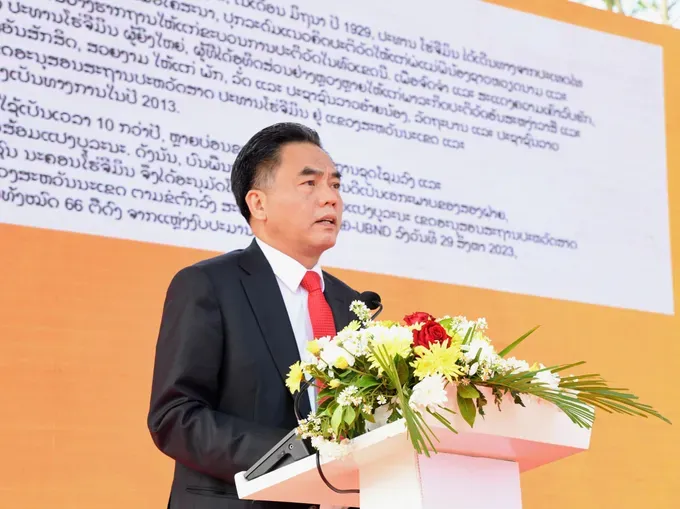
The President Ho Chi Minh Historical Site in Savannakhet Province is not only a testament to the deep affection and respect of the peoples of both countries for the late leader but also a meaningful space for political, cultural, and historical engagement among officials, Party members, and the Vietnamese community in Laos—particularly the younger generation.
According to Ms. Dang Thi Hai Tam, Consul General of Vietnam in Savannakhet Province, together with four other memorial sites in the area, the President Ho Chi Minh Historical Site regularly welcomes delegations of leaders, officials, Party members, and local residents who come to lay wreaths and offer incense in tribute. Many schools and associations also organize visits for students and members to report their achievements to President Ho Chi Minh on major national holidays.
Through these activities, the site continues to promote the tradition of solidarity, foster a strong and cohesive community, preserve cultural identity, and contribute to further strengthening the friendship and cooperation between Vietnam and Laos.
Mr. Nguyen Minh Nhut, Deputy Director of the Ho Chi Minh City Department of Culture and Sports, stated that the President Ho Chi Minh Historical Site in Savannakhet Province serves as a reminder to generations of Vietnamese and Lao people of the steadfast, loyal, and enduring solidarity between the two nations. It also reflects the close ties between Savannakhet Province and Ho Chi Minh City, as well as other localities in Vietnam.
The site plays an important role in educating officials, Party members, and the Vietnamese community in Laos about revolutionary traditions, while also serving as a key destination linking historical tourism routes and promoting cultural exchanges between the two sides.
Standing before the newly upgraded historical site, Vietnamese expatriates could not conceal their emotion and pride. Together with their Lao friends, they now have an additional place to commemorate President Ho Chi Minh and to remind one another of the responsibility to preserve and further nurture the longstanding friendship between the two nations.
Along the Mekong River, the legacy of President Ho Chi Minh’s revolutionary activities continues to be carefully preserved.
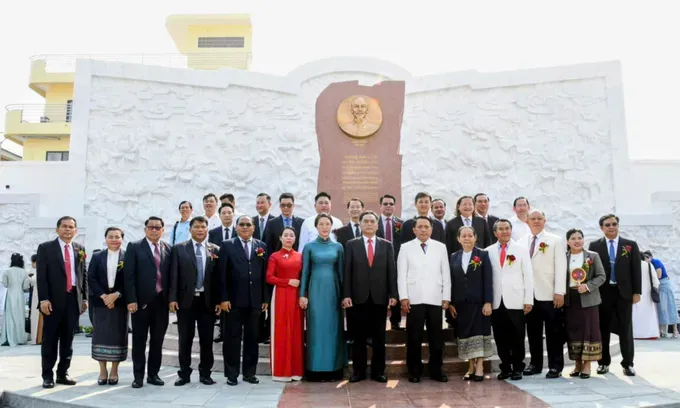
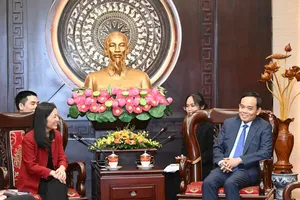
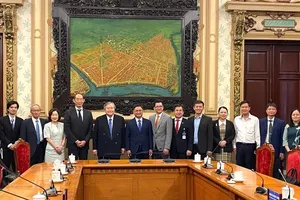
Ahead of the inauguration ceremony, Mr. Nguyen Loc Ha, Standing Vice Chairman of the Ho Chi Minh City People’s Committee, held meetings with Ms. Daovone Xaysouliene, Deputy Secretary of the Provincial Party Committee and Chairwoman of the Administration of Savannakhet Province, and Mr. Somsaad Ounsida, Deputy Secretary of the Provincial Party Committee and Chairman of the Administration of Khammouane Province.
At the meetings, leaders of Savannakhet and Khammouane provinces noted that the presence of historical sites and memorials dedicated to President Ho Chi Minh in both localities provides an important foundation for coordinated efforts in preserving and promoting their historical and cultural values. These efforts, they emphasized, contribute to maintaining the special solidarity between Laos and Vietnam, while further nurturing the friendship between the two nations for future generations, particularly the youth.
Mr. Nguyen Loc Ha expressed his sincere appreciation for the attention and support extended by the leadership of Savannakhet and Khammouane provinces toward the preservation of President Ho Chi Minh memorial sites in their respective localities. He also voiced his hope that in the coming time, all sides will continue to strengthen coordination in conserving, restoring, and promoting the value of these sites, thereby contributing to the education of revolutionary traditions and the further consolidation of the great friendship between Vietnam and Laos.
)