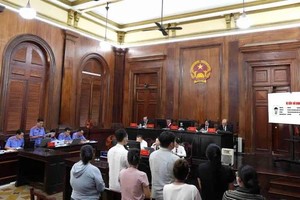
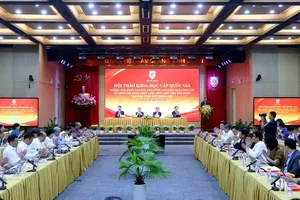
On the afternoon of July 13, during preliminary discussions on the draft revised Postal Law, Nguyen Ngoc Son, a National Assembly deputy serving on the Committee on Science, Technology and Environment, expressed concern about the financial risks associated with cash-on-delivery (COD) services.

He said that about 90 percent of the 4 billion parcels delivered each year are e-commerce shipments, with hundreds of trillions of Vietnamese dong in payments flowing through postal companies annually which is far exceeding the industry's own revenue.
However, the draft revised Postal Law does not include provisions governing the management of these funds, creating potential financial risks because money belonging to third parties is held by postal companies, 95 percent of which are small or micro-sized enterprises, without financial oversight.
The National Assembly deputy urged the government to clarify the basis for concluding that COD services are not considered payment intermediary activities, given the scale of the cash flow and the nature of postal companies temporarily holding third-party funds.
"There should be mechanisms to protect COD funds if a postal company becomes insolvent. Article 30 should also include minimum principles requiring the separation of COD funds from company finances, deadlines for reconciliation and repayment, disclosure obligations, and authorize the government to set thresholds requiring large-scale COD services to comply with payment intermediary regulations", he said.
Addressing compensation provisions in postal services, Vice Chairman of the National Assembly's Science-Technology and Environment Ta Dinh Thi said the compensation rules in Articles 17 and 46 of the draft law remain inconsistent and require further review.
To avoid overlap with the Civil Code and improve transparency in standard-form contracts, he said the draft should clearly specify whether compensation will follow civil agreements, the Law on Protection of Consumer Rights, or a sector-specific compensation framework for postal services.
Regarding financing for public postal services, Ta Dinh Thi called for a detailed assessment of the budgetary impact, including annual spending requirements, the potential to offset costs through other postal business activities, and a roadmap for modernizing public postal services.

Speaking at the session, Minister of Science and Technology Vu Hai Quan said the 2010 Postal Law has been in force for 15 years and that revising the law is necessary to meet the demands of the digital economy.
Acknowledging overlaps between the draft Postal Law and other legislation governing the circulation of goods, Minister Vu Hai Quan said he would direct the drafting agency to continue reviewing the bill, drawing on international experience to clearly define its scope while appropriately incorporating new issues such as digital postal infrastructure, electronic public administration, and postal security.