Cafés, restaurants, hotels and other businesses that play music for customers will be required to pay copyright fees under new regulations taking effect from July 1, as Vietnam moves to strengthen intellectual property protection and bring its practices closer to international standards.
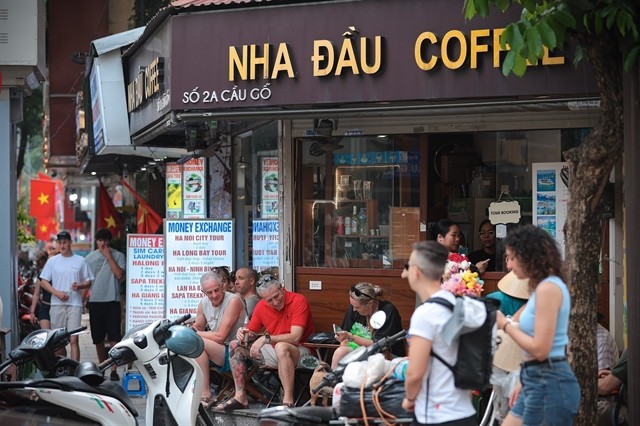
Under Government Decree No. 134/2026/NĐ-CP, a new framework for calculating royalty payments for the use of copyrighted works, sound recordings and video recordings in commercial activities will come into force next month.
The regulation applies to businesses including cafés, beverage shops, restaurants, conference and meeting venues, karaoke establishments, hotels, tourism accommodation facilities and entertainment parks that use music to create an atmosphere for customers.
The annual royalty fee is calculated by multiplying the statutory base salary by an adjustment coefficient set out in the decree. From July 1, the base salary will rise to VND2.53 million (US$96) per month.
The fee structure also varies according to locality. Two biggest cities in the country – Hanoi and Ho Chi Minh City – will apply the full rate, while urban centers classified as Type-1, Type-2 and Type-3 cities will pay 80 percent, 50 percent and 20 percent of the standard rate, respectively. Businesses in remote, mountainous and specially disadvantaged areas will pay only 10 percent of the benchmark fee.
According to the decree, a 30sq.m café in Hanoi or Ho Chi Minh City would pay around VND2.4 million per year, equivalent to less than VND200,000 a month. The cap for a cafe is set at VND20 million a year, no matter the size however.
The fees will be collected through two organisations: the Vietnam Center for Protection of Music Copyright (VCPMC), which represents composers and songwriters, and the Recording Industry Association of Vietnam (RIAV), which represents producers of sound recordings and performers.
The same royalty schedule applies to both copyright owners and related rights holders whose recordings are used commercially.
Although the requirement for businesses to pay royalties for publicly playing music is not entirely new, the decree provides a clearer and more standardised method for calculating the fees.
Experts say the move aligns Vietnam with practices already adopted in countries with developed music industries and reflects growing recognition of the value of creative work.
They note that every song played in a café or restaurant is the result of months, if not years, of artistic labour by composers, singers and producers. Allowing businesses to use music to enhance customer experience and increase revenue without compensating creators is something that a modern and mature market should address.