One of the provisions expected to have the greatest impact on the investment environment is a mechanism to address projects that have secured land use rights agreements but cannot be completed because a small number of land users refuse to consent.
Under the draft revised Land Law, if an investor has reached agreements covering more than 75 percent of the land area and with more than 75 percent of land users but is still unable to negotiate the remaining parcels after the deadline, the Provincial People's Council may consider deciding on land acquisition.
Hoang Minh Hieu, a full-time member of the National Assembly's Committee on Law and Justice, said Article 127 of the 2024 Land Law allows investors to acquire, lease, or receive land use rights as capital contributions to implement socio-economic development projects. However, the current law does not provide a mechanism to deal with the remaining land when negotiations fail to achieve full agreement.
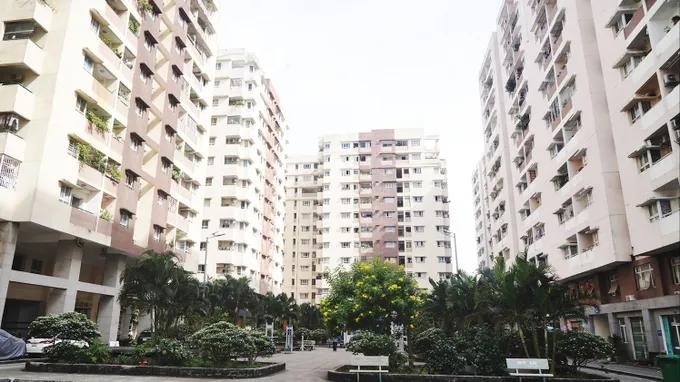
In practice, just a few households refusing to consent, demanding excessively high compensation, or disputes over land ownership can delay an entire project, tying up investment capital and wasting land resources. The proposed change is seen as an important step toward balancing the interests of the State, businesses, and land users while removing one of the biggest obstacles facing investment projects in recent years.
Draft land law strengthens resettlement support for affected communities
While the proposed mechanisms for land clearance and land valuation are intended to unlock development resources, the draft revised Land Law's provisions on compensation, assistance, and resettlement more clearly reflect its goal of safeguarding social welfare.
The current Land Law establishes the principle that a new residence should be equal to or better than the previous one. The draft revised law further specifies this principle by setting clearer requirements for infrastructure, livelihoods, and living standards after resettlement.
Accordingly, the State would be responsible not only for compensation and resettlement assistance but also for vocational training, job transition support, and measures to help affected residents stabilize their income and living conditions after their land is acquired.
For urban development projects, residents whose residential land is acquired would receive priority for on-site residential land or housing. While waiting for permanent resettlement, they would be guaranteed temporary accommodation or rental assistance.
For ethnic minority communities and other vulnerable groups, the draft also introduces additional policies to reduce or exempt land use fees, helping remove financial barriers to accessing residential land and achieving stable living conditions.
According to Tran Van, former deputy chairman of the National Assembly's Committee on Finance and Budget, these provisions will only be effective if resettlement quality is measured through specific evaluation criteria comparing former and new living conditions.
If resettlement areas fail to meet the required standards, infrastructure should continue to be upgraded or support levels increased, he said.
Former Deputy Chairman Tran Van also proposed replacing one-time compensation payments with phased support while creating electronic records to monitor residents' employment and income during the first years after resettlement. The proposal is viewed as a new approach that shifts the focus from compensating for lost assets to accompanying people as they rebuild their lives after land acquisition.
Draft land law expands development space with new land use rules
The draft revised Land Law introduces several groundbreaking provisions aimed at unlocking development potential amid shrinking land resources. For the first time, it establishes the right to exploit, trade, and lease underground space independently from surface structures. It also adds mechanisms to encourage land reclamation from the sea and introduces the concept of “multi-purpose land,” allowing primary land use to be combined with services and tourism activities without changing its classification.
Together, these measures are designed to maximize the efficiency of land resource utilization in a context where available land is increasingly limited.