The measures are aimed at promoting sustainable development, improving public administration and strengthening regulatory oversight in several key sectors.
Nationwide introduction of E10 biofuel gasoline
Under Circular No. 50/2025/TT-BCT issued by the Ministry of Industry and Trade, significant changes to Vietnam’s biofuel blending roadmap take effect on June 1, 2026.
From that date, all unleaded gasoline meeting national technical standards must be blended into E10 gasoline for nationwide use in gasoline-powered vehicles. However, E10 will not be the only fuel available on the market. E5 RON92 gasoline will continue to be produced and sold until December 31, 2030.
Amendments to value-added tax regulations
The Government has issued Decree No. 144/2026/ND-CP, which amends and supplements several provisions of Decree No. 181/2025/ND-CP guiding the implementation of the Value-Added Tax (VAT) Law.
The new decree expands the list of VAT-exempt insurance services, including life insurance, health insurance, student insurance, agricultural insurance products, reinsurance services, and insurance related to petroleum facilities and vessels operating in Vietnamese waters under specific contractual arrangements.
Regarding financial and banking services, the decree also clarifies that debt trading activities, including the sale of payables, receivables and certificates of deposit, are exempt from VAT.
Vehicle registration data integrated into VNeID and VNeTraffic
Effective June 8, 2026, Circular No. 37/2026/TT-BCA issued by the Ministry of Public Security introduces amendments to regulations on vehicle registration and inspection.
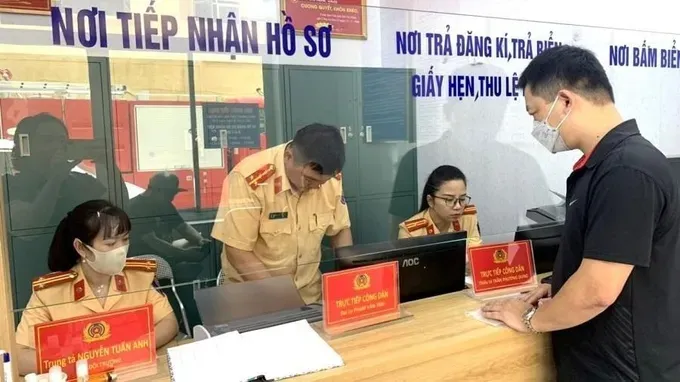
Vehicle owners may choose to receive registration results through the public service portal, postal services or directly from registration authorities. In addition, electronic vehicle registration certificates will be integrated into the national digital identification application, VNeID, and the VNeTraffic transportation application managed by the ministry.
Higher penalties for forestry violations
Decree No. 146/2026/ND-CP on administrative sanctions in the forestry sector takes effect on June 25, 2026.
The maximum fine has been increased to VND500 million (US$19,024) for individuals and VND1 billion (US$38,050) for organizations. Violations involving encroachment on natural forests will face penalties twice as high as those imposed for plantation forests, while illegal logging and forest destruction may incur fines ranging from VND180 million (US$6,847) to VND250 million (US$9,509).
To improve transparency in forest environmental service payments, organizations failing to sign contracts, delaying declarations, or evading payment obligations may be fined up to VND50 million (US$1,900) and required to pay outstanding amounts plus late-payment interest of 0.03 percent per day. Violators may also face business suspension for six to 12 months.
Village and residential group reorganization must be completed by June 10
Under Directive No. 21/CT-TTg issued by the Prime Minister on May 20, 2026, local authorities must finalize plans for reorganizing villages and residential groups by June 10.
The directive emphasizes three key requirements: restructuring part-time personnel and ensuring support policies for affected workers; meeting government criteria for the operation of the two-tier local government model; and conducting comprehensive assessments of historical, cultural, social, geographical, defense and community-related factors.
Special attention must be paid to mountainous, border and island areas, ethnic minority communities and regions with significant religious populations.
Outgoing mobile services may be suspended for biometric verification
Under Article 8 of Circular No. 08/2026/TT-BKHCN, effective June 15, 2026, telecommunications providers must review cases in which subscribers switch to a new mobile device.
If biometric re-authentication using facial recognition is uncompleted, providers may temporarily suspend outgoing telecommunications services for up to two hours while verification is conducted.
The process requires matching a live facial image of the subscriber against data stored in the National Population Database, the Citizen Identity Database, the National Immigration Database, or biometric information lawfully retained by telecommunications operators.