Homeschooling, where parents or guardians take primary responsibility for teaching instead of sending children to school, is being recognized by some families as a real demand. Education authorities have issued clear guidelines and legal frameworks to ensure students’ rights to full learning and comprehensive development.
Families adopting diverse homeschooling models
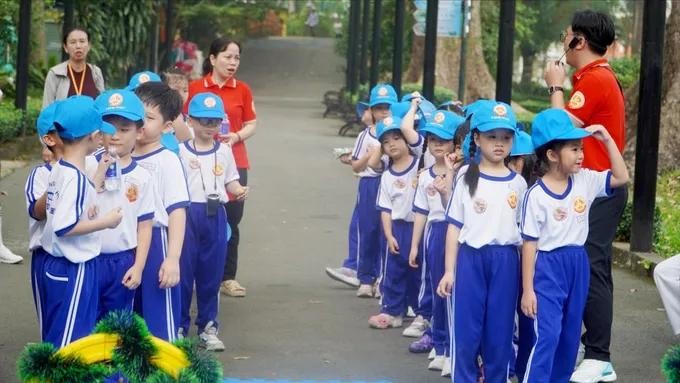
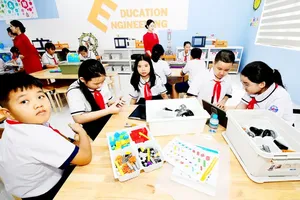
Resident Hai Minh from An Khanh Ward, Ho Chi Minh City, who frequently works abroad, has left her two children, ages 7 and 9, in Vietnam under the care of their grandmother and helpers. For the past two years, she has enrolled them in a private center with a three-day weekly schedule built around thematic lessons rather than traditional subjects. Such arrangements are becoming common in urban areas with diverse education options.
Independent education expert Bui Khanh Nguyen explained that homeschooling is suitable for children of diplomats and businesspeople who travel frequently, victims of school bullying, patients undergoing treatment, athletes, and performing artists.
Nguyen Thi Thu Huyen, Senior Advisor and Academic Director of Pathway Tue Duc Education System, identified several models:
- Solo/Independent family: Parents teach their own children without standard curricula, making quality difficult to monitor.
- Co-op/Pod: Groups of 3–15 children taught collectively by parents based on their strengths, meeting 1–2 times per week or more.
- Umbrella school: Families register with licensed private schools that manage records and diplomas. While common abroad, Vietnam has not yet issued such licenses.
- Online/Virtual school: Full-time online learning with certified teachers, fixed schedules, and accredited programs. Costs are high due to live instruction.
- Hybrid/Part-time: Children attend formal schools part of the week and study at home, a model growing rapidly worldwide.
Online schools often provide structured timetables, interactive activities, and guidance for parents to enhance social interaction opportunities for children.
Authorities warning about misuse of homeschooling
The Ho Chi Minh City Department of Education and Training has encountered cases where children completed homeschooling through grades 1–3, or even finished primary school, before parents sought re-entry into formal schools.
Lam Hong Lam Thuy, Head of the General Education Division, cautioned that some parents follow centers claiming to teach cultural subjects. These centers self-teach, self-assess, and issue completion certificates without legal authority. “This disguised form deprives children of their compulsory primary education rights,” she said.
The department is applying Circular 15, issued July 24, 2025, by the Ministry of Education and Training, which requires assessments of homeschooled students before placement in schools. However, some parents refuse to cooperate, insisting that certificates from private centers guarantee automatic progression, even when evaluations show students have not met requirements.
While homeschooling offers flexibility for families with unique circumstances, experts and officials stress the need for oversight to ensure quality and protect children’s rights. The debate highlights both the opportunities and challenges of integrating homeschooling into Vietnam’s education landscape.
Psychologist Phan The Hiep of the Department of Psychology and Physical Therapy at Children’s Hospital 2 said homeschooling can limit children’s understanding of social rules.
From a clinical psychology perspective, children aged 6-7 to 11-12 are at a stage when they can view the outside world from different perspectives. Homeschooling can personalize the pace of learning to better match children’s actual cognitive development.
However, without a diverse peer group, children may have fewer opportunities to engage with different viewpoints. Another risk is that parents without basic pedagogical skills may impose a lecture-based teaching approach rather than a constructivist one. Therefore, it is important to assess whether a particular homeschooling model meets children’s cognitive, psychological and social developmental needs at each stage.
Nguyen Thi Thu Huyen, Academic Director of the Pathway Tue Duc Education System, said homeschooling should be considered for recognition and regulation.
From an educational perspective and in response to practical needs, homeschooling should be considered for recognition and regulation by the education sector. State management and guidance would give parents a sounder scientific and legal basis for implementing the model, rather than forcing them to seek guidance and advice from “amateur experts” online. Beyond their personal experience, these experts often lack a formal foundation in education science, making it difficult for them to take a comprehensive view of an educational program.
Lecturer Nguyen Ho Thuy Anh in the TESOL program said standardized tests should be administered at each level of education.
To balance parents’ needs, children’s best interests and the specific characteristics of Vietnam’s education system, homeschooling needs a clear legal framework.
Specifically, if the model is brought under a regulatory framework, regulations could require students who have been homeschooled and later wish to enter a school to take tests based on specific requirements. For example, if a student performs poorly in all three subjects and is assessed as being below the required level, the school could place the student in a lower grade. To provide reassurance about homeschooling, standardized tests could simply be established based on the educational framework at each level. Students would be assessed through tests of knowledge and social skills and placed at the corresponding level.