The Ho Chi Minh City Department of Education and Training said its career orientation and student-streaming plan for the 2026-2027 school year includes several new elements.
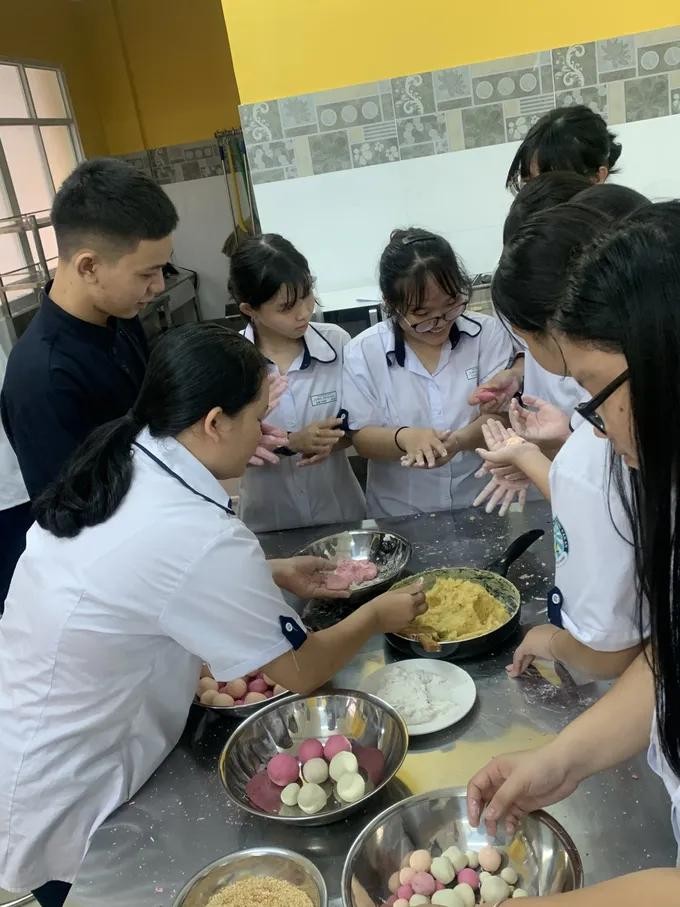
The plan aims to establish an organizational foundation and initially implement career orienting and student streaming across the education sector by the end of 2027. Educational institutions will be required to develop plans, assign personnel in charge, and organize appropriate career counseling and career-experience activities. Content, personnel, learning materials, data and coordination mechanisms will gradually be standardized to provide a foundation for stable implementation in subsequent years.
To achieve the specific objectives, the Department of Education and Training requires general education schools to implement the general education program with greater emphasis on career orientation and create conditions for students to choose their post-graduation education pathways. Schools are also required to organize elective subjects, specialized topics and optional educational activities in line with students' abilities and interests and student-streaming requirements.
Career orientation content will be integrated into subjects and educational activities based on the STEM education approach, in line with trends in occupational development, labor market demand and requirements for training human resources to meet the needs of the fourth industrial revolution.
In particular, educational institutions must regularly update information on local and national human resource needs and labor market conditions to guide students in choosing suitable fields of study and careers. They are also required to increase guidance for students to pursue basic sciences, engineering and technology, ensuring that the proportion reaches at least 35 percent by 2030.
To implement these measures, general education institutions will take the lead and coordinate with continuing education centers, continuing education and vocational education centers, and vocational education institutions to organize models that allow students to study general education subjects while receiving vocational training. Programs and pathways connecting different levels of education will be diversified to ensure students have access to suitable vocational education.
Vocational education institutions will take the lead in coordinating with general education institutions to establish connections between education and training programs by developing open and flexible learning pathways; recognizing learning outcomes, modules and credits in accordance with regulations; and creating conditions for learners to move between different education streams and training levels.
To standardize workforce fof the career orientation, the Department of Education and Training also requires the development of personnel involved in career guidance and student streaming, including teachers and lecturers from vocational education facilities and higher education institutions who participate under coordination plans.
Schools may also invite experts, business representatives, professional organizations, scientists, artisans, local government representatives, mass organizations and other suitable individuals to provide career information, guide career experiences and support student-streaming counseling.
The department also requires educational institutions to develop mechanisms and policies to attract scientists, managers, teachers from vocational education institutions and entrepreneurs to participate in career counseling and guidance for general education students.
According to Truong Hai Thanh, deputy director of the Ho Chi Minh City Department of Education and Training, personnel responsible for career guidance and student streaming must have the capacity to counsel learners and understand age-specific psychological and physiological characteristics.
They must also understand occupations and the competencies required in different fields, keep abreast of local human resource needs and trends in occupational development, be capable of organizing educational activities, apply technology in career counseling and student streaming, and participate in appropriate training and professional development programs to improve their capacity to carry out career guidance and student streaming.