Strengthening internal resources
Recent data from the General Statistics Office of Vietnam (under the Ministry of Finance) indicates that the domestic value-added ratio, reflecting the level of self-sufficiency in raw materials and the ability of domestic firms to create added value within global supply chains, has improved over the last three years. This figure stood at 44 percent in 2023, 48 percent in 2024, and reached approximately 52 percent in 2025, growing by an average of 4 percent annually.
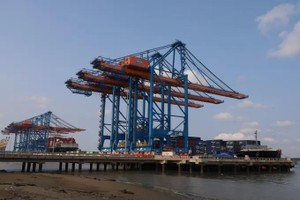
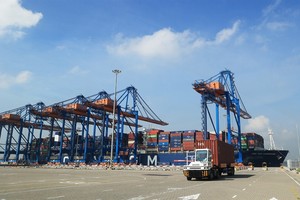
The 2025 milestone is particularly notable, marking the first time domestic value exceeded the 50-percent threshold in export goods structure. Total import-export turnover in 2025 surpassed US$930 billion, with an estimated record trade surplus of $21 billion.
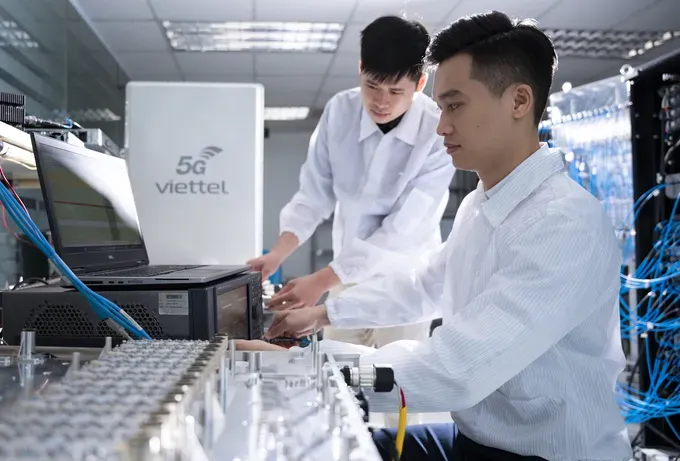
Viettel Military Industry and Telecoms Group serves as a quintessential example of the drive for self-reliance. Instead of purchasing equipment from foreign giants like Ericsson or Huawei, Viettel successfully manufactured its own 5G core network equipment. By 2025, the group had tested 5G speeds 40 times faster than 4G, aiming to master 6G by 2030. This hardware mastery ensures Vietnam escapes the fear of “embedded” malware or service disruptions from foreign policy shifts.
Similarly, established on April 29, 1997, Truong Hai Auto Corporation (THACO) has evolved into Thaco Group, comprising six member companies in mutually supporting sectors. In the automotive sector, the THACO Bus line had achieved a localization rate exceeding 70 percent by 2025. This allows THACO to maintain production during global supply chain fractures while exporting components to the US and the Republic of Korea.
Even in semiconductors, FPT Group has created a bright spot. Focusing on Power Management IC design, FPT became the first Vietnamese firm to export commercial chips to Japan in December 2025 while inaugurating a Hi-tech and Semiconductor Center in Da Nang City to cultivate human resources.
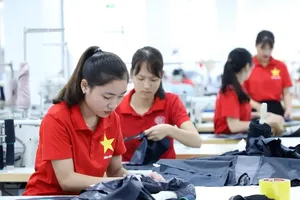
Meanwhile, the textile industry is pursuing sustainable autonomy to meet EU standards. Investments in recycled fibers and solar energy helped the sector reach a $46-billion export turnover in 2025, followed by nearly $8.9 billion in the first quarter of 2026, proving that domestic internal strength is flourishing.
Building autonomous ecosystem
Vietnam aims to become a country with modern industry, belonging to the group of nations with high industrial competitiveness and high added value in the global value chain by 2030. To hit this target, a vital task is to accelerate the technology transfer process from Foreign Direct Investment (FDI) enterprises. Encouraging these firms to form joint ventures with domestic companies for component production is key. There must be clear criteria and incentives, alongside sanctions for FDI firms that fail to meet their localization commitments.
Dr Nguyen Dinh Cung, former Head of the Central Institute for Economic Management, suggests: “Incentive policies for FDI should be tied to R&D spending rates in Vietnam, high-quality human resource training, and the development of local suppliers. If an FDI enterprise fails to contribute to enhancing internal strength, we shouldn’t prioritize them at all costs.”
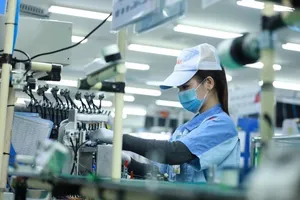
The potential is vast. By 2025, the electronics and optics sectors had shifted from mere assembly to mastering complex semiconductor and circuit board production. Notably, the digital economy contributed 13 – 15 percent of GDP that year.
To sustain this, Director Tran Viet Hoa of the Industrial Agency (Ministry of Industry and Trade) confirmed the Ministry of Industry and Trade will support digital and green industrial foundations. Their goal is helping firms undergo total digital transformation, upgrading their global value chain positions and deepening multinational connections through conditional FDI attraction.
The Ministry of Industry and Trade will focus on refining the institutional system and legal frameworks to serve as a bedrock for industrial development. They’ll coordinate with other ministries to create a favorable business environment through macroeconomic stability, tax policies, and industrial support tools.
Regarding the Ministry of Science and Technology, during his tenure, former Minister Nguyen Manh Hung repeatedly affirmed that a practical, immediate task is to establish government procurement programs, prioritizing made-in-Vietnam, for strategic tech products like UAVs, AI cameras, 5G, and virtual assistants.
He also proposed the formation of special “experimental zones” or sandboxes where testing can occur without seeking permission first. “Current sandboxes are very slow due to permit procedures and a general hesitation to make decisions,” he remarked while leading the Ministry.
At the ministerial and local levels, according to the former minister, innovation centers should be formed to order solutions from businesses and universities for large-scale problems, directly contributing to double-digit growth. He also suggested a more “open” budget allocation mechanism for science and technology by providing fixed amounts directly to the R&D funds of ministries at the start of the year.
With the mindset that the State creates large, national tasks with clear goals and autonomy, formerly minister Nguyen Manh Hung believes Vietnam can attract global tech elites to master strategic technology. Furthermore, domestic enterprises must “grow up.”
Prof Dr Nguyen Quang Thuan, former President of the Vietnam Academy of Social Sciences, recommends that businesses stick to independent development paths rather than chasing fleeting trends. Instead of focusing on short-term revenue, firms must build “resource defenses”, in such aspects as data, human capital, and technology, to minimize vulnerability to global shocks. Mastering “algorithmic sovereignty” and increasing added value over outsourcing remain significant hurdles.
However, businesses must overcome these to upgrade management standards and create competitive advantages. In a multipolar world, firms also need the capacity to forecast geopolitical and financial fluctuations. Finally, emphasizing Vietnamese cultural identity within brands allows businesses to “take root and flourish” in stormy global markets.
Strategic autonomy stands on the three pillars of not being systemically dependent on a single source or market; having the capacity to respond and substitute promptly when markets flip; and maintaining policy space to regulate the economy in the long run.