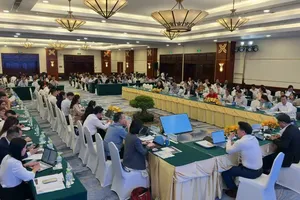
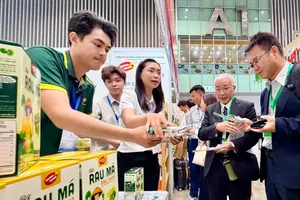
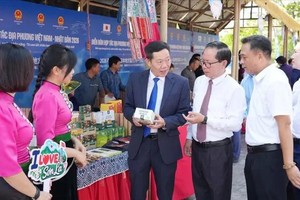
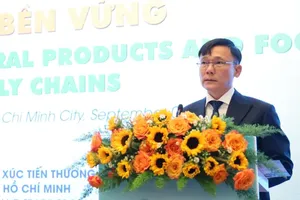
At a forum titled “Industry 4.0 & Smart Supply Chain – New Momentum for Ho Chi Minh City,” held on June 17 in the city and co-organized by Doanh Nhan (Entrepreneur) Forum Magazine and relevant agencies, experts.
During the event, participants discussed the transformative potential of the digital and artificial intelligence (AI) era.
Speaking at the forum, Mr. Hoang Quang Phong, Vice President of the Vietnam Chamber of Commerce and Industry (VCCI), noted that the Fourth Industrial Revolution and the AI era present major opportunities for developing countries. Vietnam, he said, can accelerate industrialization by “leapfrogging” toward higher technology levels.
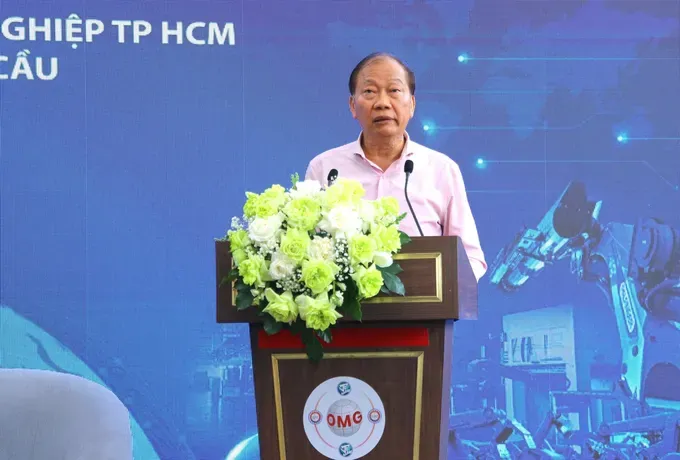
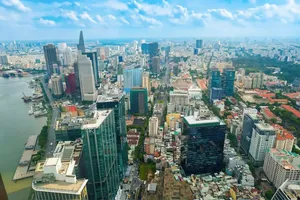
For Ho Chi Minh City, he emphasized that after expanding its economic space, the city and surrounding areas now possess strong potential, with more than 43,000 industrial enterprises along with numerous export processing and industrial zones. This expanded economic zone serves as a foundation for forming interregional high-tech industrial clusters and promoting smart supply chains.
According to the city’s planning vision to 2050, Ho Chi Minh City is expected to develop 105 industrial zones covering over 49,000 hectares. This represents a historic opportunity to restructure its entire industrial base toward high-tech, knowledge-intensive, and high-value-added sectors, thereby creating new and sustainable growth drivers.
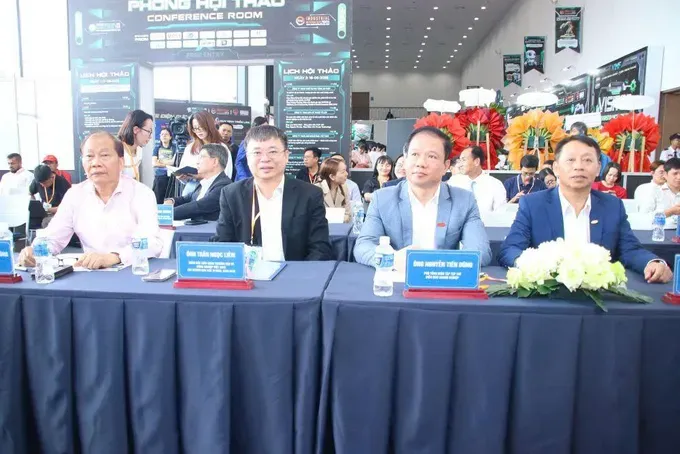
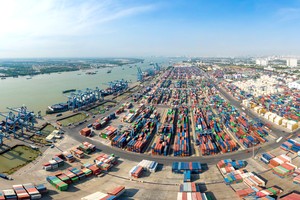
Meanwhile, Mr. Le Van Danh, Deputy Director of the Ho Chi Minh City Department of Industry and Trade, said that the city continues to maintain its role as the country’s largest logistics hub and a key gateway for trade flows in the Southern region and beyond.
However, he also pointed out bottlenecks in the logistics system, including underdeveloped connectivity between industrial zones, seaports, airports and logistics centers, leading to congestion, longer transport times, and higher logistics costs. The transport structure remains imbalanced, with road transport dominating while inland waterways and rail transport remain underutilized.