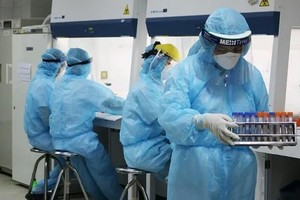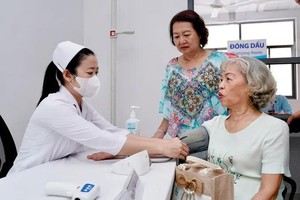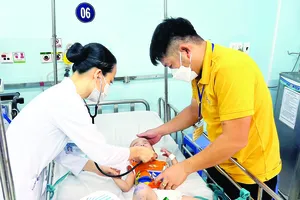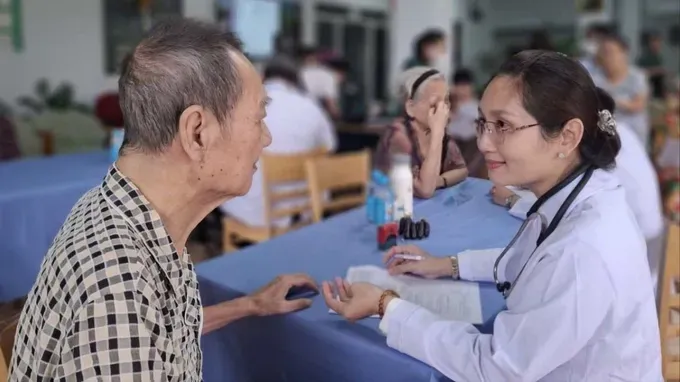
For many years, the city’s top-tier hospitals like HCMC Oncology Hospital, Tu Du Hospital, Pham Ngoc Thach Hospital, and HCMC Mental Hospital, have been in a perpetual state of overload. Every day, thousands of patients from as far away as the Central, Central Highlands, Southeast, and Mekong Delta regions flood these central facilities seeking treatment.
Director of HCMC Oncology Hospital Diep Bao Tuan, MD PhD, says that even though the hospital is already past capacity, the number of patients just keeps trending up. It’s projected that in 2025, the patient load will surge by about 20 percent compared to 2024.
“In 2023, our Campus 2 went live with a 1,000-bed, international-standard capacity and a host of modern equipment, all to ease the burden on Campus 1,” Director Tuan shared. “However, with the sheer volume of new patients, we’ve already had to squeeze in another 200 beds.”
It’s a similar story at Tu Du Hospital, which logs over 1 million medical visits annually. According to hospital data, about 60 percent of those patients are residents from other provinces.
As has been widely noted, most of these patients have to travel immense distances to access top-tier medical care. This not only costs them precious time and money but also places immense stress on the central HCMC health system. Meanwhile, several hospitals in the former provincial areas of Binh Duong and Ba Ria – Vung Tau are reportedly run-down and sitting half-empty.
Director of the HCMC Department of Health Assoc Prof Tang Chi Thuong, MD PhD, stressed that expanding facilities out into these former provincial areas is a logical step. It helps bring specialized medical services closer to the people, a move that’s badly needed in the post-merger context, with a city population now exceeding 13.6 million. This proposal has received approval from the HCMC People’s Committee.
Here's the plan:
- The Oncology Hospital will establish its Campus 3 at the site of the old Ba Ria Hospital.
- Either Tu Du Hospital or Hung Vuong Hospital will develop its Campus 2 at the Le Loi Hospital site.
- Specialized departments from Pham Ngoc Thach Hospital and the HCMC Mental Hospital will take over two abandoned medical facilities in the former Binh Duong area to swiftly restore and bring them back online.
- A proposal on the merger of HCMC Transport Hospital into the Hospital of Rehabilitation and Occupational Diseases is being prepared.
Expanding the “nucleus hospital” model is a genuine breakthrough. Instead of costly new builds, we can leverage the brand and capacity of our top-tier hospitals. This will not only quickly attract patients and guarantee quality but also reduce pressure on the central city, ultimately improving healthcare quality for all residents.
Assoc Prof Tang Chi Thuong, MD PhD
Deputy Director of the HCMC Department of Health Nguyen Anh Dung, MD PhD, explained that after the city’s merger, the department found itself overseeing 9 specialized divisions, 2 sub-departments, and 124 public service units. But the streamlining has already begun. As of September 1, 6 of those units were cut, bringing the total down to 118, which includes 32 general hospitals, 28 specialized hospitals, 38 regional medical centers, and 15 centers in the social support sector.
The health sector, he said, will continue to restructure or outright dissolve units that are operating inefficiently. This is all part of a larger push to improve the quality of basic, essential services, which is intrinsically linked to restructuring and reducing the number of staff paid from the state budget.
To be specific:
- Sai Gon General Hospital will be merged into Gia Dinh People’s Hospital, effective January 1, 2026.
- A new campus of Tu Du Hospital will be established in Can Gio, taking over the inpatient treatment functions from Can Gio Regional Medical Center. It’s expected to open its doors on November 10.
- Ba Ria – Vung Tau Traditional Medicine Hospital, Pham Huu Chi Lung Hospital, and Vung Tau General Hospital will be placed under the wing of HCMC Traditional Medicine Hospital, Pham Ngoc Thach Hospital, and Gia Dinh People’s Hospital, respectively, for “comprehensive support.”
The Department of Health is also in the process of a “comprehensive inspection” of Ba Ria General Hospital to pinpoint its organizational, operational, and professional shortcomings. This will serve as a baseline for building effective support solutions. The remaining city-level hospitals will reportedly stay as they are to ensure stability for patients.
Moving down to the grassroots level, Deputy Director Nguyen Anh Dung said the city currently has 168 health clinics (with 296 total health points) operating under 38 regional medical centers (RMCs).
A big change is coming on January 1, 2026. The HCMC Health Department proposes moving all 168 health clinics directly under local Ward, Commune, or Special Zone People’s Committee management to boost local control and proactive primary care. Subsequently, 25 RMCs without beds will transfer their resources to these stations and be dissolved. The 13 RMCs with beds will transfer their primary and preventive care resources.
When the dust settles, the HCMC Department of Health expects to have 92 public service units (including hospitals and the 13 remaining RMCs). The 168 health clinics will become independent units under their local People’s Committees.
Deputy Minister of Health Vu Manh Ha stated the public are the real beneficiaries. Instead of a fragmented network, merged regional centers will be stronger, boosting frontline care. This “major system surgery” is a necessary step for HCMC to become a specialized medical hub and serve its people better.
Tu Du Hospital Director Tran Ngoc Hai, Level-II Specialist, supports the strategic Ob-Gyn facility in Ba Ria – Vung Tau. He says it fits the city’s development goals and closes the significant gap in specialized care between the central city and surrounding areas. He confirmed that Tu Du Hospital can self-finance the new campus with its VND3,000 billion (US$118 million) fund and staff this new facility from its 330+ doctors, without disrupting the main campus.
Hoang Thi Huong, a resident from Tam Thang Ward in HCMC, recalled her in-laws’ “arduous” 4:00 a.m. trips for cancer treatment, just to queue by 6:00 a.m. “The absolute worst part,” she said, “was the 100km journey home after chemo, with my mother-in-law flat, vomiting.” She explained why residents were just so happy to hear about the new top-tier hospital campuses in Vung Tau. It means the journey for seriously ill patients will be so much less difficult.