Widespread signs of fuel hoarding
Between July 10 and October 5, a Government Inspectorate team examined 260 petroleum trading businesses, including 23 major petroleum wholesalers and 237 distributors.
The inspection found that 58 of the 260 businesses showed signs of violating petroleum trading requirements concerning retail outlets, distribution networks, and storage facilities.
Among them, one major wholesaler and 38 distributors failed to maintain the minimum required number of retail fuel outlets. In addition, two major wholesalers and 17 distributors did not have the required number of general agents, agents, or franchised retail fuel dealers.
Inspectors also identified suspected violations, as well as shortcomings in regulations governing mandatory petroleum reserves. Specifically, 182 of the 260 businesses showed signs of failing to maintain the prescribed minimum reserve levels.
The inspection further uncovered indications of fuel hoarding, along with regulatory shortcomings in addressing the practice.
According to the findings, 188 businesses had one or more days in March 2026 when their petroleum inventories exceeded 150 percent of their average stock levels over the preceding three months. This was identified as a potential sign of hoarding under Clause 3, Article 32 of Decree 98/2020.
In addition, inspectors identified six types of suspected violations involving 40 businesses. The Government Inspectorate prepared records documenting these suspected administrative violations, along with several other infractions, and forwarded the relevant files to competent authorities for consideration and action under the law.
Criminal investigations recommended
The Government Inspectorate also identified cases showing signs of criminal offenses.
On October 14, it formally requested that the Ministry of Public Security's Police Investigation Agency direct the receipt and investigation of the cases and initiate criminal proceedings where warranted, in accordance with the law.
The suspected offenses include trading in petroleum without invoices or documents proving its origin, potentially involving smuggled goods; using illegal invoices and supporting documents; and violating accounting regulations at Thanh Binh Petroleum Trading Co. Ltd. and 12 related businesses.
Similar suspected violations were identified at P.A.S. Investment Co. Ltd. and four of its branches: the Ho Chi Minh City branch, the Binh Duong branch, the former District 1 branch in Ho Chi Minh City, and the Ha Long branch.
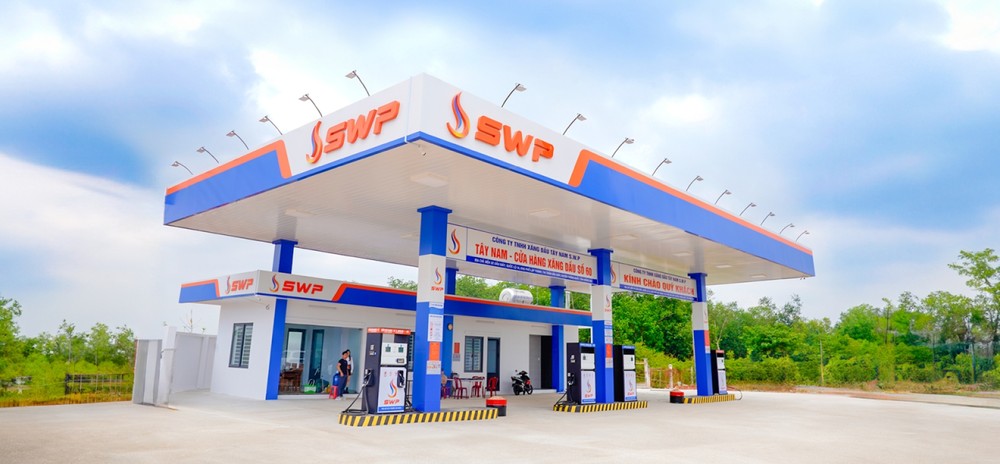
At Southwest Petroleum Co. Ltd., inspectors identified suspected use of illegal invoices and accounting violations.
According to inspection documents, from January 2025 through June 30, 2026, the company issued invoices for the sale of approximately 93 million liters of petroleum products worth about VND1.65 trillion (US$62.9 million) and collected payments from customers.
However, as of June 30, 2026, it had yet to deliver 57.6 million liters out of the 93 million liters invoiced. Meanwhile, inspections of two leased storage facilities found that their combined remaining inventory amounted to just over 15,600 liters of fuel.
The findings indicated that the company had issued value-added tax invoices containing complete transaction details and declared those invoices, even though some or all of the underlying petroleum transactions had not actually taken place.
Inspectors also found that since 2022, while subject to tax debt enforcement measures, the company had advanced approximately VND553 billion to its director, Luong Dinh Tien, and VND584 billion to capital contributor Tran Minh Xuan. Neither amount had been repaid.
The case showed signs of illegal invoicing and the criminal offense of violating accounting regulations with serious consequences, according to the inspection findings.
At Phuc Lam Fuel Joint Stock Co., inspectors identified suspected trading in petroleum without documents proving its origin, as well as accounting violations.
From 2022 through June 30, 2026, the company's inventory figures recorded in its accounting books and financial statements differed from actual stock levels verified at its petroleum storage facilities. The discrepancies were valued at approximately VND675 billion.
Other cases included suspected use of illegal invoices and accounting violations at PLI Investment and Trading Development Joint Stock Co.; suspected tax evasion at America Imx Co., Ltd.; and suspected accounting violations at Long Phu Transport and Manufacturing Joint Stock Co.
Calls for overhaul of petroleum distribution network
Alongside identifying violations, the Government Inspectorate recommended that the Prime Minister direct the Ministry of Industry and Trade, in coordination with the Ministry of Finance, to strengthen the petroleum trading system and put it on a more sustainable footing to ensure stable supplies for the economy.
The recommendations call for prioritizing the development of large-scale major petroleum wholesalers with substantial financial resources, genuine asset bases, and extensive distribution networks. These businesses should also provide services that meet the requirements of socioeconomic development and Vietnam's target of achieving double-digit economic growth.
The inspectorate proposed minimizing the number of distributors or allowing only a limited number to operate in economically strategic areas where they are needed.
It also called for restructuring the distribution stage to reduce intermediary costs and concentrate resources on major wholesalers and their networks of agents and retail outlets.
Under the proposed arrangement, agents and retail fuel stations would be allowed to purchase petroleum from multiple major wholesalers to promote competition and secure supplies at reasonable prices.
The Government Inspectorate also recommended establishing a market-based petroleum pricing mechanism under State regulation and studying the removal of the current system in which the government announces base fuel prices.
Under the proposed model, major petroleum wholesalers would take greater responsibility for securing supplies and setting retail prices based on international market prices and cost factors subject to State management.