From fake AI-generated photos to trimmed short videos masquerading as “knowledge sharing,” malicious actors are exploiting technology to morph distorted rhetoric into trending phenomena aiming to manipulate crowd psychology. Amplified by “echo chambers,” users, particularly the youth, face an imminent risk of falling into traps set by faceless individuals hiding behind the “content creator” nicknames.

Previously, distorted and subversive arguments usually appeared as heavily hostile articles, making it easy for readers to stay vigilant and identify them. However, today’s tactics have grown considerably more sophisticated. Numerous overseas reactionary pages or channels like “Thoibao.de” (managed by Le Trung Khoa) or Nguyen Van Dai’s channels have shifted from penning subversive articles to leveraging AI for splicing images and distorting domestic events.
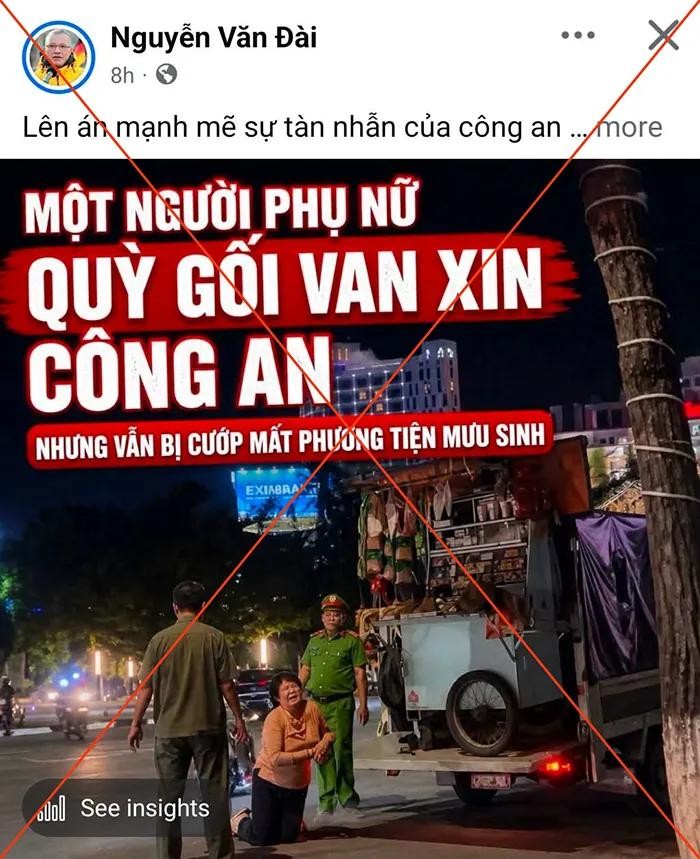
For instance, when law enforcement in HCMC launched a campaign to restore order on sidewalks and streets, Nguyen Van Dai used AI to generate an image of a woman kneeling before a police officer, subsequently posting it with the caption: “Strongly condemn the police’s cruelty...”. Beneath it sat a barrage of comments attacking and hurling insults at the authorities to manipulate public opinion, blatantly ignoring the fact that it’s a completely fabricated image.
These actors don’t stop there abut rigorously exploit trending formats like podcasts or short videos on Shorts, TikTok, and Reels to disseminate fake news alongside erroneous viewpoints. A recent example involves 43-year-old Le Thi Hieu from Ninh Binh Province, owner of the TikTok channel QuyHoi. Capitalizing on press data regarding businesses exiting the market in HCMC, she spliced information and utilized accusatory, distorted language to attack and insult both former and current municipal leaders.


When false information gets camouflaged as a self-development lesson or a takeaway from a renowned book, viewers readily absorb it with a learning, trusting mindset instead of staying vigilant. Exploiting that psychological void, manipulators frequently forge a “halo effect,” cultivating the image of a successful, erudite expert to make the audience trust the speaker while entirely skipping the content verification step.
Accompanying this is the trick of blending accurate, easily verifiable knowledge with distorted misinformation, making it incredibly difficult for viewers to distinguish truth from falsehood.
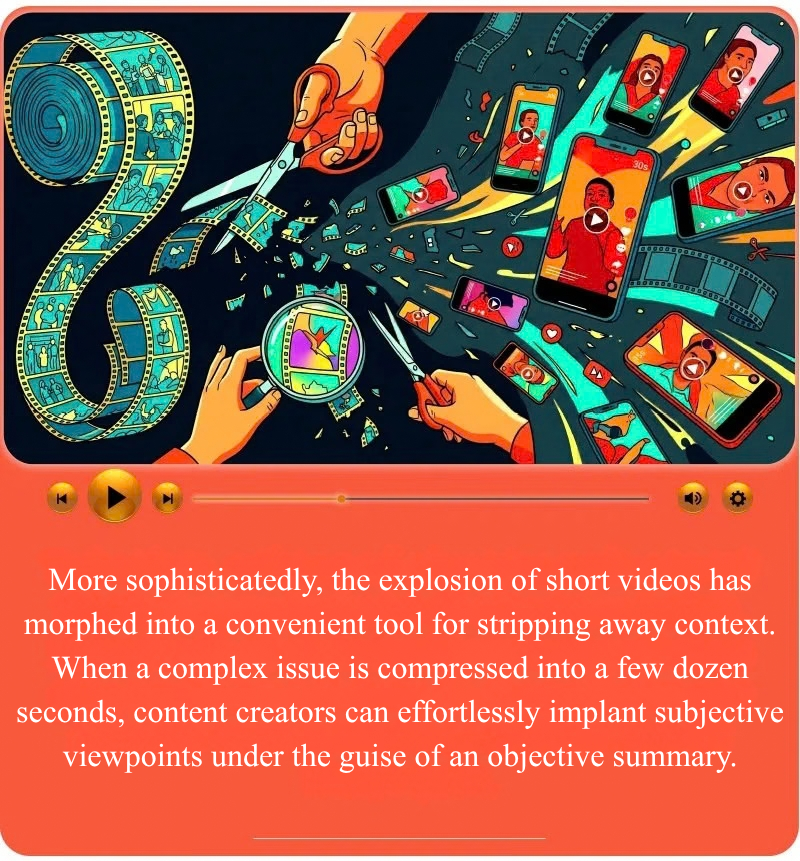
Even more concerning, the algorithmic mechanism prioritizing short, sensational, highly interactive content can cause false information to be rapidly amplified, frequently drowning out accurate reporting.

It’s worth noting that impacting human cognition, beliefs, and willpower isn’t exactly a novel method. Historically, propaganda, psychological warfare, and ideological manipulation have long existed in various forms. AI and the digital environment haven’t altered subversive objectives, but they’re fundamentally shifting the execution methods.
Thanks to big data and recommendation algorithms, content can be “personalized” according to each user’s traits and behaviors, spreading at an unprecedented speed and scale. Consequently, the cognitive manipulation process is no longer primarily one-way propaganda; it can easily become a silent, repetitive, prolonged, and far less detectable orientation.
To proliferate toxic content, subversive actors also exploit the distribution mechanisms of cross-border platforms themselves. Fake news and malicious content typically harbor sensational, provocative elements, making them highly effective at grabbing attention and driving engagement. When users linger on or interact with a video containing erroneous views, the algorithm might continue to “spoon-feed” them a slew of similar content, gradually shoving them into a space known as an “echo chamber.”
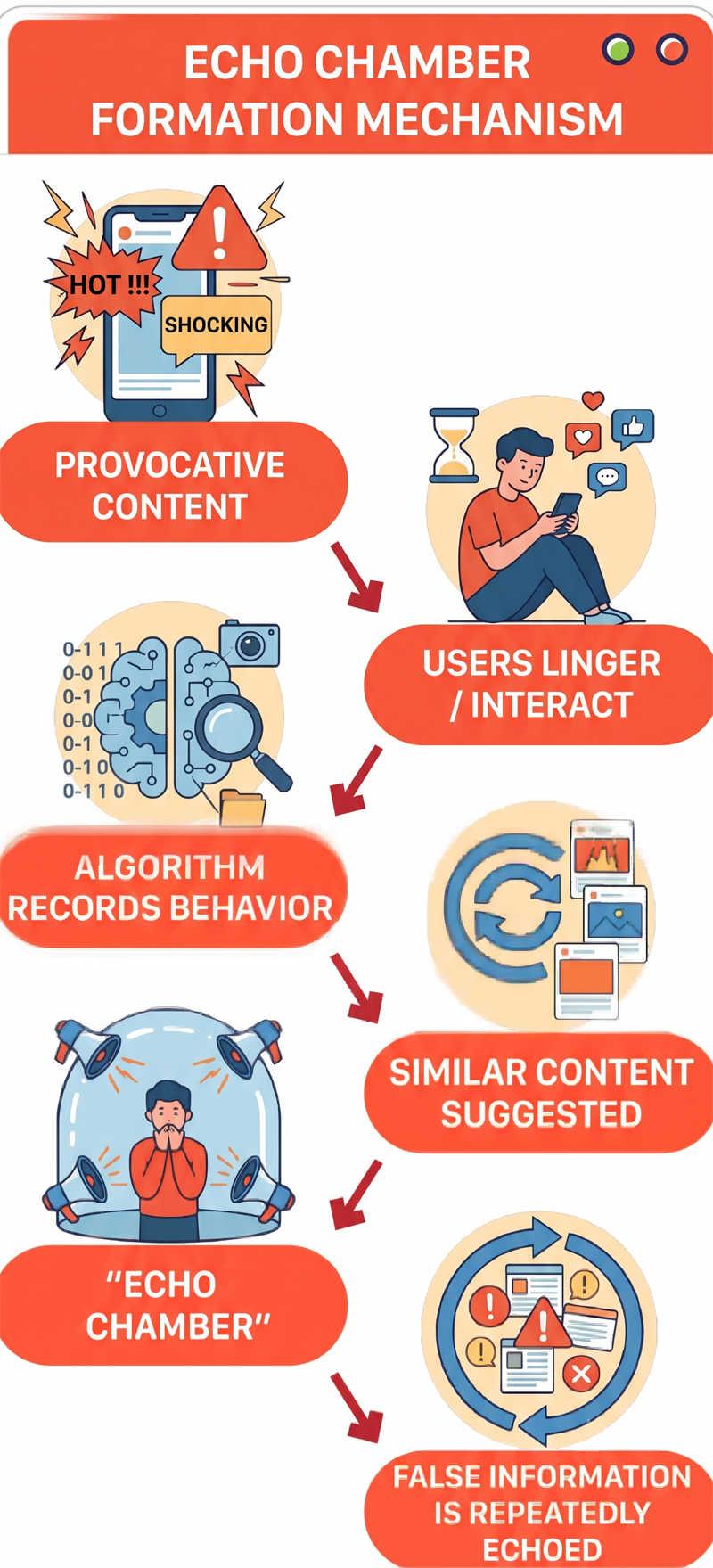
According to Assoc Prof Dr Pham Van Hau, Director of the Cybersecurity Center (Vietnam National University-HCM), an “echo chamber” is a relatively closed space on social media where users predominantly encounter echoing viewpoints and rarely get the chance to access dissenting opinions.
The formation of this space directly ties to the platforms’ business models, which perpetually seek to retain users longer to boost engagement and ad revenue. By recording behaviors like watch time, likes, shares, or following habits, the algorithm gradually constructs a “filter,” continuously recommending content that perfectly aligns with a person's existing preferences and perspectives.
He analyzed that this mechanism easily resonates with “confirmation bias”, a psychological tendency making humans prone to accepting information that reinforces their preconceived beliefs. When turning on their phones and constantly encountering identical viewpoints, viewers might develop a feeling that the majority think exactly the same way, making their perception much easier to manipulate. Once trapped in an “echo chamber,” critical voices and orthodox information sources are easily obscured.

This is one of the mechanisms capable of accelerating the “self-evolution” and “self-transformation” processes among a segment of the youth, shifting them from passive consumers into active links that continuously share and propagate misinformation.

To counter this reality, Assoc Prof Dr Pham Van Hau believes every young person needs to build their own internal “firewall” using critical thinking, maintaining composure when facing sensational content, and refraining from blindly trusting or sharing it before verifying it through journalistic sources and formal agencies.
Furthermore, users should proactively reject “digital trash” by limiting interaction, commenting, or sharing unverified videos and articles. They must actively utilize violation reporting features to block accounts or channels disseminating false information.
From a macroeconomic management perspective, Assoc Prof Dr Pham Van Hau proposed establishing a synchronized mechanism clearly delineating responsibilities among users, platforms, and regulatory bodies.
Users must bear legal responsibility for the content they generate and disseminate. Regulatory bodies are tasked with architecting a transparent legal framework and upgrading technological capabilities to detect and intercept fake news or toxic content early on.
Notably, cross-border social media platforms aren’t merely transit hubs; they must be held accountable for how they distribute and amplify content. When entering the Vietnamese market, these platforms must strictly comply with local laws, tying commercial interests to social responsibility while proactively collaborating to cleanse the information environment they operate in.
Technically speaking, functional agencies need to elevate their technological mastery to spot and block fake news early, long before it spreads and wreaks havoc on society. “In short, users are responsible for the content they create; platforms answer for distribution and amplification; regulators are in charge of designing a transparent, fair, and enforceable rulebook,” he summarized.
Assessing account levels
Mr. Nguyen Hung shared that one potential solution platform owners could implement to help curb fake news and toxic content involves assessing accountability at the account (uploader) level, rather than merely penalizing individual pieces of content.
Accordingly, when an account posts fake news, it’s not just the offending clip or article that gets penalized, but the overall credibility of the entire account takes a massive hit. Other content emanating from this account could face recommendation restrictions, reduced visibility, or even an outright ban, depending heavily on the severity of the violation.
Content: Son Vinh
Design: Minh Thu
Translation: Thanh Tam