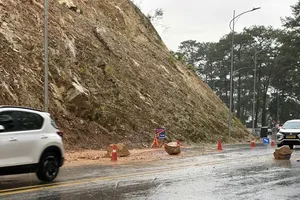
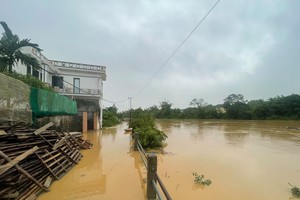
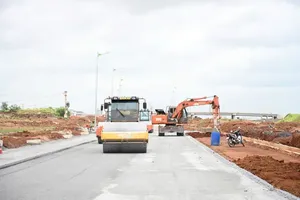
In April this year, more than 30 cases of subsidence and landslides were recorded in many localities such as Tay Ninh, Dong Thap, Ca Mau and Can Tho, causing significant property damage and disrupting daily life, transport and trade. Occurring in the dry season, the phenomenon has attracted significant attention.
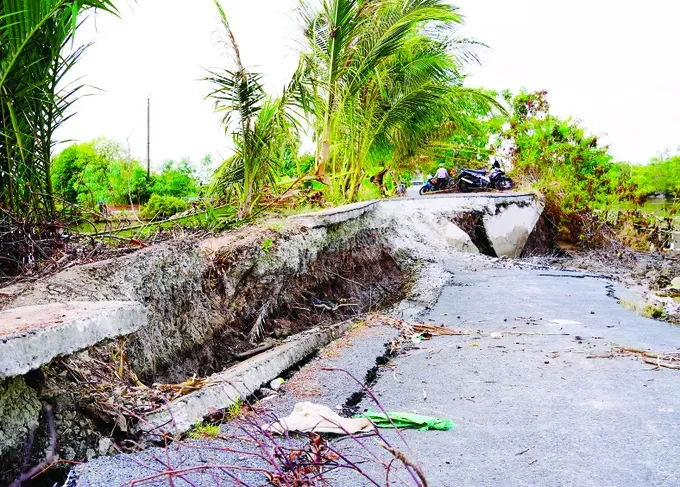
In Ca Mau, a serious landslide along the Ca Mau–Bac Lieu canal on April 21 caused several homes to collapse into the water, destroying four houses and threatening nearby structures. Elsewhere in the province, subsidence along canal-side roads has left hundreds of households struggling with travel and goods transport due to detours and unsafe conditions.
Similar incidents have occurred in Dong Thap and Tay Ninh provinces, where river embankments and rural roads have collapsed or cracked, threatening farmland and infrastructure.
Experts say the region’s soft alluvial soil, composed of sand and clay, becomes unstable when moisture levels change. Prolonged heat and drought lower water levels in rivers and canals, reducing the pressure that normally supports riverbanks, leading to cracks, subsidence and landslides.
Another contributing factor is excessive sand mining along the Mekong River system, including the Tien and Hau rivers. Studies show riverbeds in some sections have dropped by four to five meters over the past decade, accelerating erosion and reducing sediment that helps stabilize riverbanks.
Authorities are responding by increasing monitoring, warning residents and planning relocation from high-risk areas. Provinces are also investing in anti-erosion infrastructure and mapping landslide-prone zones, while experts call for stricter control of sand mining and better tracking of riverbed changes to mitigate future risks.
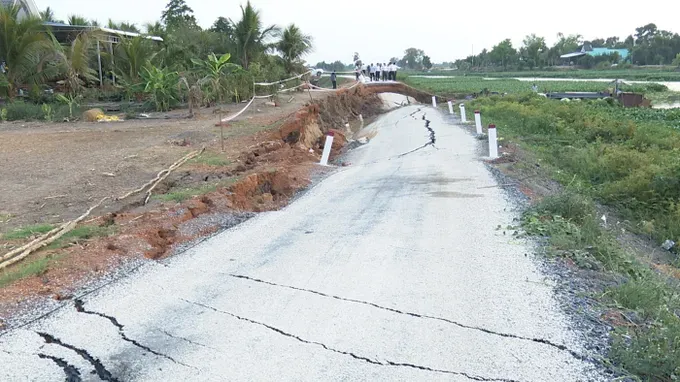
In response to the situation, Mr. Nguyen Duc Thinh, Deputy Director of the Dong Thap Province Department of Agriculture and Environment, said local authorities have been instructed to maintain on-site forces in landslide-prone areas to provide guidance, issue warnings, and prevent loss of life. At the same time, the department is advising the provincial People’s Committee to urgently implement durable solutions and accelerate residential cluster and resettlement projects to ensure stable housing for affected residents.
Meanwhile, Mr. Le Van Su, Vice Chairman of the Ca Mau People’s Committee, said the province has approved a plan to implement its riverbank erosion prevention program through 2030. Priority will be given to building anti-erosion works in densely populated areas to protect infrastructure, with a total planned length of about 104 kilometers and estimated funding of around VND7 trillion (US$266 million).
In addition, the province is focusing on surveys and developing risk maps to identify high-risk landslide zones for timely relocation of homes and facilities. Authorities are also stepping up inspections to prevent and handle illegal or non-compliant construction and business activities that could contribute to riverbank and coastal erosion.
Experts recommend tighter oversight of sand mining across the Mekong Delta, alongside regular riverbed assessments to track erosion trends, inform residents and mitigate potential damage.