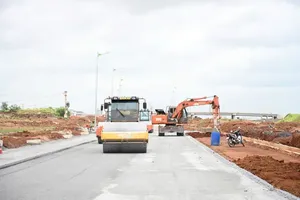
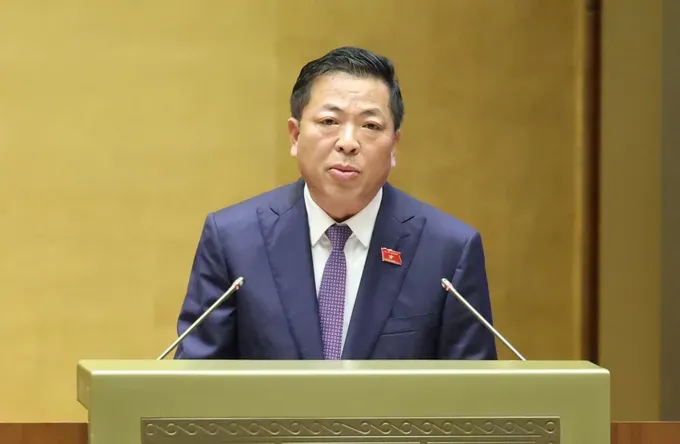
At a National Assembly session on April 20, Minister of Construction Tran Hong Minh provided clarification on issues related to transport infrastructure development, emphasizing that synchronous infrastructure, especially transport, is a key driver for achieving double-digit economic growth.
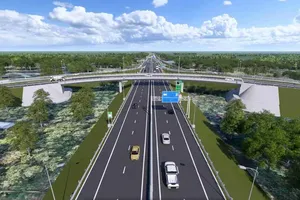
Under national planning toward 2050, Vietnam’s expressway network will include 43 routes with a total length of about 8,993 kilometers. Of this, 6,539 kilometers are planned for completion before 2030, with the remainder developed between 2030 and 2050. To date, 3,345 kilometers of expressways have been completed and put into operation.
The minister also noted that Vietnam currently has 25 railway lines totaling 6,658 kilometers under planning, including both existing and new routes. Major future rail projects include key national lines such as Hanoi–Ho Chi Minh City, Lao Cai–Hanoi–Hai Phong and Can Tho–Ca Mau.
For urban rail development, the country has so far completed three metro lines, one in Ho Chi Minh City and two in Hanoi. However, progress has been limited, with only 41 kilometers of urban rail constructed over the past decade.
In the coming period, Hanoi is expected to build 18 metro lines while Ho Chi Minh City will develop 12 lines, bringing the total to 30 urban railway lines with a combined length of about 2,224 kilometers. The total investment required for railway development in the 2026–2030 period is estimated at nearly VND744 trillion (US$28 billion).
The plan is part of a broader national transport strategy that also includes the expansion of highways, airports, and seaports to strengthen Vietnam’s infrastructure and economic competitiveness.

Regarding the aviation sector, the country plans to have 31 airports by 2030, including 15 international and 16 domestic, rising to 34 airports by 2050. The country currently operates 22 airports with a capacity of 155 million passengers per year, about 1.6 times higher than in the previous term.
The minister said public investment in aviation will mainly focus on upgrading and maintenance, while most new infrastructure will be developed through public–private partnerships (PPP) and private investment.
For seaports, Vietnam currently has 309 terminals with a total quay length of 107 kilometers along its 3,200 kilometers coastline. In addition, there are 44 offshore oil and gas terminals, which largely meet the country’s export transport needs.