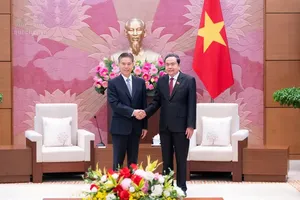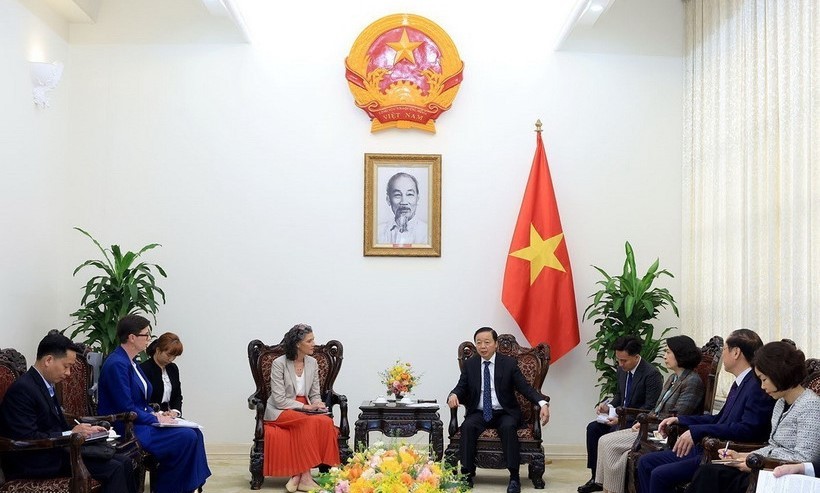
Highlighting Vietnam’s close partnership with the two UN agencies, Deputy PM Tran Hong Ha highly appreciated their important contributions to the country’s development over the years, particularly in policy consultation, institutional reform, and promoting sustainable development initiatives.
He said Vietnam wishes to continue working closely with the UNDP and WHO while exploring new initiatives to further enhance the effectiveness of cooperation in the coming time.
The Deputy PM noted that Vietnam has begun assessing major sources of air pollution nationwide, including in major urban centers such as Hanoi and Ho Chi Minh City. The structure of emission sources is similar to that in many developing countries and comparable to that of Beijing in China.
Industrial activities account for about 27 percent of emissions, followed by transport at around 25 percent and construction at roughly 20 percent. About 6 percent comes from other sources, such as open burning of straw and waste. Fine particulate matter (PM2.5) remains the dominant pollutant affecting air quality.
According to the Deputy PM, tackling air pollution requires addressing emission sources at their root, including transport, industry, construction, agricultural waste, and urban waste. He stressed the need for synchronous solutions, ranging from urban planning and relocating industrial facilities out of cities, shifting fossil fuel–powered vehicles to electric transport or developing underground transit systems, enforcing green building standards, and making use of agricultural by-products such as straw instead of burning them.
Vietnam is currently seeking a comprehensive policy solution that involves cross-sectoral and inter-regional coordination. However, he acknowledged that mobilizing resources for implementation remains a major challenge.
The Deputy PM stressed that it is necessary to have more comprehensive assessments of the damage caused by air pollution, particularly healthcare costs and broader socio-economic impacts.
Welcoming constructive proposals from UNDP and WHO representatives, Ha suggested that Hanoi could be selected as a pilot location to develop a model for air pollution control with support from international organizations. He added that the lessons learned could then be replicated in other localities across the country.
He also applauded the proposal by UNDP and WHO to organize a thematic forum on air pollution, expressing interest in connecting with international experts, including those from China, to exchange experience in designing monitoring systems and managing traffic.
Khalidi and Pratt noted that air pollution has been a key area of cooperation between the two organizations and Vietnamese ministries, particularly the Ministry of Health and the Ministry of Agriculture and Environment.
They said UNDP and WHO are currently supporting Vietnam in five main areas related to air quality management, including strengthening policy and legal frameworks; developing monitoring and early warning systems; conducting emission research and inventories; raising public awareness; and linking air pollution control with sustainable development goals, including the implementation of nationally determined contributions (NDCs) and the transition toward a low-carbon economy.
Khalidi affirmed that despite limited resources amid global uncertainties, UNDP will continue striving to mobilize and effectively use available resources to make practical contributions to efforts to improve air quality in Vietnam.