Growing capital needs
To achieve its goal of becoming a high-income developed country by 2045, Vietnam will need to sustain strong economic growth. The Ministry of Finance estimates that at least VND38.5 quadrillion (US$1.54 trillion) in development investment will be needed during 2026-2030, equivalent to about 40 percent of GDP.
The State budget is expected to cover only around 20 percent of this amount, or more than VND7.7 quadrillion (US$308 billion), while over VND30 quadrillion (US$1.2 trillion) will need to be mobilized from other sources. This underscores the need to diversify funding channels and reduce reliance on bank credit.
Pressure is already mounting on the banking system. By mid-July 2026, outstanding credit had exceeded VND20.08 quadrillion (US$803.2 billion), up 8.04 percent from the beginning of the year, while deposits rose 6.32 percent to nearly VND18.78 quadrillion (US$751.2 billion). The gap of more than VND1.3 quadrillion (US$52 billion) indicates that capital demand is growing faster than banks’ ability to mobilize funds.
Dependence on bank financing is also evident in major projects. In July 2026, the State Bank of Vietnam received proposals for credit mechanisms for 17 projects by Vingroup, Masterise and Thaco, with total estimated borrowing needs of about VND955 trillion (US$38.2 billion).
Ho Chi Minh City is also targeting double-digit growth to maintain its role as an economic driver. In the first six months of 2026, the city’s GRDP grew 8.55 percent, its highest rate in recent years.
Economist Dr. Can Van Luc said the city would need to increase total investment by at least 13-15 percent annually in the coming years, requiring tens of billions of US dollars for transport infrastructure, urban development, logistics, digital transformation, high technology and innovation.
According to Dr. Tran Du Lich, developed economies do not depend primarily on commercial banks for medium- and long-term capital. Projects in infrastructure, energy, technology and green transformation require financing over 10-20 years or more, increasing liquidity and maturity risks for banks.
Building a financial ecosystem
In this context, the comprehensive financial market reform program under Decision No. 1413/QD-TTg, issued in late July 2026, is designed to reshape how capital is allocated across the economy.
The program focuses not only on expanding market size but also on developing a modern, transparent financial ecosystem connected effectively with global capital flows. It targets the development of stock and corporate bond markets, investment funds and financial intermediaries, while modernizing trading infrastructure, improving information disclosure and strengthening risk supervision.
A deeper financial market would provide more options for medium- and long-term financing and gradually reduce the economy’s dependence on bank credit.
Whitney Pham, an executive board member of the Global Onchain Economic Alliance (GOEA), said tax incentives and investment costs are no longer the main factors determining a market’s attractiveness.
Financial institutions increasingly prioritize transparency, policy predictability and modern financial infrastructure that allows capital to move smoothly across markets.
Vietnam is working to establish an international financial center, develop a legal framework for digital assets, study the feasibility of a central bank digital currency (CBDC), develop a carbon market, modernize payment systems and introduce new financial products. These efforts reflect the country’s deeper integration with international financial markets and could provide a foundation for attracting long-term capital for innovation, high technology and green transformation.
For Ho Chi Minh City, these reforms are particularly significant as the city is being developed into a regional international financial center and continues to attract foreign investment. In the first six months of 2026, the city attracted nearly 21,000 foreign-invested projects from more than 150 countries and territories.
Cao Thi Phi Van, Deputy Director of the Ho Chi Minh City Investment and Trade Promotion Center (ITPC), said that alongside market size, human resources and the business ecosystem, stronger financial institutions would improve the city’s competitiveness in attracting projects in technology, finance, logistics and innovation.
The new phase of development requires not only more capital but also a more balanced and efficient capital allocation structure. A multi-layered financial system will be an important foundation for Vietnam and Ho Chi Minh City to achieve sustainable double-digit growth in the coming decades.
Converting investment commitments into actual funding
Assoc. Prof. Dr. Nguyen Huu Huan, Vice Chairman of the Executive Board of the Vietnam International Financial Center in Ho Chi Minh City (VIFC-HCMC), said that the center had recorded about US$20 billion in committed capital and potential mobilization from domestic and international financial institutions, investment funds and investors.
Although the funds have not yet been disbursed, the commitments show growing international interest in Vietnam. The priority now is not simply to attract more investment commitments but to turn them into actual capital flowing into the economy.
To achieve this, local authorities and businesses need to prepare projects with complete legal documentation, transparent financial plans, clear repayment mechanisms and implementation capacity that meets investors’ requirements.

VIFC-HCMC is also developing a financial ecosystem covering international bonds, green bonds, investment funds, trade finance, maritime finance and aviation finance, together with guarantee mechanisms, credit insurance and credit ratings to reduce risks and strengthen investor confidence.
Around 90-95 percent of the center’s legal framework has been completed. Once the general regulations are issued and membership licensing rules announced, banks, securities companies, insurers and international financial institutions will have a stronger basis for deeper participation.
Reducing reliance on credit
Financial and banking expert Dr. Nguyen Tri Hieu said credit growth exceeding deposit growth for many consecutive years was putting pressure on liquidity and interest rates.
If the trend continues, the banking system could face maturity mismatches as deposits are mainly short-term while investment demand is increasingly focused on medium- and long-term financing.
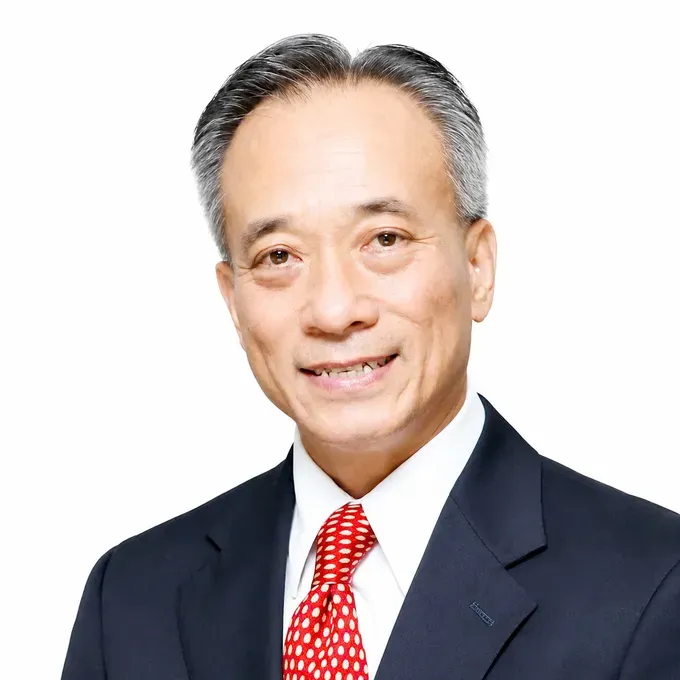
Vietnam should therefore accelerate financial market restructuring toward a better balance between bank credit and capital markets. The stock market, corporate bond market, investment funds and professional financial institutions should play a greater role in providing long-term capital for businesses and development projects.
Alongside improving the legal framework, greater market transparency and higher-quality issuers are needed to strengthen investor confidence. A transparent market would allow capital to be allocated more efficiently to businesses and projects capable of creating added value.
Transparency as a foundation
Vu Thi Chan Phuong, Chairwoman of the State Securities Commission, said that capital market development should not only expand fund-raising capacity but also improve market quality and transparency.
This is essential for Vietnam’s goal of being upgraded from frontier to emerging market status under FTSE Russell criteria, which would help attract stronger international capital flows.

For the corporate bond market, Decree No. 200/2026/ND-CP further improves the legal framework, enabling businesses to raise medium- and long-term capital while strengthening requirements on information disclosure, governance and the use of funds.
When businesses maintain financial transparency, sound governance and full compliance with their commitments, their credibility improves, fundraising costs can gradually decline and access to domestic and international capital can expand.
Alongside modern trading infrastructure and stronger supervision, improving the quality of listed companies and bond issuers will help the capital market develop sustainably and become an effective medium- and long-term funding channel for the economy.