Identifying bottlenecks
According to the Statistics Department under the Ministry of Finance, total realized social investment reached approximately VND2.13 quadrillion (US$83.4 billion) in the first seven months of 2026, up 13.1 percent year on year. The non-state sector accounted for VND1.14 quadrillion (US$44.7 billion), or 53.7 percent, followed by the state sector at VND601.2 trillion (US$23.6 billion), or 28.3 percent, and the FDI sector at VND384.4 trillion (US$15.1 billion), or 18 percent.
The figures show that the private sector is the economy’s largest source of investment, but its access to medium- and long-term capital remains limited.
Lam Thuy Ai, General Director of Mebifarm Joint Stock Company, said the company recently invested about VND600 billion (US$23.5 million) in an egg production plant, with most of the funding borrowed from banks at a medium-term interest rate of 10.5 percent per year.
High borrowing costs put pressure on businesses from the investment stage, increasing production costs, extending payback periods and limiting expansion. This is a common challenge for domestic businesses that remain heavily dependent on bank credit.
Meanwhile, businesses in other countries have access to a wider range of funding sources, including investment funds, credit funds, pension funds, green financing, development financial institutions and long-term investment funds. These sources can offer lower-cost capital to businesses that meet governance and transparency standards.
With multiple capital channels available, businesses will have more options suited to each stage of development, while attracting stronger international capital flows, reducing financing costs for the production sector, improving competitiveness and laying the foundation for long-term growth, said Nguyen Ngoc Hoa, Chairman of the Ho Chi Minh City Business Association.
Tran Ngoc Anh, Vice Chairman of the Saigon Central Business Association, said that although new policies had helped strengthen business confidence, a significant gap remained between policy and implementation.
The two major bottlenecks are currently access to capital and digital transformation. Most assets of micro-enterprises are tied to experience, reputation and business cash flows, while credit assessments still rely largely on collateral. This makes it difficult for many businesses to obtain capital when they need to expand production.
Digital transformation is another challenge due to a shortage of skilled personnel, high investment costs and a lack of solutions tailored to businesses of different sizes.
Embracing change to drive growth
To address these bottlenecks, Vice Chairman of the Saigon Central Business Association Tran Ngoc Anh called for the development of micro-credit guarantee funds and changes to credit assessment methods to focus more on cash flow and business performance. He also proposed practical, hands-on digital transformation programs for different groups of businesses and greater digitalization and data sharing among government agencies to reduce compliance costs and make it easier for businesses to access policies and funding.
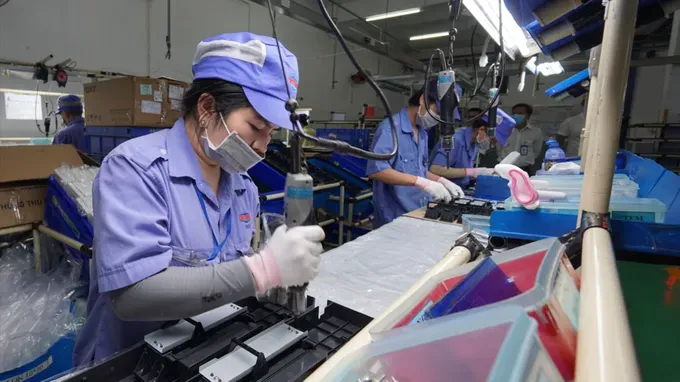
Businesses themselves also need comprehensive changes to achieve sustainable growth. Companies that proactively improve corporate governance, financial transparency and green transformation are increasingly gaining access to new sources of capital at more competitive costs.
A notable example is New Era Cold Storage Joint Stock Company (NECS), which has secured green financing from Nam A Bank at interest rates around 2-3 percentage points lower than conventional loans. The funding has been used to invest in an automated cold-storage system, with robots handling most operations.
The model has helped the company reduce energy consumption and CO2 emissions, minimize goods losses and reduce its reliance on workers in cold-storage environments. The company has also installed rooftop solar panels, cutting electricity costs by about 25-33 percent.
A company representative said the biggest obstacle to accessing green financing was the stringent standards, which not all businesses can meet.
Regarding green financing, Vo Hoang Hai, Deputy General Director of Nam A Bank, said the bank had raised about US$350 million in green capital from international financial institutions since the beginning of the year and had fully disbursed the funds.
The capital has been directed mainly to rooftop solar, energy-efficient cold storage and logistics, and certified high-tech agriculture projects with stable cash flows and strong eligibility for international financing.
Experience shows that green capital is readily available for suitable projects. The challenge is that businesses must meet requirements on governance, transparency and sustainable development.
To expand access to green financing, Mr. Vo Hoang Hai proposed developing green supply-chain financing models to channel capital from development financial institutions to small and medium-sized enterprises in export supply chains. These businesses face growing pressure to undertake green transformation but have limited access to international capital.
He also proposed studying the establishment of a centralized trading platform for green bonds and carbon credits to improve liquidity, enhance transaction transparency and create an additional fundraising channel for green transformation projects.
From a long-term perspective, economist Dr. Can Van Luc said businesses need to pursue more decisive innovation by increasing investment in research and development, innovation, artificial intelligence, digital transformation and green transformation. Such efforts would improve productivity and help businesses meet increasingly demanding international market standards, providing a springboard for competing in global markets.