The Directorate for Roads of Vietnam, on December 15 announced that at present, it has seven traffic projects calling for investment capital from domestic and foreign enterprises in the form of BOT (Building Operation Transferring).
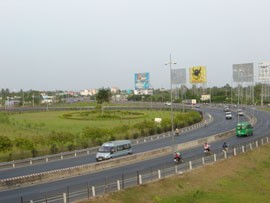
The seven traffic projects are regarded as ‘super projects’, each one with investment capital of billions of US dollars.
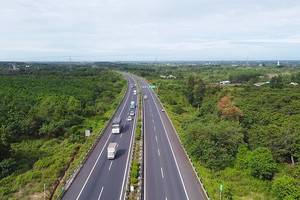
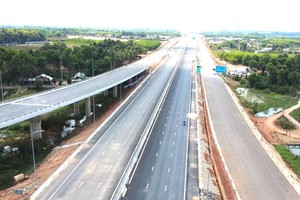
Three projects are involved in highway development, namely the 205-km Dau Giay – Lien Khuong expressway with a total estimated capital of VND37,500 billion (US$1,8 billion). The 79-km Nha Trang – Phan Thiet expressway, with an aggregate investment capital of VND10,000 billion ($500 million). Finally, the 150-km Quang Ngai – Quy Nhon highway with a total estimated investment capital of VND28, 000 billion ($1.4 billion).
The four remaining projects are belt-roads in Hanoi and Ho Chi Minh City. This is the 136-km six-lane expressway linking Hanoi, Bac Ninh, Hung Yen and Bac Giang with a total investment capital of VND51,874 billion ($2.6 billion). This road will be an expressway through the five cities.
Another expressway costing VND60 trillion ($3 billion) is to be built linking Hanoi, Bac Ninh, Bac Giang, Hung Yen and Vinh Phuc. The third project is to construct an 87.4-km express belt-road in Ho Chi Minh City; and finally, a project to build the $3 billion 152-km expressway linking Ho Chi Minh City with Dong Nai, Binh Duong and Long An.
According to the Directorate for Roads of Vietnam, there are some difficulties on the capital recovery of the expressway projects. Furthermore, the permit for investors to use the capital borrowed, from the World Bank’s International Bank for Reconstruction and Development (IBRD), or other sources of capital through PPP (Public Private Partnership), is seen to be the most effective and feasible to deal with this project.
To conclude, because IBRD capital have now a low interest rate and a longer lending term, investors face less of a risk, to their investments, and less capital needed from the State.