Taxpayers are also entitled to mandatory insurance deductions and contributions to charity and humanitarian funds.
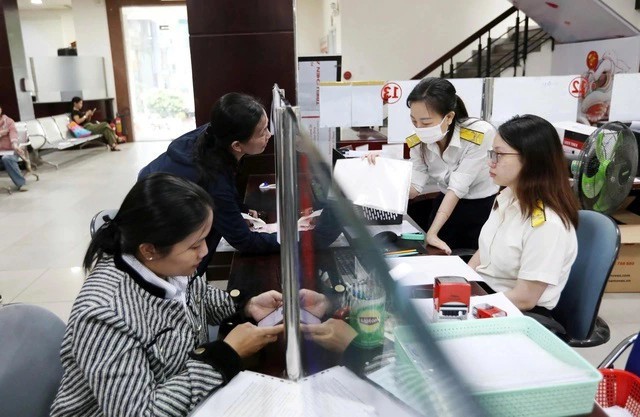
In just a few days, millions of Vietnamese taxpayers will begin to enjoy reduced financial pressure as new personal income tax (PIT) regulations, featuring higher deductions and a revised progressive tax bracket, take effect from January 1, 2026.
Under the amended Law on Personnal Income Tax, the personal deduction will rise to VND15.5 million (US$590) per month from VND11 million at present. Taxpayers are also entitled to mandatory insurance deductions and contributions to charity and humanitarian funds.
With compulsory insurance contributions currently equivalent to 10.5 percent of assessable income, a single individual earning around VND17 million per month will not pay PIT next year, saving approximately VND210,000 per month compared to current rules. Each dependent will qualify for an additional deduction of VND6.2 million per month, instead of VND4.4 million, meaning a taxpayer with one dependent and an income of VND24 million will also be exempt from PIT.
Higher earners will likewise benefit as Vietnam’s tax structure shifts from seven to five progressive brackets with redesigned taxable thresholds. For example, a taxpayer earning VND30 million per month with one dependent will only fall into the 5 percent bracket instead of the current 15 percent, reducing their monthly tax burden from VND968,000 to VND295,000.
Someone earning VND50 million per month with one dependent will now pay around VND1.84 million instead of VND4.3 million while a person earning VND100 million per month will see their PIT fall by more than VND5.5 million to around VND12.5 million.
Experts also highlight a major policy innovation. For the first time, taxpayers will be permitted to deduct eligible healthcare and education expenses for themselves and their dependents, once the Government issues detailed guidance.
They argue this represents an important human-centred reform, easing essential cost burdens while promoting social investment in health and education. Several legal and financial experts suggest allowing full deduction of legitimate medical expenses for serious illnesses, alongside reasonable caps for general healthcare and education spending to ensure fairness and administrative feasibility.
At the same time, many hope the Government will modernise policies relating to dependents. Currently, an individual is only recognised as a dependent if their income does not exceed VND1 million per month - a level widely viewed as outdated and unrealistic given rising living costs and increasing minimum wages. Legal experts recommend increasing this threshold to align with the dependent deduction of VND6.2 million per month from 2026, or at least allowing partial deductions proportional to actual support needs.