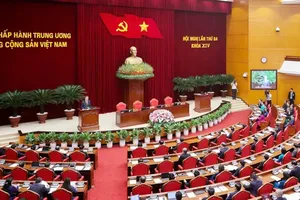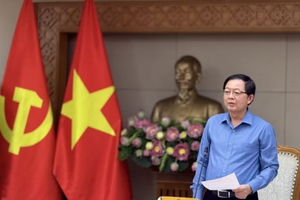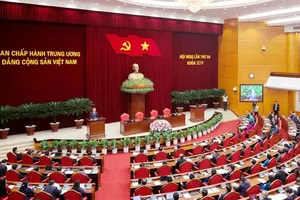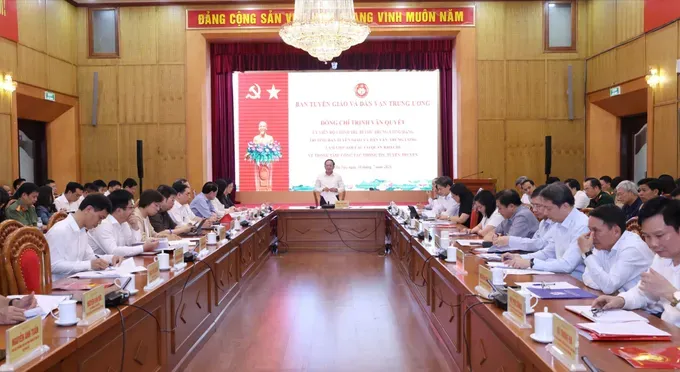
Speaking at the working session, Head Trinh Van Quyet of the Central Propaganda and Mass Mobilization Commission pointed out that in the context of rapidly evolving social media where information can surface in just seconds, if mainstream journalism isn’t fast, accurate, and proactive, it’s easy to lose its competitive edge in information dissemination.
Therefore, the press must command the media landscape, delivering official information to citizens in order to help them differentiate between fake and genuine news while forging consensus across society.
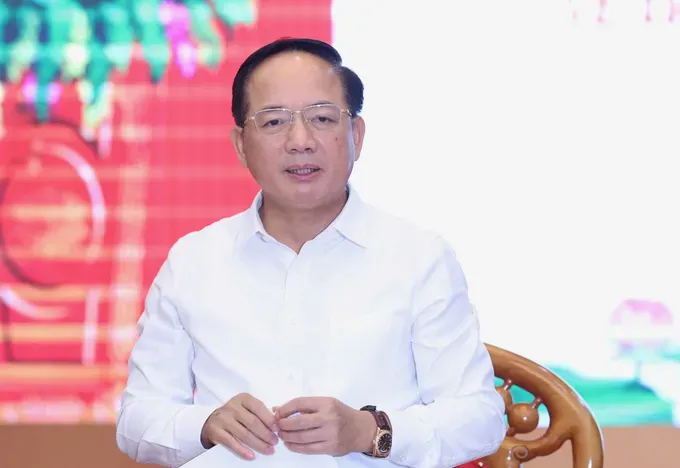
Head Trinh Van Quyet evaluated that policy communication isn’t merely the responsibility of press agencies, but of the entire political system. Ministries and agencies should actively supply information to the press, rather than simply publishing updates on their electronic portals.
A cohesive synergy between policy-making bodies and media outlets will make communication more timely and effective, especially before the rollout of major Party guidelines.
He then suggested several clusters of issues for the conference to debate.
Accordingly, innovating propaganda methods, especially policy advocacy, requires a decisive shift from mere event reporting to enhanced analysis and explanation so that citizens grasp the content, significance, and benefits of policies. This also involves studying methods to measure communication effectiveness through tangible changes in social awareness and action.
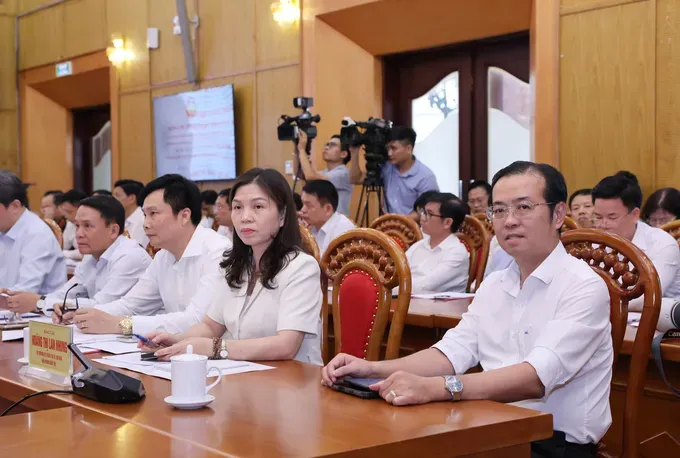
Regarding the role of journalism in achieving growth targets, according to the Commission Head, it's insufficient to simply reflect growth results; the press must also foster a spirit of development and provide constructive policy criticism, helping citizens correctly understand guidelines and generating momentum for growth.
He demanded that the press become the prevailing mainstream flow, crafting works that touch the hearts of readers, listeners, and viewers, reigniting patriotism, national pride, and strengthening the great unity of the entire population.
“The true value of a journalistic piece lies in its ripple effect and practical contributions to society,” he emphasized, requesting delegates to examine existing hurdles and propose solutions to bolster the efficacy of information and propaganda efforts.
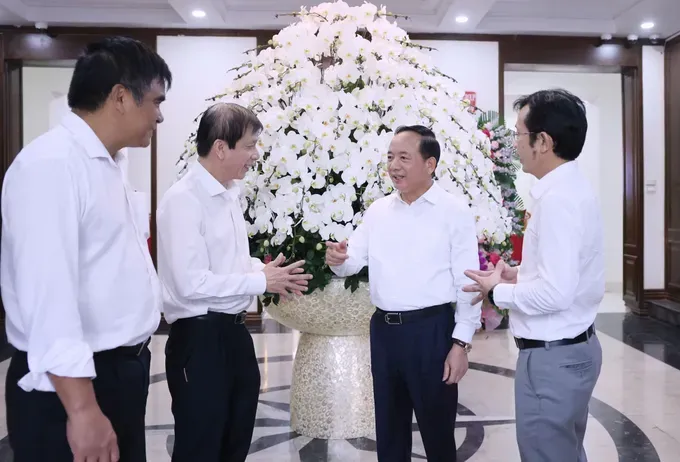
Deputy Prime Minister Pham Thi Thanh Tra shared that the Government will continue to fine-tune information-provision mechanisms and elevate the quality of policy communication via spokesperson networks, regular press briefings, and specialized conferences.
Simultaneously, the Ministry of Culture, Sports and Tourism has been tasked with collaborating with the Central Propaganda and Mass Mobilization Commission to construct a shared policy communication database for press agencies to exploit and utilize.
The Deputy Prime Minister stated that the Government is researching and refining mechanisms for commissioning and assigning policy communication tasks, amending regulations on financial autonomy for press institutions, and exploring a set of evaluation metrics to quantify the press’s contribution to socio-economic development.
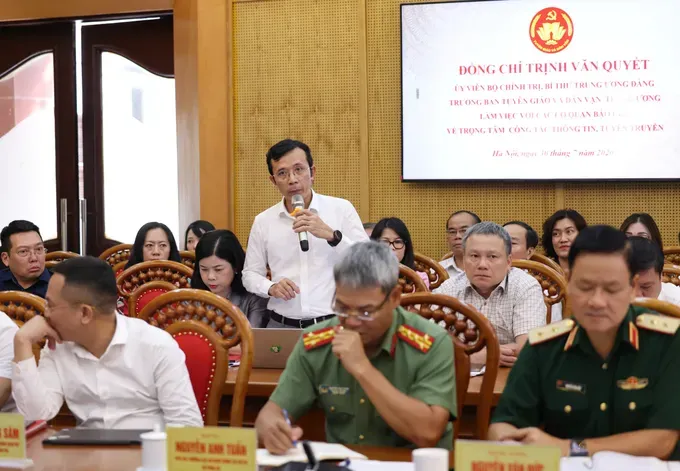
Concluding the working session, Commission Head Trinh Van Quyet cited Party General Secretary and State President To Lam’s opening remarks at the 3rd conference of the 14th Party Central Committee , highlighting four strategic shifts:
- enhancing leadership capacity and governance quality across the Party and State apparatus;
- uniformly managing development spaces to leverage national resources;
- establishing a growth model rooted in productivity, knowledge, technology, and human capital;
- proactively preventing risks while boosting national resilience to safeguard the country.
According to the Commission Head, press agencies should identify these four shifts as predominant media campaigns throughout 2026, particularly in this final six months, to integrate Party policies into everyday life. He urged media organizations to deeply communicate the 14th Party Congress Resolution and Politburo strategic directives, while underscoring first-half socio-economic development results and strategic targets for the second half.
“The press must put an end to speech-reading reporting styles and hone in on analyzing novel points, core elements, and policy implications,” he instructed.
Policy information must remain journalism’s focal point. Media outlets must accompany the Government in striving for double-digit economic growth by analyzing and proposing solutions without shying away from difficult topics, ensuring they don’t leave information vacuums for toxic narratives to exploit across digital platforms.
“Every timely, well-directed article is a brick building public trust. Every silence in the face of wrongdoing is a void yielded to negativity. If the four strategic shifts are the imperative of the times, then the press’s transformation is a mandate from the people’s hearts.”
Head Trinh Van Quyet of the Central Propaganda and Mass Mobilization Commission
Additionally, the press needs to advocate for an orderly, safe, and civilized society, honoring exemplary individuals while boldly combating erroneous and hostile views.
He ordered the press to firmly hold the front-line role in safeguarding the Party’s ideological foundation, tighten information discipline, and elevate source vetting, especially regarding historical subjects and revolutionary leaders.
Press management agencies must coordinate closely with state bodies to provide early, specific directives. At the end of the day, each major ministerial or local project must clearly define communication responsibilities and resources.
As informed by Director Tong Van Thanh of the Press and Publication Department under the Central Propaganda and Mass Mobilization Commission, the operational landscape of the press has evolved noticeably. Since early 2026, journalism management has been executed synchronously.
The Central Propaganda and Mass Mobilization Commission readied the Press Center for the 14th Party Congress to serve over 700 journalists and organized 27 briefings.
Over the first six months, functional agencies processed 106 petitions, issued 26 sanction decisions totaling nearly VND1.5 billion (US$57,000), and appraised 194 leadership dossiers.
A digital map to monitor public sentiment and push back against malicious content is slated for completion by August or September.