Every hospital visit is a challenge
Among the 745 people receiving care at the Ho Chi Minh City Social Protection and Social Work Center, 550 have mental illnesses.
Each day, the center hires a 29-seat bus to transport dozens of patients to hospitals for medical examinations. Although the distance is not far, every trip is challenging because many patients have difficulty controlling their behavior, placing constant pressure on accompanying staff.
According to Le Thi Hong Chin, director of the Ho Chi Minh City Social Protection and Social Work Center, although the center has doctors and medical staff to provide primary healthcare, many patients still require hospital treatment or emergency care. The center also cares for nearly 200 children with disabilities, people with severe disabilities, and older adults with multiple underlying health conditions, but it has only one ambulance. These residents require frequent, continuous healthcare but face the greatest barriers to accessing medical services.
A similar situation has persisted for many years at the Hiep Binh Chanh Center for People with Disabilities in Ho Chi Minh City. Among the 234 people with disabilities receiving care there, many also suffer from illnesses ranging from minor conditions to complex diseases.
Limited staffing, insufficient transportation, and the difficulty of moving patients mean that every hospital visit is a major challenge. As a result, healthcare quality has not fully met expectations, even though patients receive 100 percent health insurance coverage.
According to Director Pham Thi Hong Phuong of the Hiep Binh Chanh Center for People with Disabilities, conditions improved significantly from March 2025, when the Ho Chi Minh City Department of Health assigned Thu Duc Regional General Hospital, the Rehabilitation and Occupational Disease Treatment Hospital, and the Traditional Medicine Hospital to support the center.
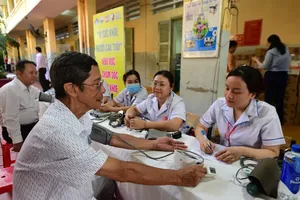
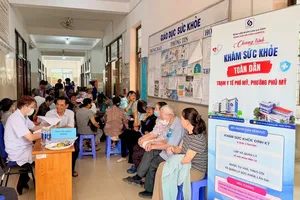
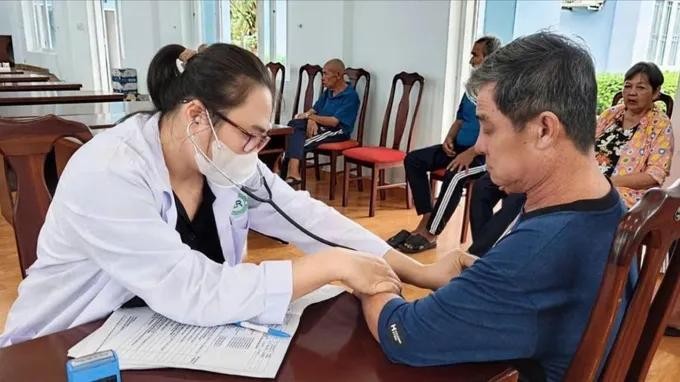
Soon afterward, instead of transporting people with disabilities to hospitals, the three hospitals established mobile medical teams that regularly bring doctors, nurses, medicines, and medical equipment to provide examinations and treatment at the center. As a result, many of the difficulties faced by both patients and the social welfare facility have gradually been resolved.
The city's healthcare model has helped address challenges medical workers faced for many years. Most importantly, people receiving social protection can now access healthcare services more conveniently and effectively, Director Pham Thi Hong Phuong said.
Humanitarian model needs wider adoption
The Ho Chi Minh City Department of Health has implemented a partnership model between hospitals under its management and 14 social welfare centers, improving healthcare services for more than 7,000 residents receiving care.
In early July, the model was expanded to four social welfare facilities operated by the Ho Chi Minh City Youth Volunteer Force. However, mobile healthcare services at these centers are facing regulatory obstacles. Vietnam Social Security has not approved reimbursement of health insurance-covered medical expenses because the examination sites are not listed in the operating licenses of the healthcare facilities.
Requiring people with disabilities and those with mental illnesses to travel to healthcare facilities to receive health insurance benefits complies with current regulations but does not reflect practical realities. The requirement may even reduce healthcare access for vulnerable people living in social welfare centers.
In practice, hospitals sending medical teams to social welfare centers does not alter the professional nature of medical services. Doctors continue to practice within their licensed scope, while medical records, diagnostic testing orders, prescriptions, and treatment monitoring remain under hospital management.
Travel and equipment transportation costs are covered by the healthcare facilities themselves and are not charged to the health insurance fund.
According to leaders of the Ho Chi Minh City Department of Health, if the issues are not resolved soon, those who will suffer the most are older adults, people with disabilities, people with mental illnesses, individuals receiving social protection, and others who are no longer able to travel independently to healthcare facilities.
On July 16, the Ho Chi Minh City People’s Committee formally sought guidance from the Ministry of Health, the Ministry of Finance, and Vietnam Social Security to address obstacles in paying health insurance costs for medical examinations and treatments at social welfare centers.
The move underscores the city’s effort to protect the legitimate rights of vulnerable groups while positioning itself as a model locality nationwide. Officials emphasized that the initiative aims to advance continuous health care services in line with the Party and State’s policies and guidelines, setting a precedent for other provinces to follow.
)