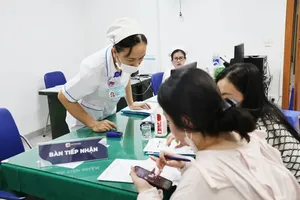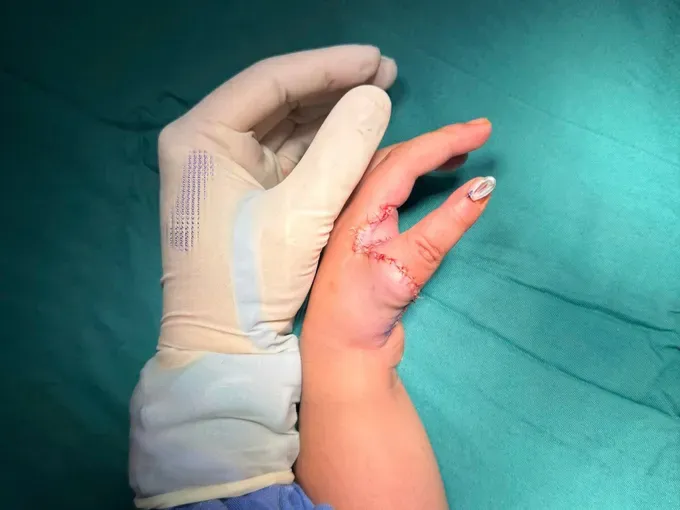
On August 3, Viet Duc Friendship Hospital announced that its surgeons had successfully performed a pollicization surgery on a five-year-old girl born with severe thumb hypoplasia in both hands, restoring hand function and offering new hope for children with the rare congenital condition.
The patient, a five-year-old girl, was admitted with congenital thumb hypoplasia affecting both hands. Although both thumbs were present anatomically, they were almost completely nonfunctional because they lacked essential structures, including bones, tendons and the musculoskeletal system required for movement.
The thumb is considered the most important finger for hand function, accounting for about 40 percent to 50 percent of the hand's ability to grasp objects and perform fine motor tasks. When the thumb does not function normally, children face significant difficulties in daily activities, affecting their everyday life, education and long-term development.
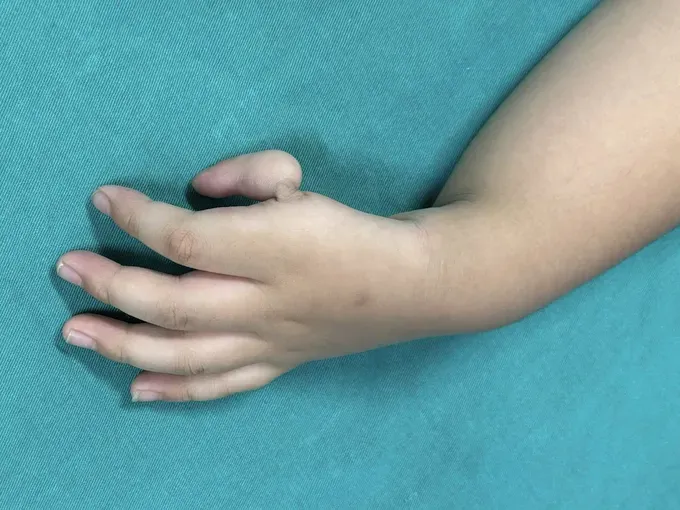
 "The deformed thumb is removed and replaced with the index finger, helping the child to grasp objects better. Photo: Viet Duc")
Given the patient's condition, doctors decided to perform pollicization operation, a surgical technique that transfers the index finger to the position of the thumb to replace the function of the underdeveloped thumb.
Dr. Dao Van Giang, Deputy Head of the Department of Maxillofacial, Plastic and Aesthetic Surgery, said pollicization is currently regarded as the gold-standard treatment for severe thumb hypoplasia, in line with international recommendations for pediatric hand surgery.
During the operation, the nonfunctional thumb was removed. The index finger, with its entire system of bones, tendons, blood vessels and nerves preserved, was reshaped and transferred to the thumb position.
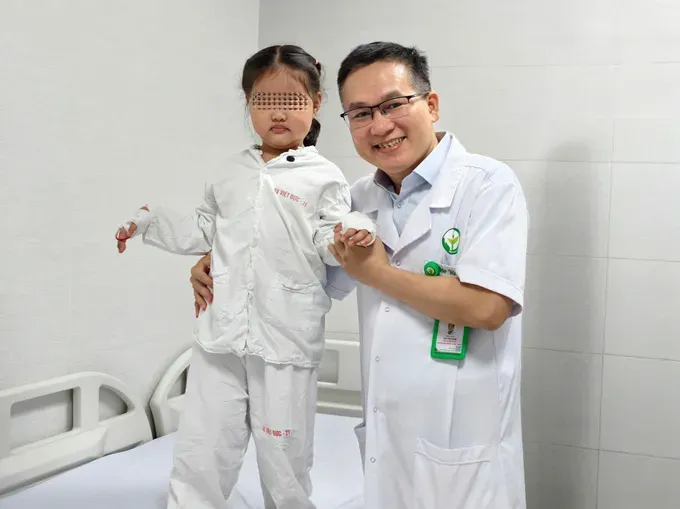
The goal was not only to improve the hand's appearance but, more importantly, to restore grasping, pinching and movement. Following the surgery, the child was able to grasp objects, perform personal daily activities independently, use chopsticks and begin practicing writing like other children of the same age.
Doctors advised parents to seek early medical evaluation at specialized healthcare facilities if they notice any congenital abnormalities of the hands or limbs in their children. For thumb hypoplasia, they emphasized that the key issue is not whether the hand has the normal number of fingers, but whether those fingers can perform their intended functions.
Timely assessment and treatment can give children the best chance of regaining optimal hand function, supporting their development and improving their ability to integrate into daily life.