On June 27, the Government issued Resolution No. 169/NQ-CP on local growth targets for 2026 and the 2026-2030 period to implement Conclusion No. 18-KL/TW of the Party Central Committee, Resolution No. 25/2026/QH16 of the National Assembly, and Resolution No. 109/NQ-CP of the Government.
To successfully achieve the goal of double-digit economic growth in 2026 and throughout the 2026-2030 period, while ensuring high-quality, sustainable and substantive economic expansion, the Government instructed chairpersons of provincial and municipal People's Committees to closely monitor growth developments in their localities, strengthen coordination, and comprehensively and effectively implement the assigned tasks and solutions across all sectors.
They were also directed to promote unity in leadership and administration, adopt innovative and breakthrough thinking, take decisive action, continuously improve implementation capacity, and successfully fulfill local growth targets for 2026 and the five-year period from 2026 to 2030.
Localities that meet or exceed their assigned growth scenarios are required to strive for even higher performance. Those recording growth below their assigned scenarios or below the national average must urgently review and update their growth plans, assess both objective and subjective causes, fully identify bottlenecks, shortcomings and constraints, and, in line with the objective of achieving double-digit economic growth in 2026 and the 2026-2030 period, identify new growth drivers and potential to formulate practical and breakthrough solutions to ensure their targets are met.
Key economic localities are expected to further strengthen their leading and spillover roles, strive to meet and exceed assigned targets, and make greater contributions to state budget revenue and overall national economic growth.
The Government also called for accelerated disbursement of public investment capital, while continuing to resolve long-delayed projects related to land and planning so they can be brought into operation as soon as possible to support growth.
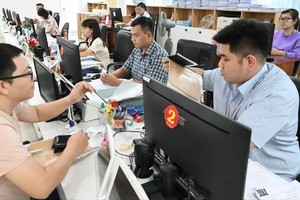
At the same time, local authorities were instructed to further cut and simplify administrative procedures, business conditions and conditional business sectors, creating more favorable conditions for people and businesses. They were also told to remove obstacles in the operation of the two-tier local government system and comprehensively address surplus, unused public assets, including land and buildings.
The Ministry of Industry and Trade was instructed to effectively implement measures to ensure adequate petroleum supplies at competitive regional prices and maintain sufficient electricity supply, particularly during peak demand and hot-weather periods, with no shortages of electricity or fuel under any circumstances.
The State Bank of Vietnam was instructed to closely monitor developments in the balance of payments, monetary and foreign exchange markets, credit, interest rates, exchange rates and outbound capital flows. It was also tasked with developing monetary policy scenarios for the full year and for each quarter, proactively adjusting policy tools to suit specific situations while maintaining appropriate, effective and substantive interest rate stability.
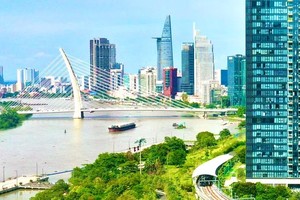
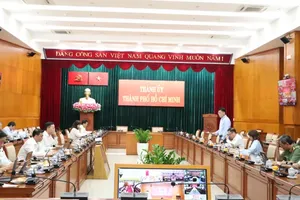
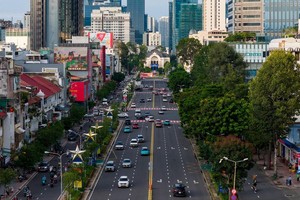
Under the resolution, Ho Chi Minh City has been assigned an average Gross Regional Domestic Product (GRDP) growth target of 10.2 percent for 2026 and 10.25 percent for the 2026-2030 period. Average GRDP per capita is targeted at US$9,800 in 2026 and US$14,400 for the 2026-2030 period.





)