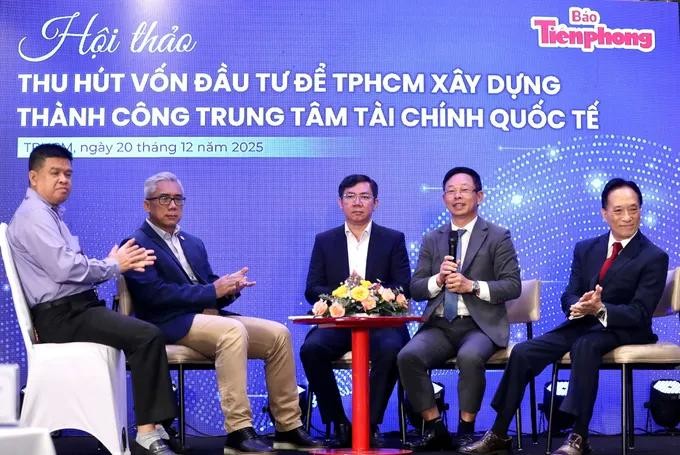
They were speaking at the seminar titled “Attracting Investment Capital for Ho Chi Minh City’s Development of an International Financial Center (IFC)” held on December 20 by Tien Phong Newspaper.
Vietnam expected to attract US$50 billion in three years
Ho Chi Minh City and the nation are preparing for the official announcement of the establishment of the Vietnam International Financial Center, along with the launch of its executive council and governing bodies in both Ho Chi Minh City and Da Nang on December 21.
Experts noted that in the context of global integration and the strong shift of international capital and value chains, developing an IFC in Ho Chi Minh City is not only a natural step in the country’s economic evolution but also a strategic aspiration to elevate Vietnam’s and the city’s positions on the global financial map.
Huynh Anh Tuan, General Director of Vikki Digital Banking Securities (VikkiBankS), stated that in the city’s IFC development strategy, the stock market is not merely a component but a core pillar.
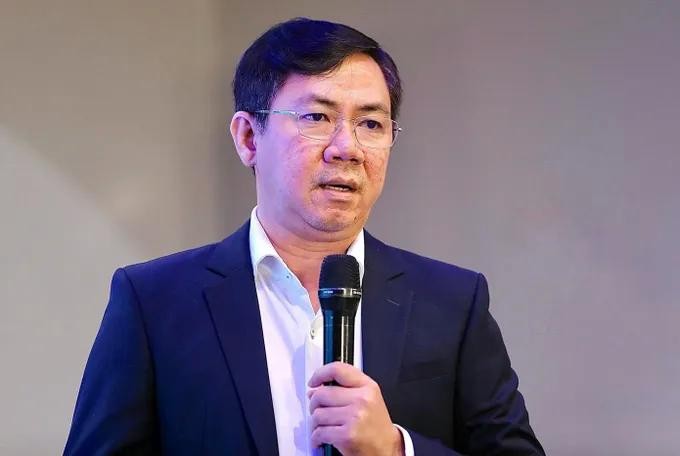
Upgrading Vietnam’s stock market from frontier to emerging status is not just about rankings; it marks a decisive step in redefining the nation’s capital market within the global financial landscape.
Currently, Vietnam’s stock market capitalization stands at approximately US$390 billion, equivalent to about 82 percent of GDP. The total outstanding balance in the market is around VND400 trillion, reflecting significant participation from institutional investors and domestic investment funds.
However, despite meeting many conditions for an upgrade to “emerging market” status, foreign investors have remained net sellers recording net sales of around VND94 trillion in 2024 and nearly US$5 billion more in the first 11 months of 2025, even as the market reached new highs. “The establishment of an IFC, combined with an upgraded stock market, will create favorable conditions for foreign capital to return”, Director Huynh Anh Tuan forecasted. Ho Chi Minh City holds a major advantage, as the Ho Chi Minh Stock Exchange( HOSE) accounts for roughly 64 percent of total market capitalization.
Once the IFC is operational, financial institutions and investment funds will need an ecosystem to deploy capital and the stock market will be a key pillar. Initial inflows could reach around US$1 billion, potentially growing to US$10 billion–20 billion by 2030. As an emerging market, Vietnam will attract higher-quality, larger, and more stable capital flows, he added.
Nguyen Tri Hieu, Director of the Institute for Global Financial and Real Estate Market Research and Development, agreed that with its strategic geographic location, a GDP of US$500 billion, and strategic partnerships with major economies, Vietnam has strong potential to develop an IFC.
However, he also pointed out several challenges such as low per capita GDP and the limited international presence of Vietnamese banks. Building IFCs, he noted, will enable Vietnam to integrate more deeply into the global economy and elevate its financial standing. “To attract major investors, the key lies in officially upgrading the stock market and improving the national credit rating,” Director Nguyen Tri Hieu emphasized.
Vietnam, he said, needs a clear IFC development strategy starting with serving the Southeast Asian market and gradually expanding globally. Prioritizing high-potential areas such as capital markets, green finance, and fintech will be essential in a three-phase road map from 2026 to 2045.
Furthermore, the establishment of intelligent infrastructure and the engagement of major financial institutions will be essential for guaranteeing the effectiveness of the IFC. He emphasized that transparency and credibility should be paramount; the success of the IFC will hinge on its capacity to foster a transparent and sustainable environment that attracts international capital and supports Vietnam's long-term financial development.
Director Nguyen Tri Hieu projected that if these bottlenecks are resolved, after the IFC is established, Vietnam could attract around US$20 billion in both direct (FDI) and portfolio investments in 2026, and approximately US$50 billion in the first three years.
Roadmap for HCMC International Financial Center development
Quach Ngoc Tuan, Deputy Director of the Ho Chi Minh City Department of Finance, stated that the road map for developing the city’s International Financial Center will be implemented in three phases.
During Phases 1 and 2, the city will utilize existing infrastructure in the central core area. Specifically, the buildings at 123 Truong Dinh Street and 8 Nguyen Hue Boulevard will serve as the headquarters for the IFC’s executive office.
In Phase 3, Ho Chi Minh City will focus its resources on developing a large-scale, modern financial center within the Thu Thiem New Urban Area.
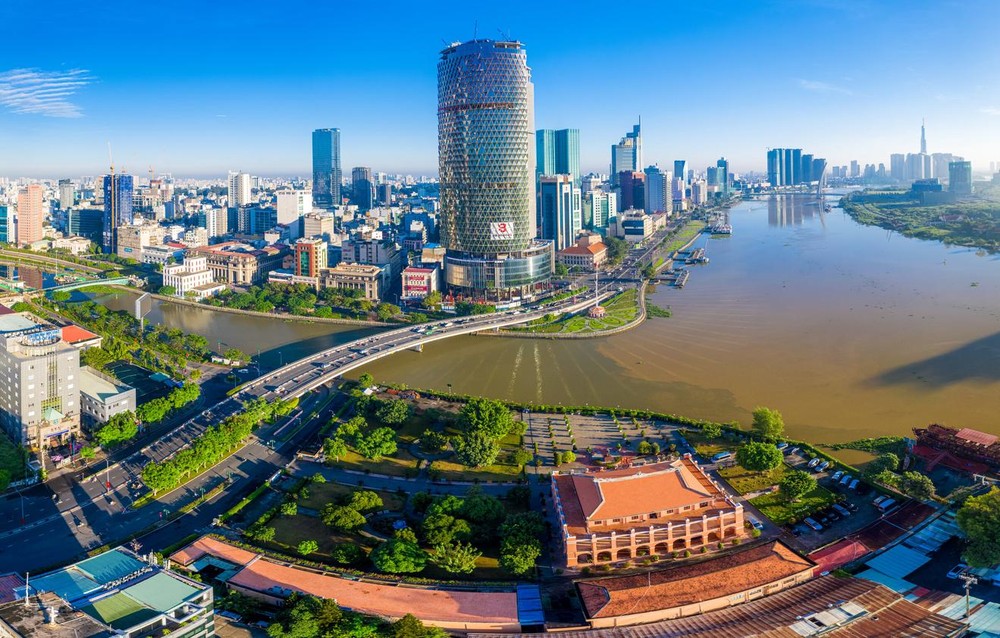
Bui Hoa An, Deputy Director of the Ho Chi Minh City Department of Construction, added that the IFC will be located across Saigon, Ben Thanh, An Khanh, and Thu Thiem wards. This location is strategically significant, as businesses and financial institutions operating within the area will benefit from government incentives related to taxation, utilities (electricity and water), and other production and business conditions.
Telecommunications infrastructure will be comprehensively developed, featuring broadband Internet and 3G, 5G coverage to ensure operational efficiency for financial activities. Electricity and water services will also be prioritized to meet the high consumption demands of the center.
The IFC’s coordination office is planned to be based at 8 Nguyen Hue Boulevard. However, as the building is currently under renovation, operations will temporarily be conducted from the sixth floor at 123 Truong Dinh Street.
The city’s central area currently hosts around 1,000 office buildings, with Bitexco Tower being the tallest. Most of these buildings already possess stable infrastructure, sufficient to support the operations of an international financial center.