Faced with distorted and provocative content cleverly masqueraded in myriad forms, refuting misinformation must inevitably go hand in hand with proactively disseminating accurate data, positive values, and architecting a culture of responsible online conduct. This is fundamentally the bedrock for strengthening defense mechanisms, thereby empowering users to accurately identify and filter information, effectively preventing them from being led astray by erroneous rhetoric.

Assoc Prof Dr Do Canh Thin, Deputy Director of the Institute for Nontraditional Security (INS) at Hanoi School of Business and Management (Vietnam National University-HN), pointed out that recent months have seen a surge in tactics exploiting debates and criticism to implant distorted information. These toxic content streams are relentlessly broadcasted in dense, highly sophisticated formats, calculatingly aiming to scramble information, sow cognitive ambiguity, and systematically subvert public trust.
Misinformation doesn’t always materialize as outright fabrication. It can cleverly link to a real event, an existing limitation, or a burning question in the public sphere, subsequently cherry-picking data that conveniently supports the disseminator’s narrative. When such content spirals into full-blown “information campaigns,” the fallout isn’t just confined to a single post or isolated argument anymore.
Unfounded interpretations can be endlessly echoed across numerous accounts, creating the illusion of multiple independent sources confirming the same thing. Consequently, a controversial incident easily morphs into a focal point, while rigorous analyses grounded in solid facts and credible sources struggle to garner proportionate attention.

Given this context, merely tackling misinformation post-publication simply isn’t enough. Cyberspace desperately needs an influx of accurate, beneficial content that helps the public fully grasp the true nature of events, providing them with a solid basis to evaluate issues. In other words, alongside identifying and refuting distorted information, it’s imperative to proactively clean cyberspace using positive, high-quality content boasting broad accessibility.
Mr. Do Anh Tu from the Hanoi Psycho-Pedagogical Association noted the current digital landscape’s complexities. “The sheer explosion of online information today has spawned myriad anonymous accounts dedicated to commenting and inciting,” he assessed. “They frequently leverage mob mentality to suppress constructive, honest opinions. In the current context, cultural soldiers on the communication front must be better trained to devise robust solutions for combating and preventing negative virtual phenomena and accounts on social media.”
This perspective underscores the pressing need to elevate the caliber of communication professionals while simultaneously fostering an environment where responsible voices can resonate. The press inherently plays a pivotal role in this endeavor. Armed with professional verification skills and a profound sense of social responsibility, journalists can deliver credible information, demystify complex issues, and swiftly clarify misleading narratives.
However, within a multi-platform media landscape, content quality must march in lockstep with accessibility. Storytelling techniques, expressive language, and delivery formats must be appropriately revamped, ultimately facilitating a smoother flow of accurate information to the public.
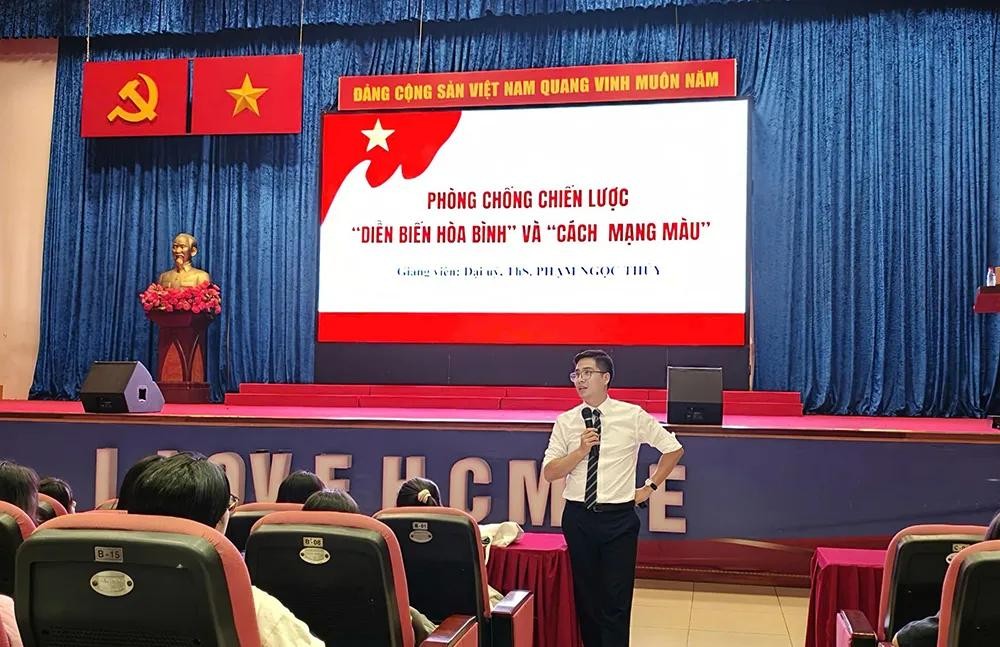
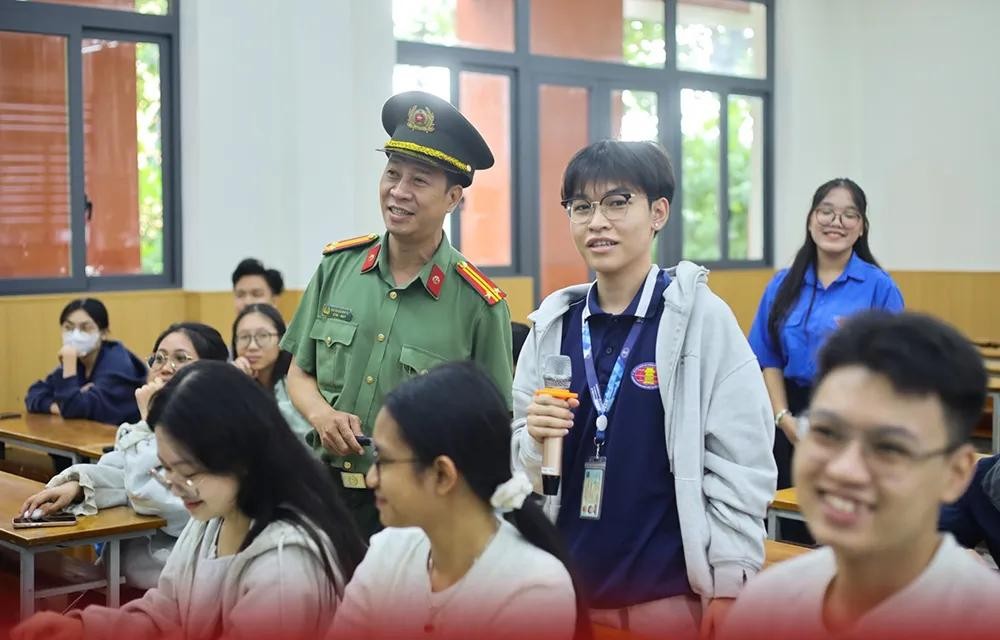

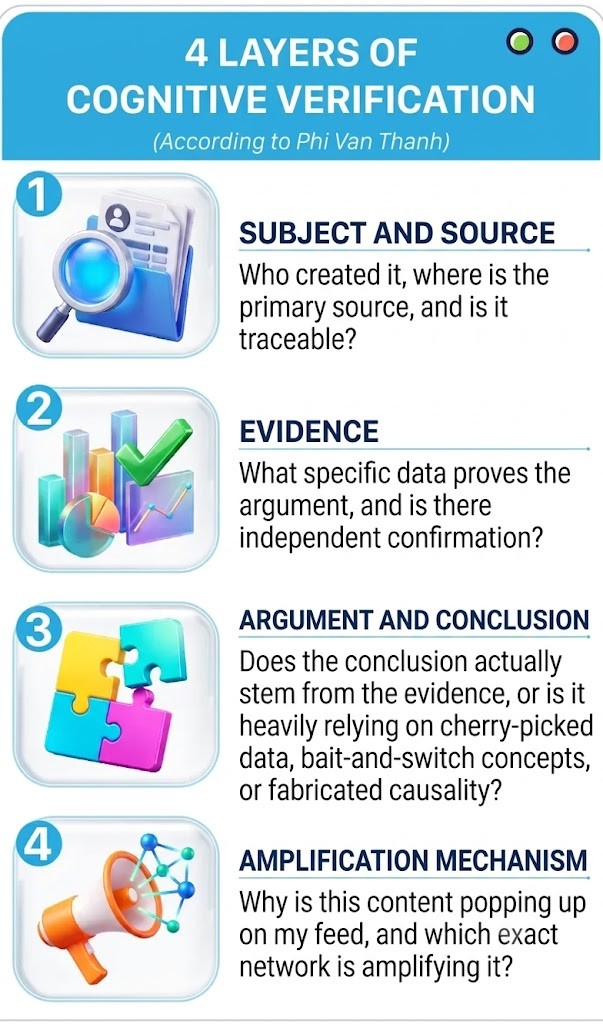
According to Mr. Phi Van Thanh, a cybersecurity expert from the Faculty of Computer Science at Delhi University in India, digital resistance needs to be approached as cognitive resilience, essentially the capacity to maintain independent judgment when bombarded with misinformation and emotional manipulation.
“It’s absolutely crucial to instill a four-layer cognitive verification process in young people,” he advised. “They need to ask: Who created this, where is the primary source, and is it traceable? What specific data proves the argument, and is there independent confirmation? Does the conclusion actually stem from the evidence, or is it heavily relying on cherry-picked data, bait-and-switch concepts, or fabricated causality? Finally, why is this content popping up on my feed, and which exact network is amplifying it?”
The aforementioned verification principles are undeniably vital for the general public as well. Before hitting the share button, users must scrutinize the source, the evidence, and the broader context; when forming an opinion, distinguishing facts from personal views is paramount. This crucial habit significantly mitigates the inadvertent spread of misinformation while concurrently laying the groundwork for far more substantive discourse.
Dr Pham Thi Thuy from the Academy of Politics Region II argued that the current anxiety isn’t merely about online squabbles, but more profoundly about erroneous viewpoints silently creeping into human cognition.
Lacking strong verification skills and a solid cognitive foundation, audiences can gradually be sucked into extreme, divisive ideologies. When that happens, they run the terrible risk of transforming from passive information consumers into active people disseminating misinformation, utterly oblivious to the full scope of the consequences. One highly effective countermeasure involves building a “psychological immune system” within cyberspace.
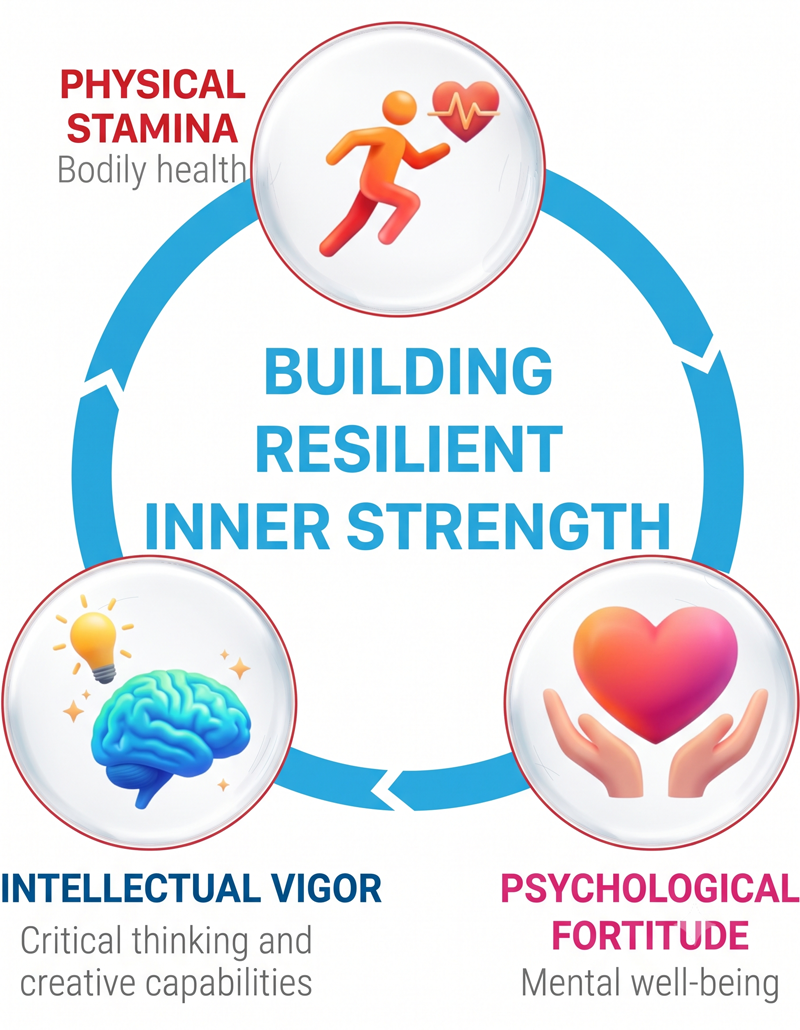
The core solution hinges on forging a resilient inner strength comprising three pillars: physical stamina (bodily health), intellectual vigor (critical thinking and creative capabilities), and psychological fortitude (mental well-being). Once this inner strength is sufficiently robust, individuals become exceedingly difficult for public opinion to manipulate or mislead.
From an educational standpoint, Assoc Prof Dr Pham Thi Kien, Deputy Head of the Marxism-Leninism Module at the Institute of Political and Social Sciences (HCMC University of Economics), suggested that glaring gaps in ideological and political education can trigger a severe deficit in value systems, political bravery, and civic consciousness. This invariably leaves many people, particularly the youth, highly susceptible to distorted, extreme information.
Therefore, political theory and revolutionary ideals education must continuously be prioritized and revamped. Directive No. 10-CT/TW, issued on July 20, 2026 by the Secretariat, explicitly pinpointed educating political theory, revolutionary ideals, morality, lifestyles, and civic consciousness as a crucial, regular mandate within the national education system, demanding tailored implementation suited to each specific educational model, level, and target audience.
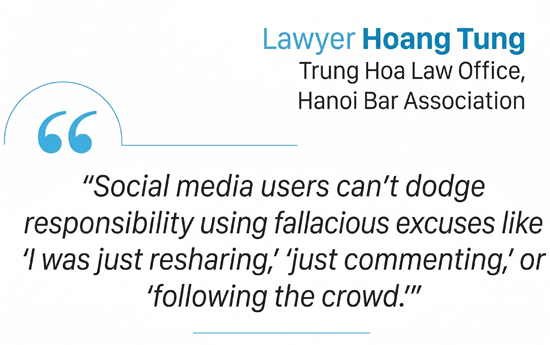
A healthy information culture also strictly requires every individual to acutely recognize their legal responsibilities when speaking, commenting, and sharing. Lawyer Hoang Tung from Trung Hoa Law Office under Hanoi Bar Association provided a stark analysis.
“In reality, the legal boundary separating freedom of speech and social criticism from outright cyber violations is strictly determined by the motive, the information’s authenticity, and the ensuing legal consequences for public or personal interests,” he detailed.
“The right to free speech is constitutionally enshrined, explicitly allowing citizens to contribute constructive feedback rooted in objective truth and social morality. However, this boundary is blatantly crossed when individuals fabricate falsehoods, commit defamation, or weaponize this right to distort policies, incite violence, and actively sabotage the State. When national security or the legitimate rights of other entities are compromised, these behaviors will be severely punished and simply cannot be equated with free speech. Social media users absolutely cannot dodge responsibility using fallacious excuses like ‘I was just resharing,’ ‘just commenting,’ or ‘following the crowd.’ The law unequivocally penalizes any act of providing or spreading false information, utterly regardless of whether you’re the original source or merely resharing,” he said.
“Cleaning” cyberspace is an ongoing, relentless process that seamlessly combines generating quality content, revamping delivery methods, elevating information reception capabilities, architecting sharing responsibilities, and strictly punishing legal violations.
When these elements are synchronously deployed, the cyber environment will inevitably become healthier, substantially bolstering the capacity to identify and filter information while severely curtailing the impact of distorted, subversive tactics, regardless of whatever sophisticated disguises or sophistry they employ.

Each information share comes with responsibility
Recently, authorities have cracked down on numerous cases involving sharing or commenting on false information harboring slanderous content or insulting the honor and prestige of organizations and individuals. Notably, a significant portion of these violators were students or fairly young individuals.
Reality harshly dictates that nobody can invoke excuses like “just sharing,” “just commenting,” or “following the crowd” to shirk accountability. Legal liability is strictly evaluated based on the specific content and the exact actions each individual executes in cyberspace. Every single share must unequivocally be accompanied by a profound sense of responsibility.
Social media users rightfully possess the privilege to criticize and voice their opinions. However, when that expression is rooted in fabricated information, harbors insulting content, or actively incites illegal acts, the perpetrator may absolutely face legal repercussions as mandated.
Freedom of speech is perpetually tethered to accountability for the content one utters and shares.
Content: staff writers
Design: Minh Thu
Translation: Thanh Tam