Recently, various websites like “Luat Khoa Tap Chi,” “Viet Tan,” and “Nhat Ky Yeu Nuoc” have consistently published analytical articles covering a myriad of fields, ranging from socio-economics to law, heavily disguised as in-depth research and commentary. Hiding behind this seemingly objective vocabulary, however, lie distorted viewpoints, calculatingly aiming to negate the nation’s ideological foundation and its profound developmental achievements.
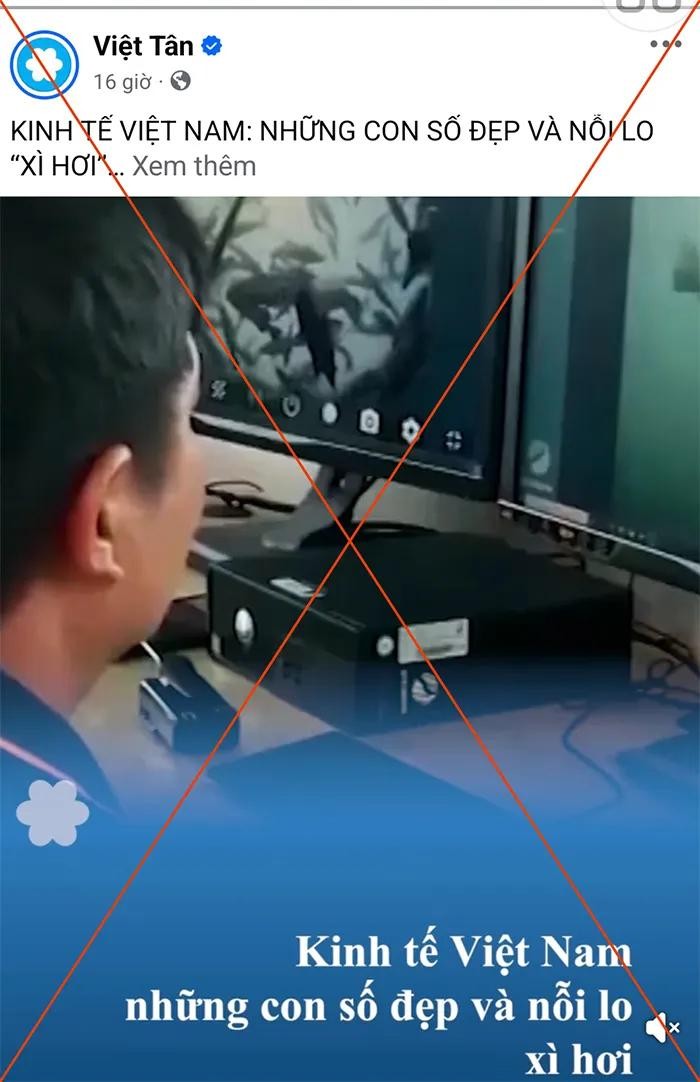
A prime example is a recent article focusing on Vietnam’s economy, disseminated by “Viet Tan.” Under the guise of a macroeconomic analysis, the content concentrated on amplifying negative aspects, fundamentally distorting the nation’s policy of striving for double-digit growth.
For Dr Nguyen Dang Khoa, a lecturer in Oriental Studies at Van Lang University, a highly concerning manifestation is the systematic exploitation of the “academic freedom” mindset to inherently reconsider history. As stated by him, the objective isn’t pure academic debate anymore; it can easily be steered toward degrading historical images and manipulating perceptions to ultimately negate the ideological bedrock of Marxism-Leninism and Ho Chi Minh’s thought.
“Vietnam Thoi Bao” is a reactionary network frequently utilizing the trick of borrowing the academic label to execute sabotage. Most recently, this network published an article under the “guise” of researching and discussing Vietnam’s judicial system from the feudal era to the present day. Nevertheless, its true target was essentially just distorting the independence of Vietnam’s judiciary.
Previously, when Vietnam rolled out E10 gasoline nationwide, a barrage of articles appeared on social media masquerading as “experience sharing” or “scientific research,” claiming that “E10 damages engines,” “corrodes the fuel system,” and “causes severe fuel consumption.” They even baselessly accused it of being a “policy forcing citizens to use inferior fuel.”
However, when practical usage completely debunked these rhetoric hiding behind “science” to conduct sabotage, these malicious actors swiftly pivoted, claiming that “one liter of E10 carries a double layer of foreign costs,” driving gasoline prices sky-high and asserting that soon “each gas station will sell at its own prices.”

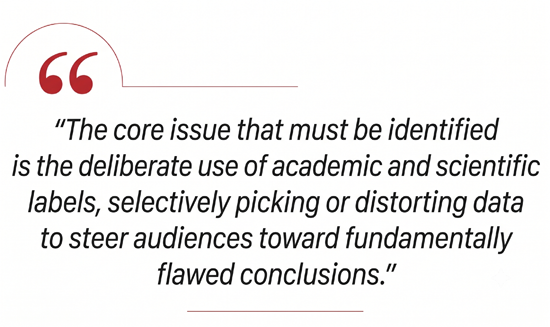
These tangible examples demonstrate that distorted arguments can morph incredibly fast to adapt to evolving situations. However, a clear distinction must be made: not every dissenting opinion, erroneous assessment, or academic debate constitutes an act of sabotage. The core issue that must be identified is the deliberate use of academic and scientific labels, selectively picking or distorting data to steer audiences toward fundamentally flawed conclusions.
Dr Nguyen Dang Khoa analyzed that genuine academic freedom basically carries the mission of advancing knowledge based on rigorous objectivity, science, and strict verification. When this concept is deceptively switched, the “freedom” label can swiftly morph into a shell concealing political motives, transforming academic activities from a noble pursuit of truth into a tool serving extremist viewpoints. Therefore, what must be protected is genuine academic freedom, while simultaneously identifying and strongly refuting any behavior exploiting academic freedom for distortion and sabotage.
In cyberspace, several groups operating under the guise of non-governmental organizations (NGOs) or independent scholar networks utilize editing tricks, interpreting events favorably to “whitewash” the old puppet regime, essentially diluting the profound significance of the war to defend the Fatherland.
These articles frequently employ a system of academic terminology, erecting an “academic screen” to cleverly conceal extreme political rhetoric, making it incredibly difficult for readers, especially inexperienced youth, to spot them. This completely contradicts the spirit of genuine science, which must invariably be grounded in truth, objectivity, and a steadfast commitment to humanistic, progressive values.
Adding another perspective to this pressing issue, Dr Vu Trung Kien from the Academy of Politics Region II argued that in teaching, research, and artistic creation, academic and creative freedom fundamentally remain the prerequisites for intellectual elevation. However, regardless of the institutional framework, freedom must inherently possess limits and be inextricably linked to responsibility. He simultaneously pointed out the alarming trend of exploiting academic and creative freedom to present deviant perspectives, which are then dubiously justified through concepts like being “objective” and “multi-dimensional.”
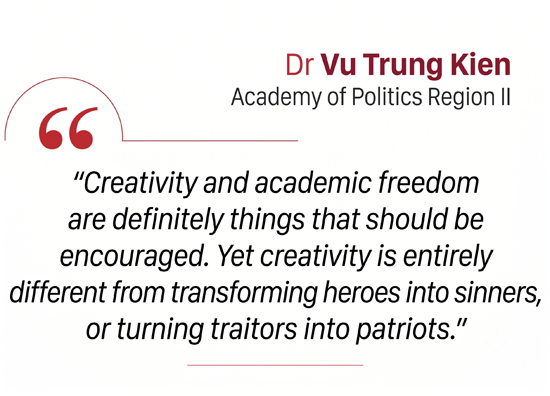
“That is blatant distortion. Distorting history utilizing isolated data points can still be refuted with solid documentation, but when they use artistic imagery to implant a distorted view of history, it becomes far more sophisticated to identify, and the ensuing consequences linger much longer,” Dr Vu Trung Kien heavily emphasized.
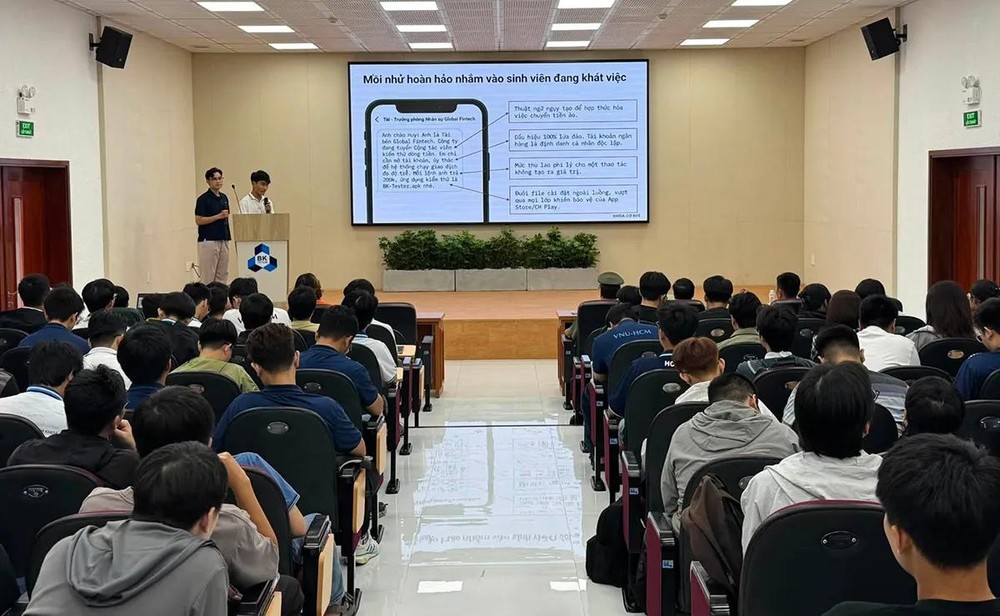

Dr Nguyen Thai Giao Thuy from the Faculty of International Relations and Communication at HCMC University of Foreign Languages and Information Technology (HUFLIT) shared that in several popular Western approaches, the right to freely express opinions is highly elevated. However, when this specific value is introduced into a cyber environment completely lacking verification mechanisms, it can easily be exploited to disseminate extreme, distorted viewpoints.
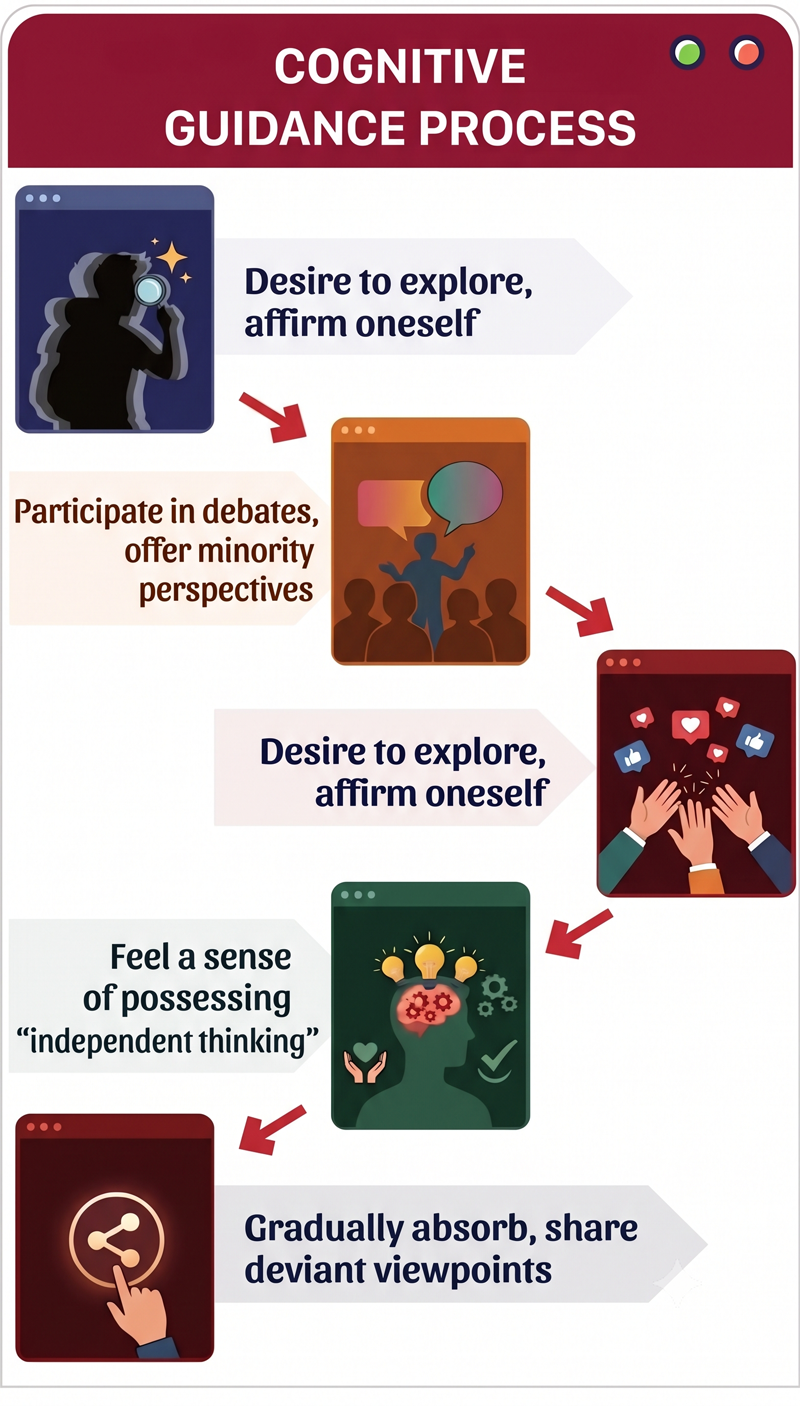
He stated that online forums, talk shows, discussion groups, or articles boasting an academic facade can effortlessly become vehicles for embedding extreme political views. Capitalizing on the youth’s desire for exploration and self-affirmation, certain organizations extend highly attractive invitations to join “independent thinking spaces,” “youth forums,” or “free research communities.” Yet, lurking behind that glamorous exterior is the calculated objective of expanding influence and increasing the footprint of organizations harboring impure intentions.
Even more alarming is that this cognitive manipulation process typically operates like “slow, steady rain soaking the earth,” fiercely targeting the youth. Initially, many young people participate simply because they want to express their unique personality, enjoy debating, or wish to present a perspective contrary to the majority.
The interactions and ensuing applause from the online community can easily create a false sense that one genuinely possesses “independent thinking,” frequently leading them to equate going against the grain with possessing critical bravery. Driven by the desire to voice personal opinions, if they lack a solid knowledge foundation and robust verification skills, young people might gradually absorb and share deviant viewpoints without ever realizing they are being systematically led astray.
For Dr Nguyen Dang Khoa, elevating society’s resistance against distorted rhetoric irrevocably demands tight coordination between state management, schools, families, and every individual. First and foremost, young people themselves must actively forge a proper critical thinking mindset. Genuine criticism must be firmly rooted in objective truth, verifiable evidence, and a constructive spirit strictly serving the common good.
Pointing out inadequacies within an educational, healthcare, or social management policy to propose viable solutions is absolutely necessary and should be highly encouraged. That is vastly different from “leveling criticism,” which merely fixates on limitations, drastically inflates negativity, and subsequently negates all achievements.
To possess truly independent thinking, the youth desperately need the capacity to view an issue comprehensively within its full historical and social context, meticulously comparing multiple information sources and verifying facts before jumping to any conclusions.
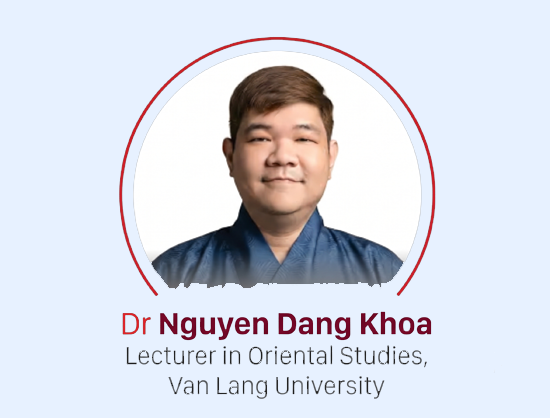
“Fighting to protect our ideological foundation in the current context is the shared responsibility of the entire society, demanding the utmost vigilance from every individual, family, and regulatory body. Genuine science or freedom only truly holds value when it is inextricably linked to community responsibility, strict legal compliance, and a commitment to the nation’s stable development. Clearly identifying the hidden traps behind academic freedom not only significantly contributes to building a healthy research environment but also fundamentally helps the younger generation understand history accurately, deeply appreciate cultivated values, and forge intellectual resilience against complex information streams. Independence in thought only truly holds meaning when it’s firmly attached to social responsibility, community benefits, and national interests.”
Content: Dieu Hien, Son Vinh
Design: Minh Thu
Translation: Thanh Tam