Booking data from Agoda for the first half of 2026 ranked Vietnam third in Asia for returning international travelers, behind Japan and Thailand. Da Nang, Ho Chi Minh City, Nha Trang, Hanoi, and Phu Quoc were among the domestic destinations recording the highest rates of repeat visits.

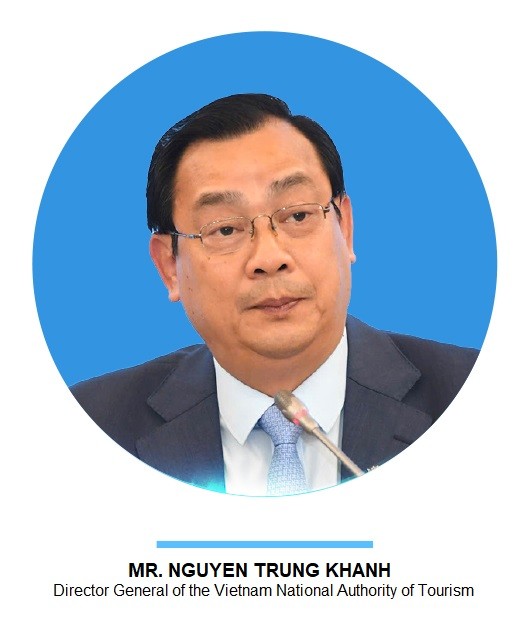
Mr. Nguyen Trung Khanh, Director General of the Vietnam National Authority of Tourism, said the figures were an encouraging sign that Vietnam was not only attracting first-time visitors but also giving travelers reasons to return.
However, he said repeat-visitor rates reflected only part of a destination's appeal. More importantly, each return visit should offer travelers new experiences, encourage them to stay longer and generate greater economic value.
According to Mr. Nguyen Trung Khanh, that approach is central to Vietnam's broader tourism development strategy.
He said Resolution No.26-NQ/TW sets out a shift from growth driven primarily by visitor numbers toward a tourism model focused on quality, smart management, green development and innovation. Under that approach, culture serves as a foundation, while local identity and the quality of the visitor experience are key competitive advantages.
By 2030, Vietnam aims to welcome 45 million to 50 million international visitors and serve 160 million domestic travelers, generating total tourism revenue of US$80 billion to US$90 billion, Mr. Nguyen Trung Khanh said. The strategy also prioritizes markets whose visitors tend to spend more and stay longer.
For that reason, he said tourism growth should no longer be measured solely by the number of arrivals, but increasingly by the economic value generated by each visitor.
From more visitors to more valuable experiences
Mr. Nguyen Trung Khanh said Vietnam should capitalize more effectively on its cultural heritage, landscapes, cuisine and festivals, while making the quality of the visitor experience a stronger source of competitiveness.
He identified high-value tourism products as an important area for development, including MICE tourism — travel connected with meetings, incentives, conferences and exhibitions — as well as wellness tourism, island and coastal resorts, sports tourism and products linked to the cultural industries.
Another priority, he said, is to broaden opportunities for visitors to spend beyond accommodation and dining.
Shopping tourism, the night-time economy, riverfront and coastal experiences, and integrated tourism, entertainment, cultural and sporting complexes all offer significant room for further development, according to Mr. Nguyen Trung Khanh.
He noted that visitor spending in Vietnam remains concentrated largely on accommodation and food, while entertainment, leisure and experiential activities still have considerable untapped potential. Developing these areas could help the tourism sector generate greater value without relying solely on higher visitor numbers.
Mr. Nguyen Trung Khanh also stressed the need to continually refresh established destinations so that returning travelers do not simply repeat the same itinerary.
Vietnam's extensive network of heritage sites, natural attractions, distinctive cultures and thousands of festivals provides ample scope for destinations to develop new products and experiences, he said.
Community-based tourism linked to traditional craft villages, heritage, and local culture should also be expanded, while stronger connections are needed across the tourism supply chain, from tour operators and transport providers to accommodation, services and locally made products.
According to Mr. Nguyen Trung Khanh, better integration across these services could encourage travelers to extend their trips, experience more of a destination and spend more during their stay.
He added that the tourism sector should also consider appropriate policies to encourage international visitors to remain in Vietnam for longer periods, including controlled pilot mechanisms for remote workers and other long-stay traveler groups.
Data-driven tourism promotion
Mr. Nguyen Trung Khanh said another major priority is to move away from broad-based tourism promotion toward more targeted marketing driven by data and the characteristics of individual source markets.
The national tourism database, he said, is expected to gradually incorporate information on travelers' needs, service choices, spending levels, length of stay and interests.
Such data would allow tourism authorities to tailor content, languages, communication formats and distribution channels more closely to specific visitor groups.
He also highlighted plans to develop a multilingual national tourism content repository containing official destination information, photographs and videos.
Big data and artificial intelligence could be used to monitor travel trends, analyze visitor feedback and assess the effectiveness of individual promotional campaigns, allowing the industry to respond more quickly as consumer preferences change, he said.
The ultimate objective, according to Mr. Nguyen Trung Khanh, is to identify the right markets and visitor segments and reach them with more relevant products and promotional messages.
He also pointed to Hanoi, Ho Chi Minh City and Da Nang as three major tourism growth poles that could play a stronger role in driving development across their surrounding regions.
The three cities already serve as major gateways for receiving and distributing visitors, but Mr. Nguyen Trung Khanh said their regional leadership could be strengthened through better connections in transport, tourism products and services, particularly multimodal links between international gateways and key tourism areas.
At the same time, he said individual destinations should define their own competitive strengths and avoid developing overly similar products.
Stronger links between the three major tourism centers and neighboring localities would make it easier for visitors to extend their itineraries, while enabling surrounding destinations to participate more deeply in the tourism value chain, Mr. Nguyen Trung Khanh said.
Double-digit growth targets
The Ministry of Culture, Sports, and Tourism has also adopted a tourism development scenario tied to a double-digit growth target.
Under the plan, Vietnam is aiming for 25 million to 27 million international visitors in 2026 and 150 million to 153 million domestic travelers, with total tourism revenue projected at VND1.1 quadrillion to VND1.2 quadrillion.
Eleven key localities have been assigned international visitor growth targets. Ho Chi Minh City has the largest target, at 11.5 million international arrivals, up 33.7 percent, while Hanoi is targeting 10 million, an increase of 27.8 percent. Da Nang has been assigned a target of 9 million international visitors.

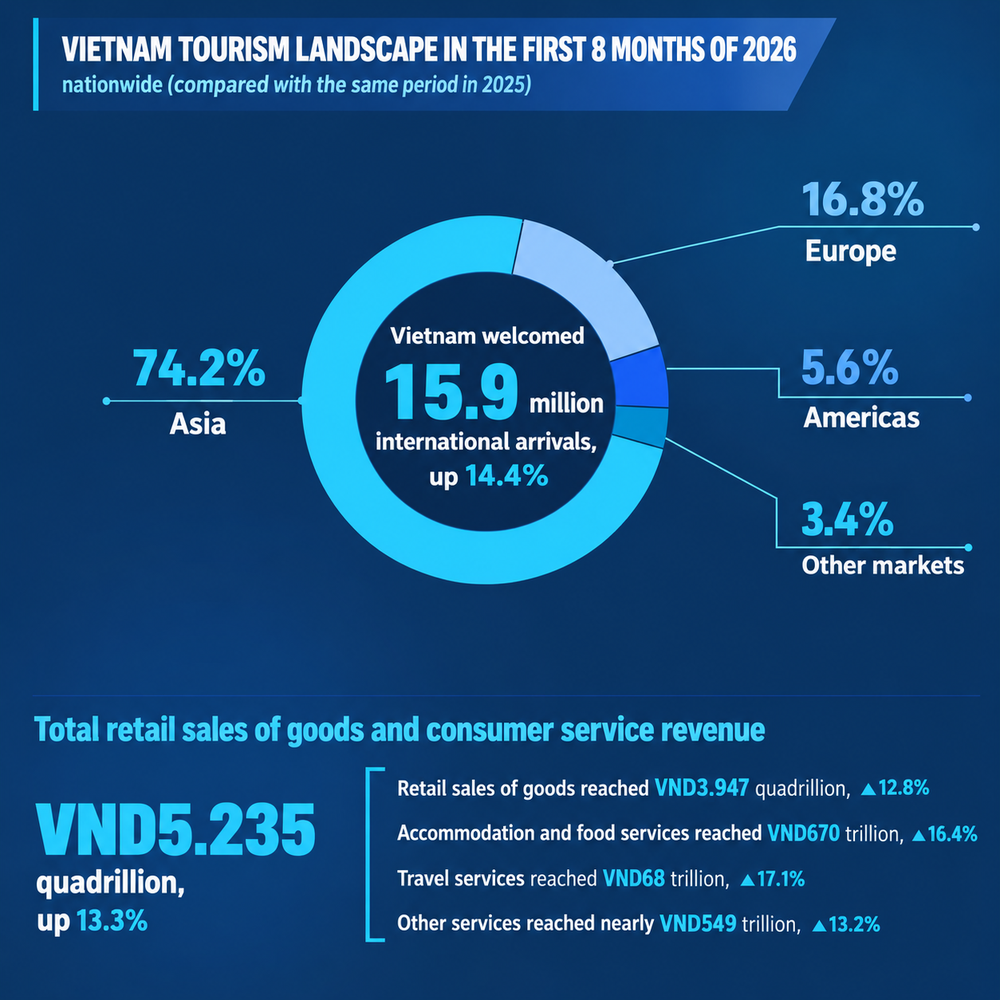
In the first eight months of 2026, Ho Chi Minh City received nearly 8 million international visitors and more than 35 million domestic travelers, generating close to VND260 trillion in tourism revenue. It is aiming for VND330 trillion for the full year. With visitor volumes already large, the next phase of growth will depend increasingly on extending journeys, diversifying experiences, and creating more opportunities for travelers to spend.
Cui Dan, a MICE traveler from Singapore who recently attended meetings in Ho Chi Minh City, said she wanted to see an arts performance, buy high-quality "Made in Vietnam" gifts, or find relaxation services in the evening.
But information about available services was fragmented, and entertainment choices after 8 p.m. remained limited, she said.
"After 10 p.m., it is very difficult to find an experience attractive enough for us to keep exploring and spending," she said.
Her experience points to a wider weakness: the chain of activities designed to sustain visitor spending is not yet seamless.
Ho Chi Minh City has numerous major shopping centers and international brands, but it still lacks a clearly identifiable shopping portfolio that reflects the city's own character. Visitors can struggle to find a concentrated destination offering premium Vietnamese fashion, cosmetics, handicrafts, gifts, and food products.
VAT refund procedures for international visitors are also not yet sufficiently convenient, industry representatives say, reducing some of the incentive for tourists to spend more on retail purchases.
The gap becomes more evident at night.
Ho Chi Minh City's evening economy remains concentrated largely around food, pedestrian streets, and a relatively limited range of familiar activities.
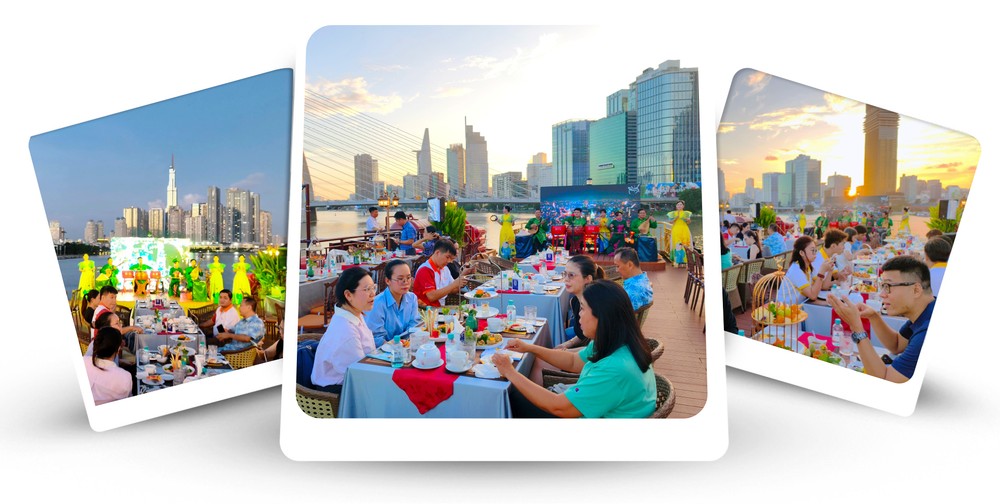
Although the city is lively after dark, revenue-generating products such as late-night museums, performing arts venues, river tours, creative cultural spaces, and specialized entertainment programs remain limited.
The lack of integration is also evident in higher-spending tourism segments.
In medical tourism, patients may still have to arrange healthcare, accommodation, transport, interpretation, wellness services, and sightseeing separately rather than purchase them as part of a coordinated package.
Cruise tourism faces a similar challenge. If port infrastructure and shore-excursion programs are not designed around the limited amount of time passengers spend in the city, opportunities to capture additional spending can easily be lost.
Mr. Tran Minh Hoang, Sales Director of Chao Show in Ho Chi Minh City, said the city needed to respond more effectively to high-spending visitors.
Tourism, he argued, should be treated as part of a broader ecosystem connected with the cultural industries, creative industries, and the night-time economy.

Ms. Nguyen Cam Tu, Director of the Ho Chi Minh City Tourism Promotion Center, said the city was reviewing and reorganizing its tourism spaces, including plans to improve infrastructure serving large cruise ships.
Night-time entertainment products are also being developed with the aim of extending visitor stays and stimulating spending.
For the MICE market, travel companies have proposed itineraries combining business commitments with sightseeing, shopping, dining and cultural activities.
Ms. Le Hong Thuy Tien, Chief Executive Officer of IPPG, has called for the development of duty-free luxury shopping centers and faster VAT refund procedures.
Medical tourism is another area where businesses see room for specialization. Stronger coordination between the city's health, tourism, and industry and trade authorities could support common standards and allow companies to package medical treatment with accommodation, transfers, recovery services, and sightseeing.
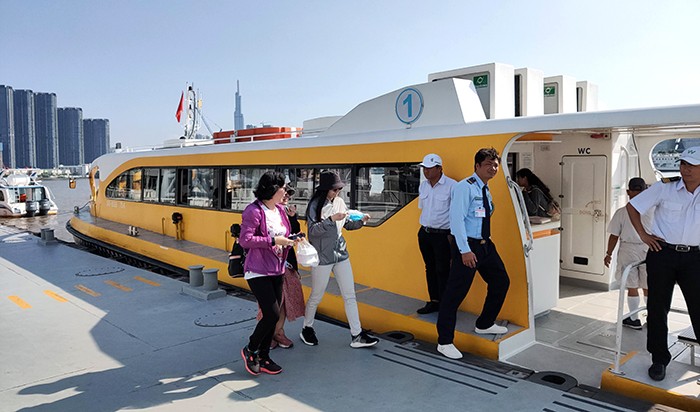
Major Ho Chi Minh City travel companies, including Saigontourist, Vietravel, and Vietluxtour, are already expanding experiential products for international travelers.
Offerings combine arts, cuisine, wellness treatments, heritage visits, and shopping for Vietnamese products. Saigon River journeys, tunnel tours, and double-decker buses have broadened the city's tourism mix, while helicopters, golf, and yacht experiences target wealthier visitors seeking privacy and exclusivity.
Ms. Tran Thi Bao Thu, Marketing and Communications Director at Vietluxtour, said convincing visitors to spend more requires products with genuine value rather than simply more things to buy.
The company is expanding themed itineraries built around the city's culture, history and urban life.
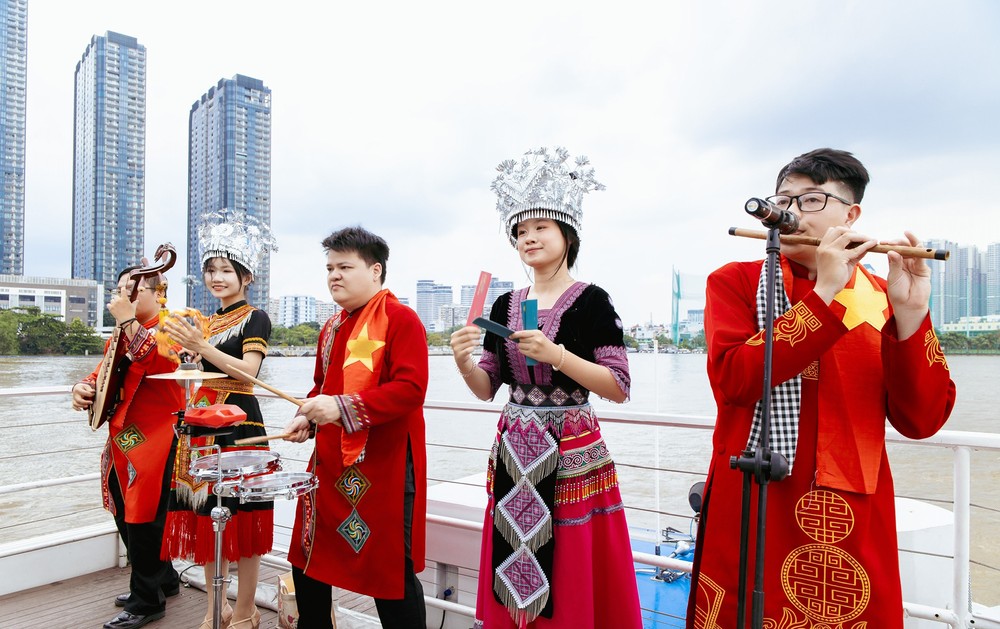
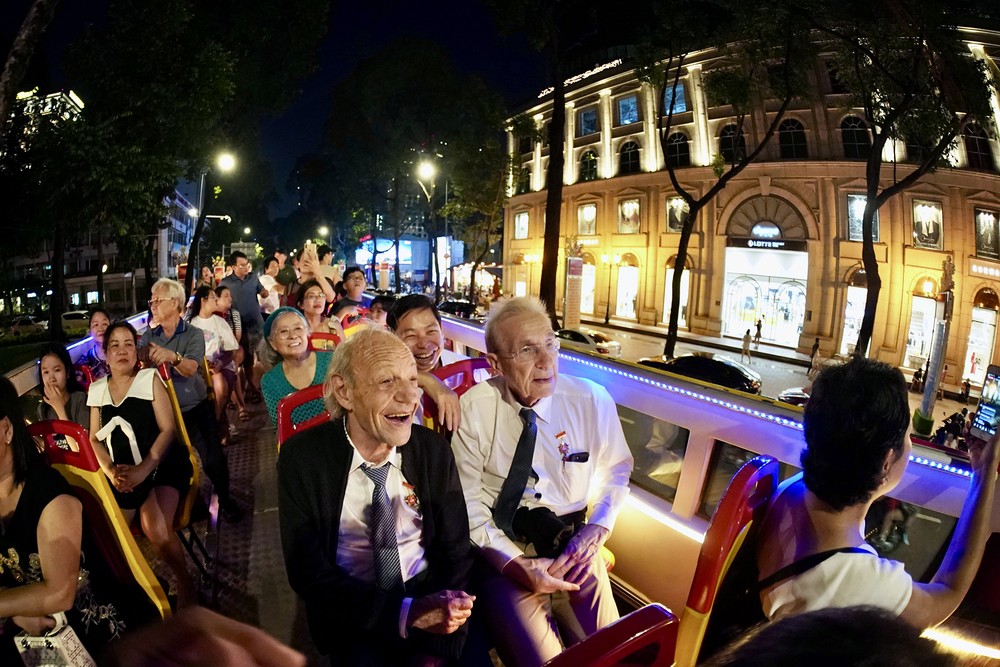
Its "Ho Chi Minh City Tells Stories” Group includes cultural and historical journeys such as tours linked to the former Saigon commandos and an itinerary combining the city's past and present with metro experiences.
Another product group focuses on "Ho Chi Minh City after 6 p.m.," extending the evening journey through food, arts, and wellness. A third group, built around a "green and flexible" city, incorporates Can Gio tourism, short city breaks, and MICE travel, with programs customizable by language, transport, and cuisine for different markets.
The approach reflects a broader change in thinking: from selling an individual tour to designing an entire visitor journey.
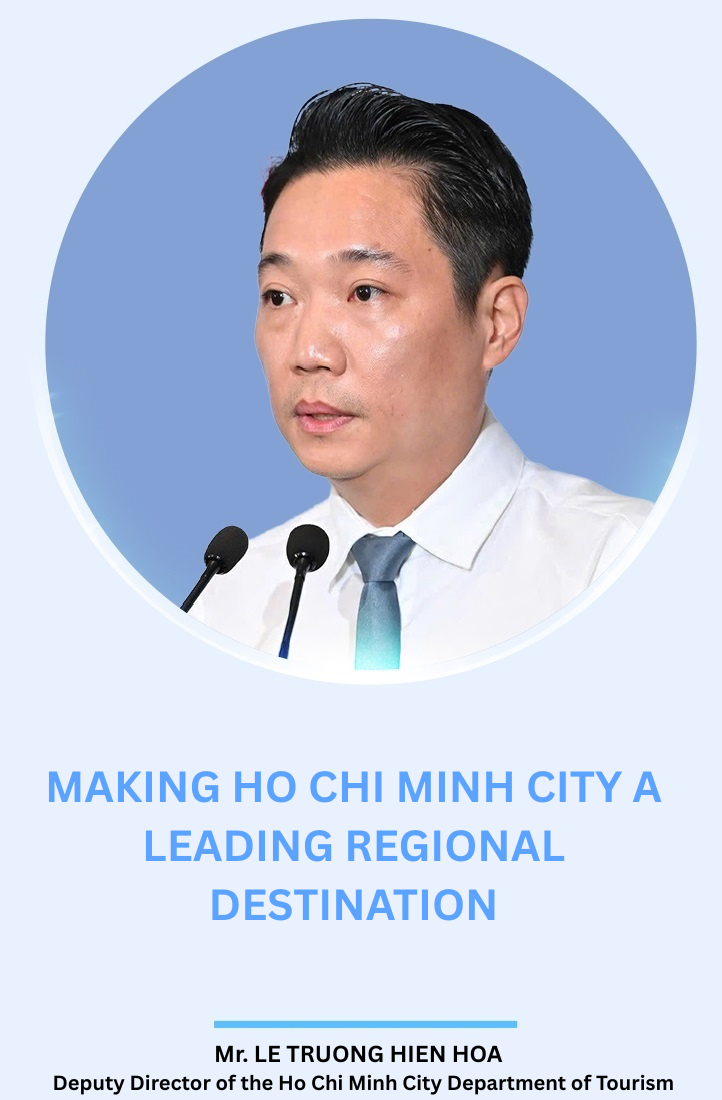
Mr. Le Truong Hien Hoa, Deputy Director of the Ho Chi Minh City Department of Tourism, said the city would continue working with businesses in the final months of 2026 to take part in major international tourism fairs in Singapore, the United States, and the United Kingdom.
Promotion will focus particularly on Northeast Asia and Europe as the city prepares to attract visitors for 2027.
The city is also seeking to raise average spending per tourist by building a stronger ecosystem of shopping, entertainment, and premium experiences.
Plans include studying duty-free shopping models, simplifying VAT refunds, and improving services at shopping centers and outlets catering to international visitors.
At the same time, Ho Chi Minh City is expanding its night-time economy and developing major arts and entertainment programs alongside specialized tourism products such as Saigon River cruises, wellness tourism, Halal cuisine, MICE, and local cultural experiences.
The longer-term ambition is to create a tourism value chain capable of keeping visitors in the city for longer, encouraging higher spending, and positioning Ho Chi Minh City as one of the region's leading destinations for tourism, shopping and entertainment.
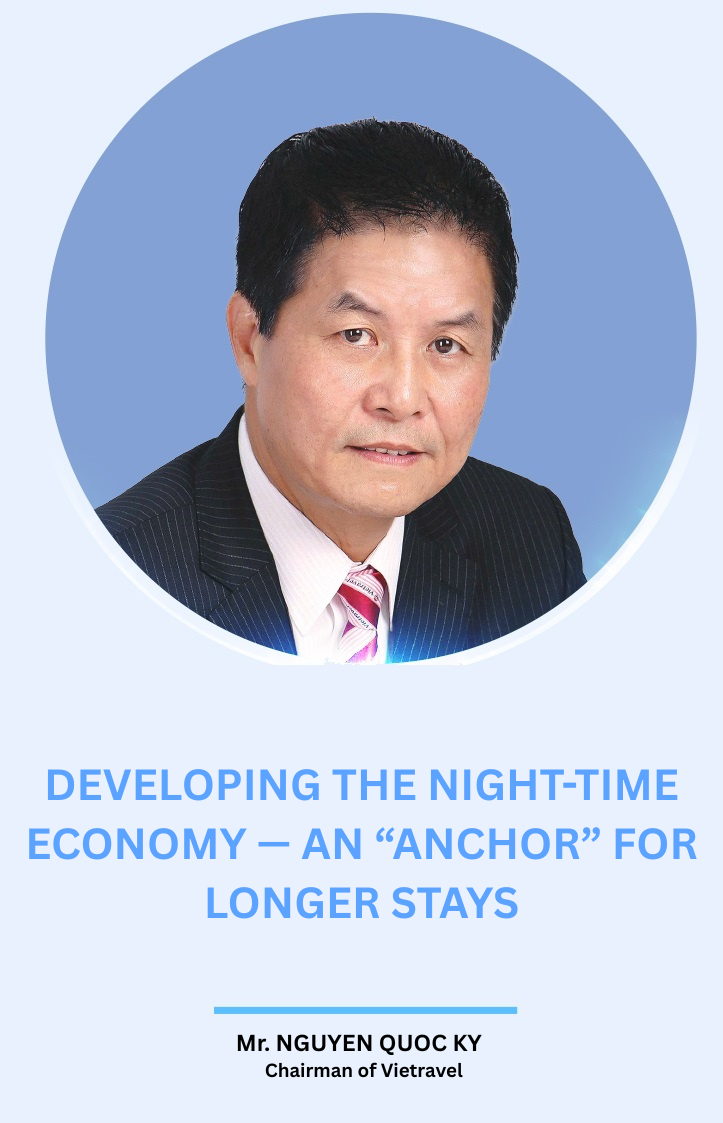
Mr. Nguyen Quoc Ky, Chairman of Vietravel, sees the night-time economy as a potential "anchor" for visitors.
Tourism activities currently tend to be concentrated between 7 a.m. and 5 p.m., a period he said accounts for only around 30 percent of service revenue. By contrast, the period from 6 p.m. to 2 a.m. could generate as much as 70 percent but remains underexploited.
Traditional cultural assets, ranging from cuisine and folk arts to wellness-related products, could be transformed into attractions that keep visitors engaged after dark, he said.
A stronger night-time economy could increase income not only for tourism companies but also for local residents and public budgets.

Mr. Nguyen Minh Man, Deputy General Director of VinaGroup Travel, similarly argues that unlocking visitor spending requires a move away from simply selling tours and toward designing experiences.
The objective, he said, should not be to push travelers to buy more, but to create experiences valuable enough that they want to spend more.
That could include products built around the urban memory of Saigon, Gia Dinh, and Ho Chi Minh City, allowing visitors to understand the city's story through its history, architecture, cuisine, people, and everyday life.
It could also mean extending itineraries beyond the central districts into natural areas, agricultural communities, craft villages, and local neighborhoods, where travelers can participate in traditional work, prepare food, and experience daily life.
At the premium end, helicopter flights, Saigon River yachts, fine dining, and panoramic city experiences could be connected into distinctive high-value journeys.
By moving beyond conventional sightseeing toward more immersive experiences that allow visitors to engage with and experience the destination more deeply, the city could encourage longer stays, broaden opportunities for spending and increase the economic value generated by each visitor.