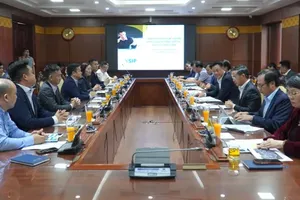
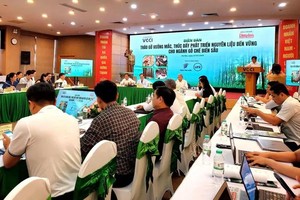
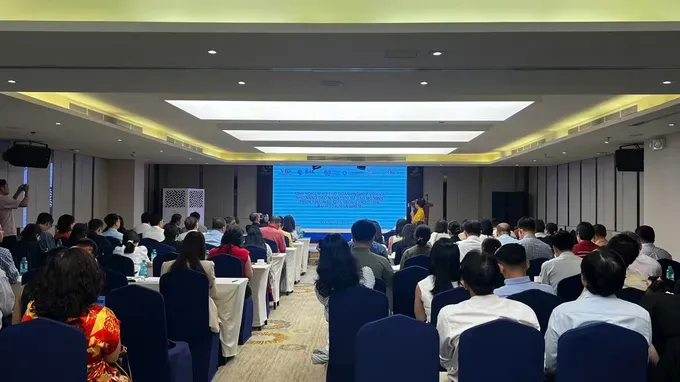
On June 12, the Agency for Private Enterprise and Collective Economic Development (APED) under the Ministry of Finance, in collaboration with the International Labour Organization (ILO) in Vietnam, organized a workshop titled “Promoting Digital and Green Transformation to Improve Productivity and Decent Employment: Practical Perspectives.”
The workshop was held as part of the Productivity Ecosystem for Decent Work (PE4DW) project funded by ILO Vietnam. It attracted representatives from government agencies, industry experts, business associations and the business community.
Mr. Nguyen Xuan Tho, Deputy Director of the APED, said that fostering strong growth in the private sector requires removing institutional barriers and improving access to resources and a favorable business environment. He identified two key priorities: institutional reform and enhanced support for businesses in accessing resources.
The overarching objective of new policy measures is to create a more enabling environment for businesses, particularly small and medium-sized enterprises (SMEs), household businesses and innovative startups. The new mechanisms aim to simplify administrative procedures, shorten the time required for investment and business-related processes, and expand the application of technology in public administration.
At the same time, a range of policies is being implemented to improve access to land, finance and innovation resources.
Participants said digital and green transformation are no longer optional but essential for businesses aiming to boost productivity, strengthen resilience to market fluctuations, and achieve sustainable growth. They emphasized that effective implementation requires continued institutional reforms and stronger coordination among government agencies, support organizations, and the business community, in order to build a more enabling ecosystem for private-sector development.
Another topic that attracted strong attention was the initiative to develop a pool of 10,000 chief executive officers by 2030 to reinforce momentum in private-sector growth. The program will prioritize upgrading modern management competencies, advancing digital and green transformation capabilities, and strengthening overall leadership capacity in the business community.