On April 23 in Ho Chi Minh City, the Vietnam Banks Association (VNBA), in collaboration with the International Finance Corporation (IFC), held a conference to roll out a Code of Conduct for debt collection activities.
Issued on March 31, 2026, the Code aims to standardize debt recovery practices and establish civilized behavioral standards to be applied consistently across all credit institutions.
Speaking at the event, Dr. Nguyen Quoc Hung, Vice Chairman and Secretary General of VNBA, said that the Code was carefully developed with IFC’s support and input from multiple stakeholders. The drafting committee held numerous in-depth discussions and collected feedback from member credit institutions, while also consulting key agencies such as the State Bank of Vietnam, the Ministry of Public Security, the Ministry of Justice, the Supreme People’s Procuracy and the Supreme People’s Court before finalizing the document.
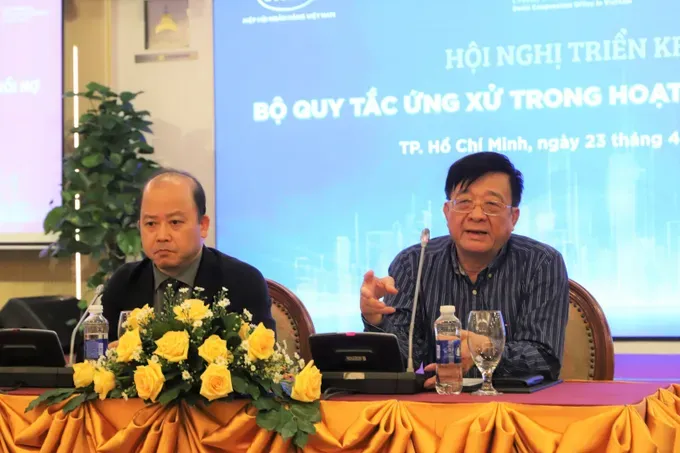
According to Dr. Nguyen Quoc Hung, the Code seeks to promote lawful, ethical and transparent debt collection practices, while eliminating negative behaviors that could harm society. Although it is not a statutory regulation, the Code offers a standardized framework for credit institutions to design their own internal guidelines, provided they remain consistent with its core principles.
The banking sector aims to build a professional and trustworthy image while improving debt resolution efficiency and contributing to financial system stability, he emphasized.
Pham Lien Anh, Head of the Economic Program and Advisory Services at IFC for Vietnam, Laos and Cambodia, noted that alongside the growth of credit, particularly consumer lending, debt collection has become increasingly important.
From a practical perspective, Ms. Nguyen Thi Hoang Phuong, Senior Manager of Debt Resolution at HDBank, said debt recovery is not merely a technical task but requires a combination of expertise, legal knowledge, and communication skills. In a volatile economic environment, banks face challenges such as declining customer financial capacity, lack of borrower cooperation, and legal obstacles in asset liquidation.
To improve effectiveness, HDBank classifies customers to apply appropriate solutions, offering support and debt restructuring for those facing genuine difficulties, while taking firm measures against willful defaulters.
Meanwhile, Bui Minh Nguyet, Director of Payment Consulting and Strategy at Home Credit Vietnam, said that the company is accelerating digital transformation to better manage its large customer base. A key initiative is the use of AI-powered voicebots, which automate up to 90 percent of early-stage debt reminders and enable flexible communication tailored to different regions. However, she noted ongoing challenges related to telecommunications infrastructure and legal procedures, particularly in asset verification and enforcement.
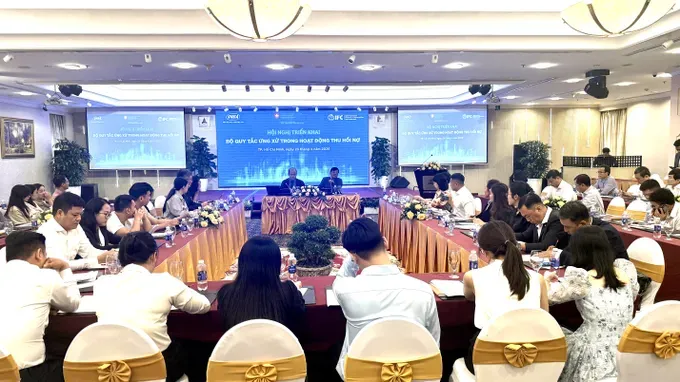
Participants at the conference emphasized that credit institutions must lead by example. Transparent and standardized debt collection practices will help build public trust, especially as regulations on collateral repossession become clearer. At the same time, borrowers are encouraged to fulfill their financial obligations responsibly, avoiding deliberate delays or disputes despite having the ability to repay.