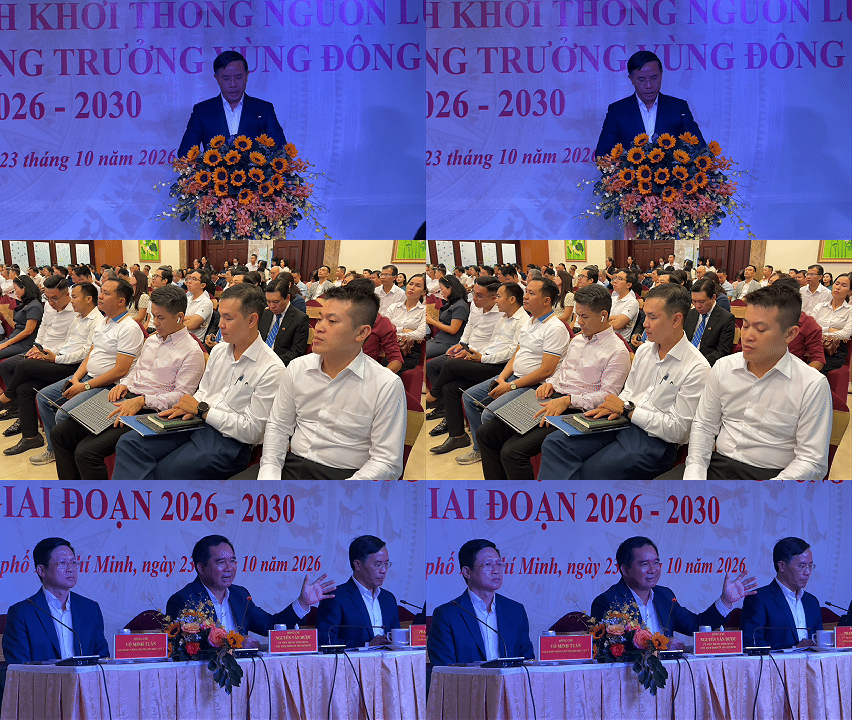
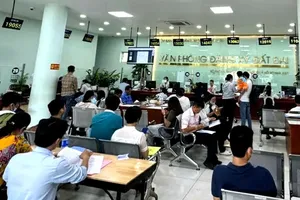
On May 20, the Business Forum Magazine hosted the Finance Forum 2026 in Ho Chi Minh City, where policymakers and financial experts discussed solutions to diversify capital sources and reduce dependence on bank lending.
Speaking at the event, Mr. Hoang Quang Phong, Vice Chairman of the Vietnam Chamber of Commerce and Industry (VCCI), said that the 2026-2030 period would be a critical stage for accelerating investment and strengthening the foundation of the economy.
According to estimates by the World Bank and the Asian Development Bank, Vietnam will require between US$15 billion and US$17 billion annually for climate adaptation and sustainable infrastructure projects, while the state budget can currently meet only 30-35 percent of that demand.
At the same time, small and medium-sized enterprises (SMEs) and micro-businesses continue to face significant financing gaps worth billions of dollars each year. Participants noted that resolving capital bottlenecks would not only support businesses but also serve as a major driver for national economic growth.
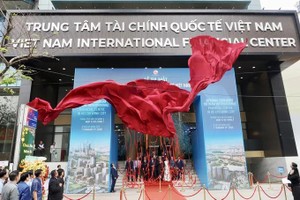
Sharing the same view, Mr. Nguyen Huu Huan, Deputy Chairman of the Executive Board of the Vietnam International Financial Center in Ho Chi Minh City (VIFC-HCMC), said that Vietnam’s ambition for double-digit growth would require enormous capital resources over the coming decades.

He noted that Ho Chi Minh City’s plan to develop eight metro lines over the next ten years alone would require around US$30 billion in investment. With Vietnam’s banking system already maintaining a high credit-to-GDP ratio, continued reliance on bank credit could create significant risks.
According to him, the capital market and the Vietnam International Financial Center (VIFC) will become two critical pillars in easing pressure on the banking sector while expanding the country’s ability to attract international capital flows.
VIFC is currently coordinating with the State Securities Commission to develop a proposal for an international stock exchange, while also studying the development of international bond markets, infrastructure bonds and municipal bonds.
The financial center also aims to support SMEs and startups through a crowdfunding platform operating under Decree 324/2025/ND-CP. Under the mechanism, each enterprise can raise up to US$700,000 annually through community fundraising channels.
This is an important solution because more than 90 percent of Vietnamese businesses are small and medium-sized enterprises that face considerable difficulties accessing bank loans, Mr. Nguyen Huu Huan said.
In addition, VIFC plans to develop a commodity exchange that would allow agricultural businesses and farmers to participate more deeply in global supply chains, reduce reliance on intermediaries, and improve control over selling prices. VIFC-HCMC’s competitive advantage, he added, lies in its significantly lower operating costs compared with financial hubs such as Singapore and Hong Kong (China).
From the perspective of capital demand, Mr. Do Thien Anh Tuan, a lecturer at the Fulbright School of Public Policy and Management, stressed that a multi-tiered capital ecosystem would be essential to achieving Vietnam’s 10 percent growth target during 2026-2030.
He estimated that with inflation projected at 4.5 percent, the economy would require around VND40 quadrillion (US$1.5 billion) in investment capital. However, he warned that capital efficiency remains low, with Vietnam’s ICOR ratio currently at 5-6, compared with the target of reducing it to 4.5-4.8 or even 4.
As a result, the structure of investment capital should shift significantly by reducing the share of state investment from 26-27 percent to 20-22 percent, while strengthening the role of the private sector.
The private sector must become the main growth engine, contributing 60 percent of total social investment capital and creating a foundation for sustainable growth, he emphasized.