Amid growing demands for a modern, equitable, and efficient healthcare system, the Party Secretariat has issued Directive No. 52-CT/TW on October 3, 2025 on implementing universal health insurance in the new phase. This directive sets a strategic direction to elevate the national health insurance policy, upholding humanitarian principles and community solidarity while moving toward sustainable universal healthcare.
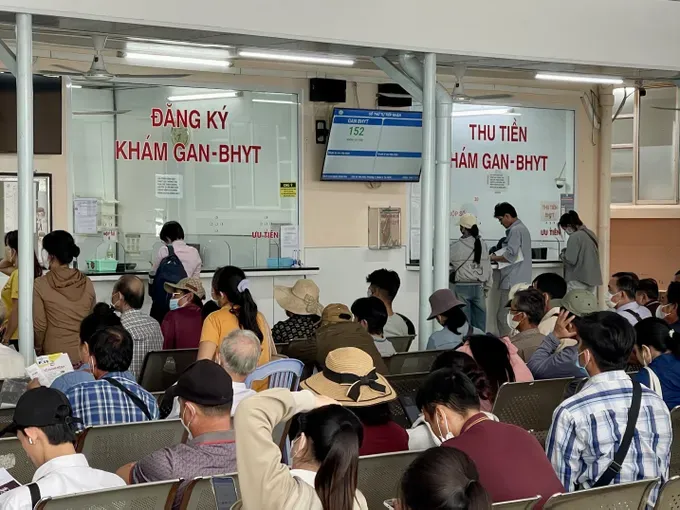
Universal health coverage - a strong foundation for social security
Tran Van Hau, 38, a worker at a private garment factory in Ho Chi Minh City’s Binh Phu Ward, took advantage of his lunch break to visit the ward’s People’s Committee office to correct an error on his health insurance card. “I used to think having health insurance didn’t matter much,” he said. “But after my wife gave birth prematurely and our baby spent a month in the hospital, I truly understood its value.”
He remembered that his wife delivered at 34 weeks two years ago. Their baby required intensive care, antibiotics, and constant monitoring. The total treatment cost exceeded VND70 million (US$2,660), of which nearly 80 percent was covered by health insurance. He said that without universal health insurance, they wouldn’t have managed financially. Since then, they started to encourage relatives to buy health insurance.
According to Dr. Diep Bao Tuan, Director of Ho Chi Minh City Oncology Hospital, universal health insurance serves as a safety net- safeguarding patients particularly the economically disadvantaged and individuals with chronic illnesses from experiencing financial difficulties.
He added that many patients delay or entirely avoid treatment due to financial constraints. The provision of health insurance is essential to mitigate such unfortunate circumstances. With universal health insurance cards, individuals are more likely to pursue medical attention promptly, leading to earlier disease detection and a reduction in the strain on central hospitals.
Policy is improved continuously
Statistics from Vietnam Social Security show that as of October 2025, approximately 94.84 million people are covered by health insurance, up 0.96 percent compared to the same period in 2024. Currently, more than 95 percent of Vietnam’s population holds universal health insurance cards, though millions remain uninsured mainly informal workers, small traders, or short-term migrants.
Director Tran Thi Trang of the Health Insurance Department under the Ministry of Health said that all poor households nationwide now receive free universal health insurance cards. The government also subsidizes 70 percent of premiums for near-poor households, while many localities mobilize additional resources from budgets and philanthropists to cover the remaining costs—making full participation possible.
According to Deputy Minister of Health Vu Manh Ha, after 16 years of implementing Directive No. 38-CT/TW (issued September 7, 2009) on strengthening health insurance in the new context, Vietnam has met and even exceeded its set goals. By the end of 2024, 13,395 healthcare facilities had signed contracts to provide universal health insurance services, including 1,793 public hospitals, over 10,390 commune health stations, and 1,212 private clinics.
Persistent challenges include limited local leadership and oversight, superficial public communication, fragmented policy implementation, and protracted delays in claim settlement. In addition, the quality of healthcare at grassroots and remote facilities still falls short of expectations.
According to the Ministry of Health, health insurance coverage has risen from 58 percent in 2009 to 94.26 percent in 2024, equivalent to about 95.5 million people. The number of insured medical visits nearly doubled, from 88.6 million in 2009 to 183.6 million in 2024. Meanwhile, insured patients now enjoy broader benefits as the list of reimbursable medicines, medical devices, and procedures continues to expand.
To achieve the goal of full population coverage, the Party Secretariat’s Directive No. 52-CT/TW seeks to address shortcomings of Directive No. 38-CT/TW and adapt to the two-tier local government model. It sets out key orientations, tasks, and solutions to ensure effective implementation of universal health insurance aiming for coverage above 95 percent by 2026 and full national coverage by 2030.
“The Ministry of Health will take a systematic, evidence-based approach, coordinating closely with relevant ministries and the health departments of 34 provinces and cities to promote administrative reforms, enhance digitalization, and resolve outstanding reimbursement issues. We are also piloting electronic medical record-based payments and improving the legal framework to address obstacles in the payment process for universal health insurance”, Deputy Minister Vu Manh Ha affirmed.