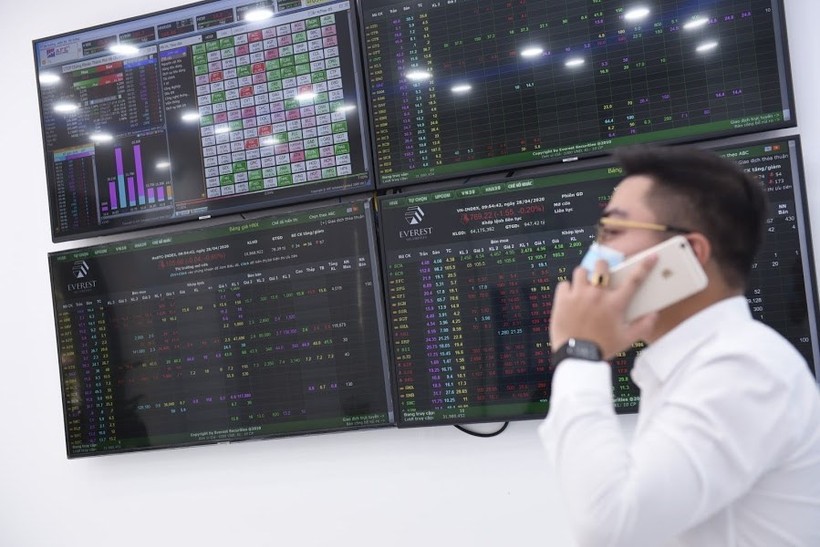
According to securities companies, 2026 is regarded as a pivotal year for Vietnam’s economy and stock market, marking the start of a new development cycle with a targeted GDP growth of 10 percent, deep institutional reforms, and prospects for a market upgrade.
A stable macroeconomic foundation, together with expected growth in corporate earnings, is forecast to continue providing room for the market to maintain a positive trend in the medium and long term.
The VNDIRECT Securities Joint Stock Company said that 2026 is the first year of implementing the five-year socio-economic development plan, opening what is considered the most ambitious policy cycle in Vietnam’s history. The 10 percent GDP growth target reflects the country’s determination to narrow development gaps and move closer to the group of upper-middle-income economies.
Globally, VNDIRECT noted that world economic growth is slowing due to US-China trade tensions, though the most volatile phase is believed to be over. The US’s move toward negotiations and new agreements is seen as potentially advantageous for Vietnam amid global supply chain restructuring. In addition, easing global inflation is expected to create room for more accommodative monetary policies, although the pace of interest rate cuts may vary across economies.
However, the company cautioned that geopolitical and trade risks, along with pressures on global supply chains, remain, requiring flexible management and close coordination between domestic monetary and fiscal policies.
Beyond traditional growth drivers such as exports, consumption, and investment, it expects Vietnam’s 2026 economic growth to be bolstered by structural transformation factors. Among them, institutional reform is viewed as key to unlocking private-sector potential, while public investment and infrastructure development will continue to play a crucial role in logistics and industrial growth over the next decade.
Domestic consumption is projected to benefit from rising disposable incomes and more flexible tax policies. At the same time, high-tech FDI inflows are expected to continue, alongside capital market liberalization and plans to develop an international financial center, further enhancing Vietnam’s regional standing.
Reviewing market performance in 2025, the VN-Index recorded an impressive gain of around 41 percent, though the rally was largely driven by Vingroup-related stocks.
According to VNDIRECT, the real estate sector led the market last year, followed by tourism and entertainment, banking, and financial services. Positive developments in banking and finance were attributed to accommodative monetary policy, low interest rates, and rising credit demand as businesses expanded production and operations.
The official operation of the KRX trading system from May was a major milestone, not only resolving order congestion but also laying the groundwork for a comprehensive upgrade of market infrastructure. Notably, during its September 2025 review, FTSE Russell confirmed that Vietnam had met all criteria for Secondary Emerging Market status, reflecting strong reform commitments to enhance transparency and market accessibility.
Meanwhile, market liquidity surged in 2025, with average trading value exceeding VND28.6 trillion (US$1.08 billion) per session, up 35.5 percent year-on-year. The number of individual investor accounts surpassed 11.5 million, achieving the target set for 2030 ahead of schedule.
VNDIRECT expects listed companies’ profits to continue growing strongly in 2026, thereby supporting market valuations.