
On the morning of August 21, at the military terminal of Tan Son Nhat Airport, units under the Ho Chi Minh City High Command, the Ho Chi Minh City Steering Committee for the Search, Collection and Identification of Martyrs' Remains, Military Region 7, and Air Division 370 organized the transport of 7,104 biological specimens to Hanoi for DNA testing and identification.
These specimens were gathered by specialized teams under the Ho Chi Minh City High Command from unidentified graves across 18 martyrs' cemeteries in the city. The sampling process spanned nearly six months, executed with utmost care, precision, and digital tracking.
Transporting the specimens by military aircraft aimed to reduce travel time while ensuring safety.
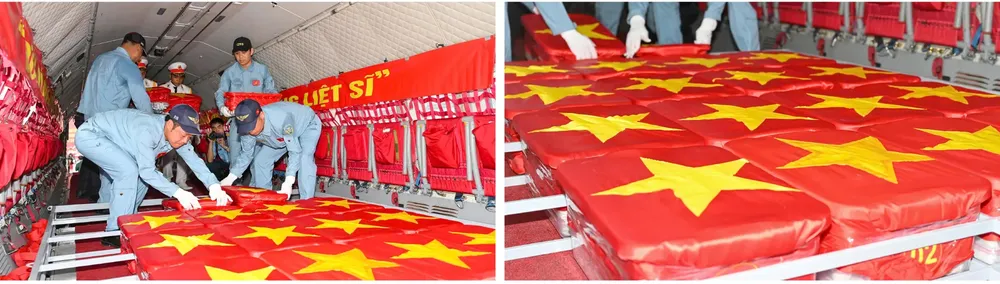
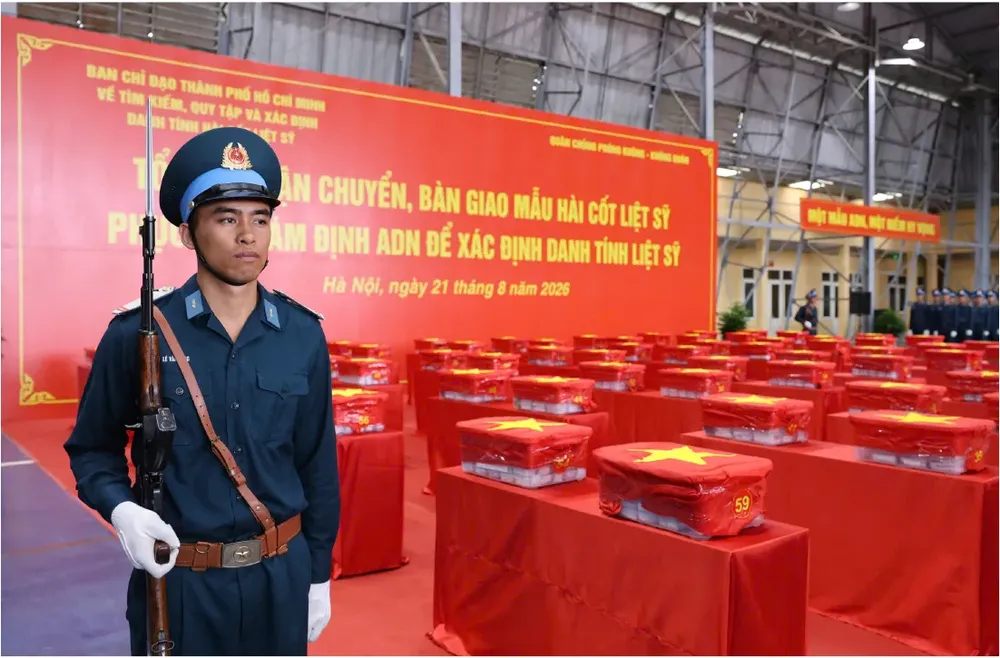
The 7,104 biological specimens were sealed inside 100 specialized containers, each draped with the National Flag.
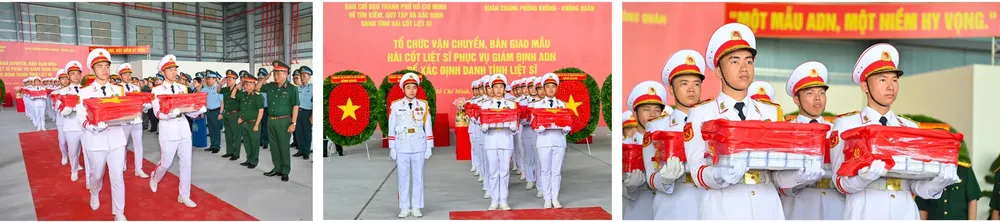
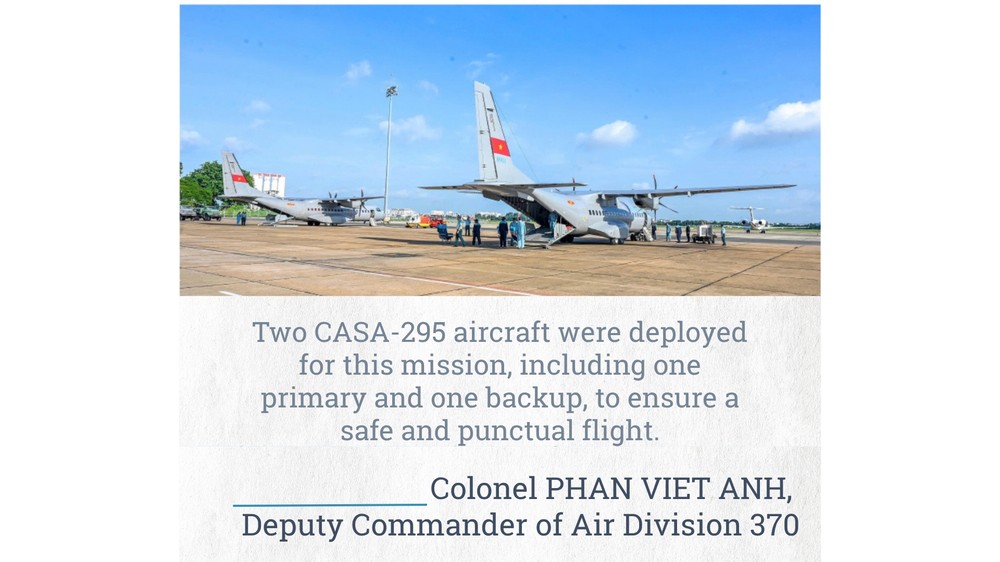
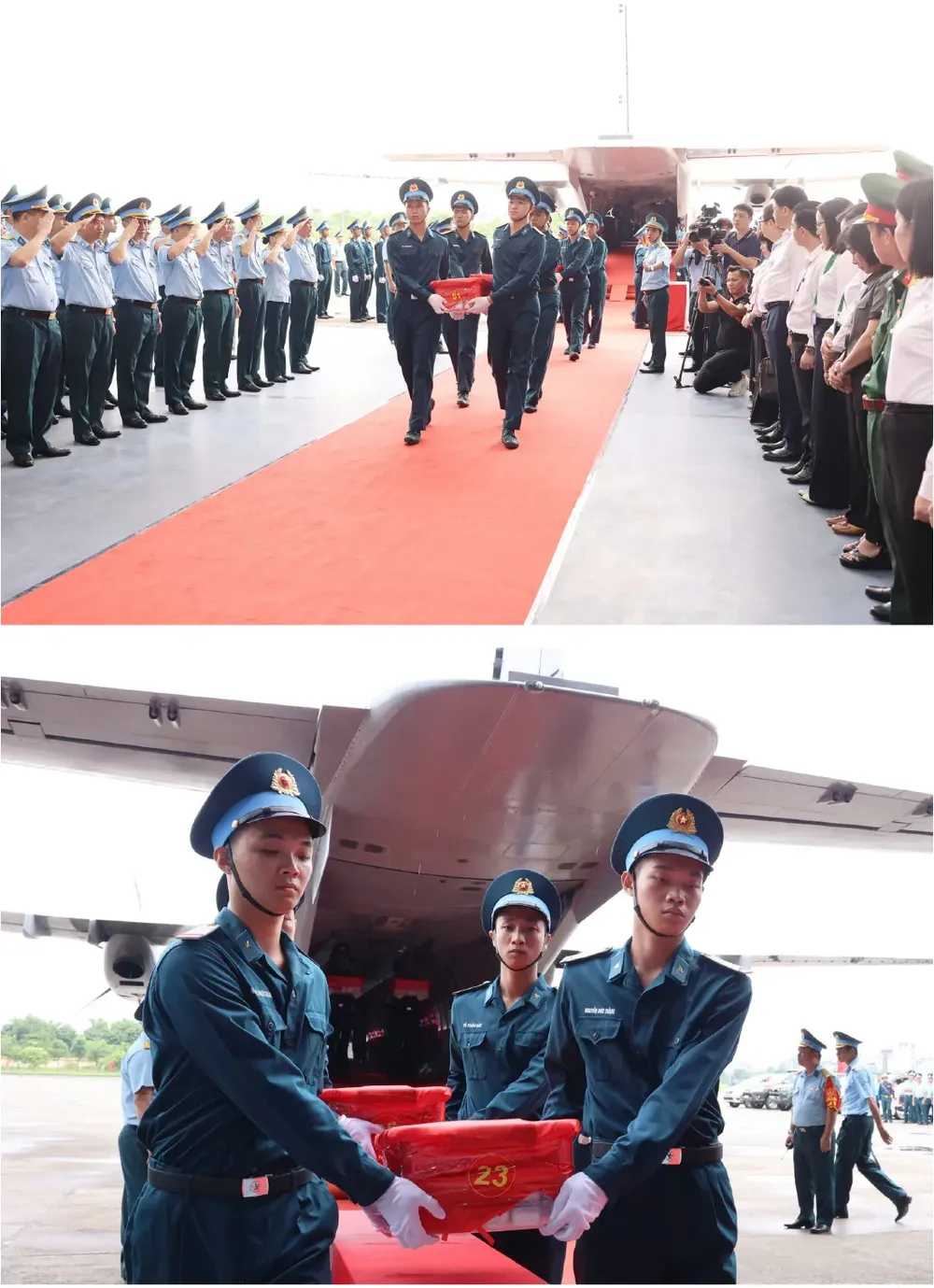
At 7:30 a.m, following a commemoration ceremony, the honor guard loaded the container boxes onto a CASA-295 military transport aircraft belonging to Brigade 918, Air Defense - Air Force Service.
Soldiers carefully arranged the containers inside the cargo hold. Temperature and humidity were strictly monitored to preserve the biological samples throughout the journey.
The handover and transport were conducted strictly according to protocol: precise, swift, solemn, safe, and timely.
At 8:45 a.m., the flight took off from Tan Son Nhat Airport, heading toward Hanoi.
)
At exactly 11:30 a.m., the aircraft landed safely at Gia Lam Military Airport (Hanoi). Immediately after, an incense-offering and flower-laying ceremony took place in a deeply solemn atmosphere.
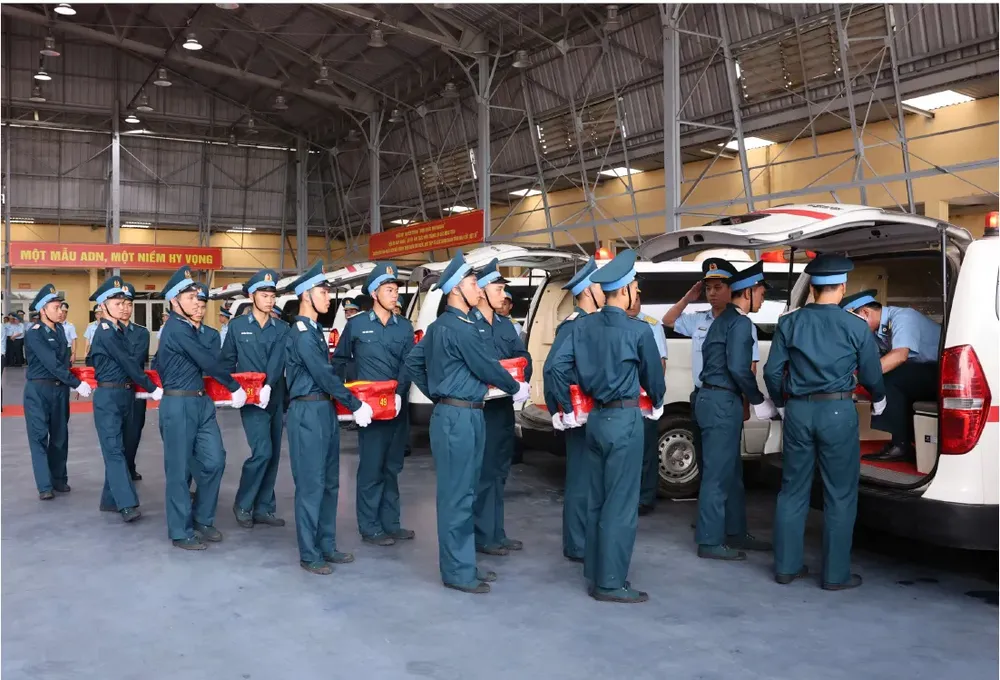
The container boxes were then transported by specialized military vehicles to the Vietnam Academy of Science and Technology for DNA extraction and cross-matching with samples provided by relatives.

This activity is part of the "500-Day-and-Night Campaign to accelerate the search, collection, and identification of martyrs' Remains," running from March 15, 2026, to July 27, 2027, ahead of the 80th Anniversary of Invalids and Martyrs' Day (July 27, 1947 – July 27, 2027).
The nationwide “500-day-and-night campaign” aims to collect approximately 7,000 sets of remains, sample about 230,000 unidentified graves, and conduct DNA testing on roughly 18,000 biological specimens.
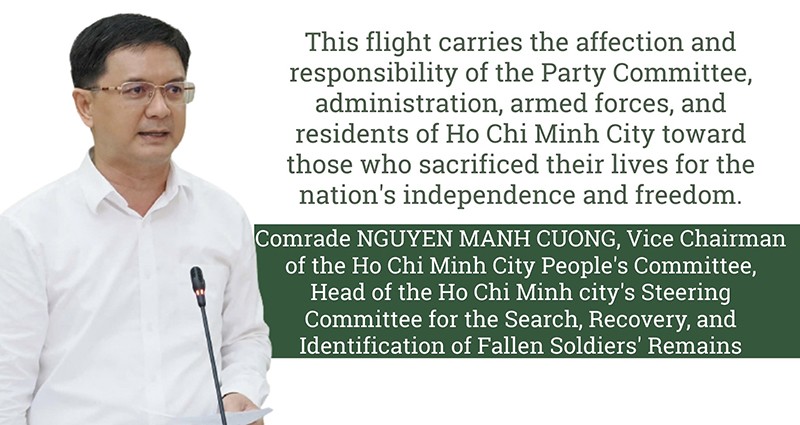
According to Nguyen Manh Cuong, Vice Chairman of the Ho Chi Minh City People's Committee and head of the city's Steering Committee for the Search, Recovery, and Identification of Fallen Soldiers' Remains, Ho Chi Minh City has completed 100 percent of its sampling plan across 18 cemeteries, collecting 9,854 samples, of which 7,104 met the strict technical criteria for DNA testing.
Moving forward, Ho Chi Minh City will continue to collaborate with the Vietnam Academy of Science and Technology, the Military Institute of Forensic Medicine, and agencies under the Ministry of Public Security to conduct DNA analysis, collect DNA samples from the relatives of martyrs, and build a database to facilitate cross-referencing and the identification of martyrs' remains.
As witnesses and relatives of fallen soldiers grow older and more frail, time does not allow for delay. The journey to restore the names of those who sacrificed their lives has therefore become a fierce “race,” making the search for and collection of remains and DNA identification increasingly urgent.
These are “races” driven by responsibility and reverence among today’s generation. Across the country, whenever even the smallest clue is found, the journey to “find our fallen comrades” is immediately set in motion. Witnesses, documents and technology work hand in hand, together with the collective efforts of the forces involved, to make searches possible day and night.
Every grave that is found is not only evidence of the nation’s just war of national defense, but also a tribute from today’s generation to those who gave their lives for the independence and freedom of the Fatherland.
 "Chairman of the Ho Chi Minh City People’s Council Vo Van Minh and Lieutenant General Vu Hong Son, Commander of the Air Defense – Air Force Service, move the biological samples from the remains of fallen soldiers onto specialized vehicles bound for the DNA Identification Center of the Vietnam Academy of Science and Technology. (Photo: SGGP/Quang Phuc)")

The work of honoring and repaying the contributions of those who served the nation does not stop at commemorating the fallen or caring for families of people who rendered service. It also carries the sacred responsibility of bringing those who sacrificed their lives home with their proper names, homeland, comrades and families.
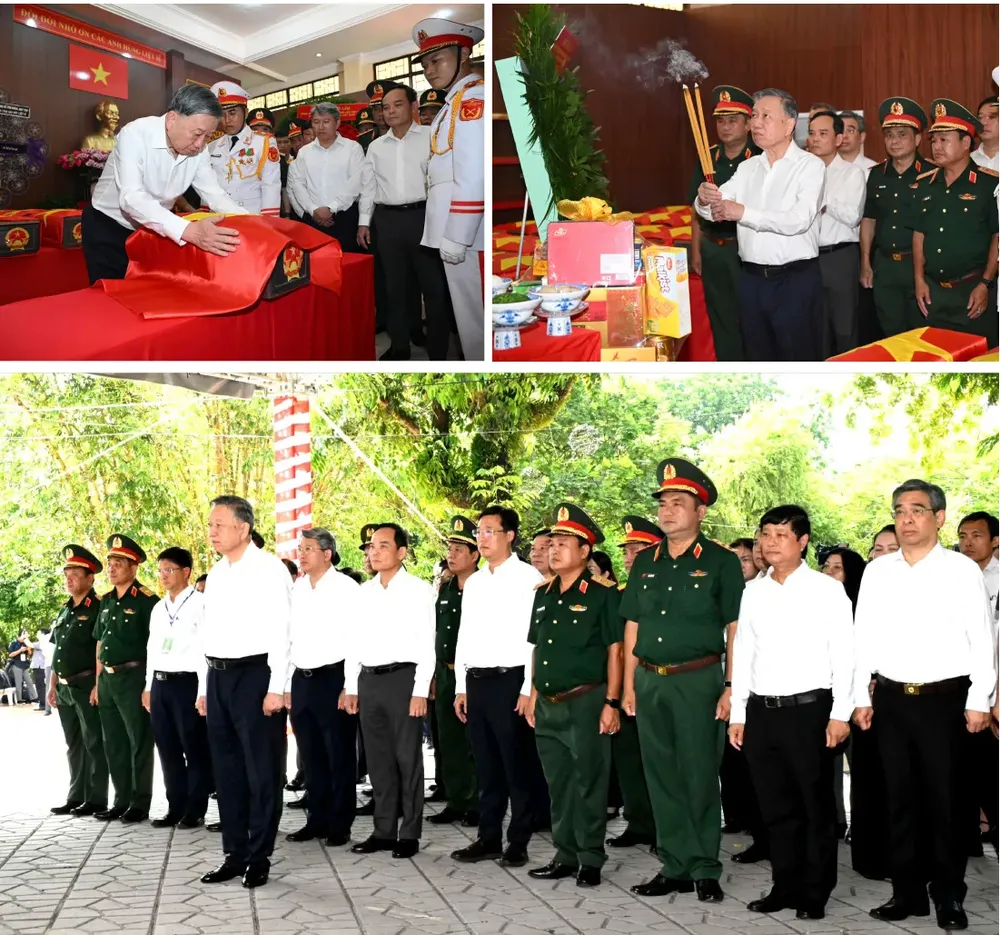
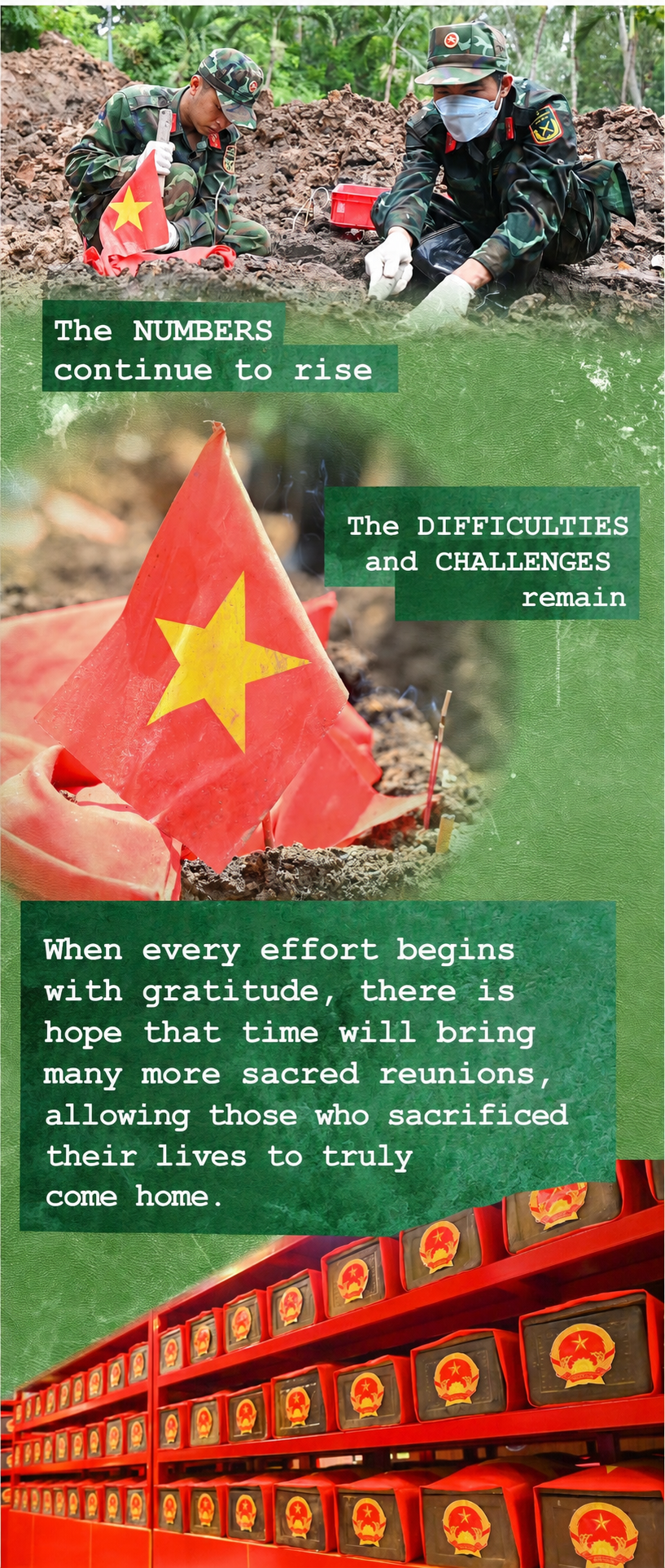
As of August 13, after more than four months of implementation, the forces involved had searched for and collected 1,715 sets of fallen soldiers’ remains, including 691 recovered domestically, 174 in Laos and 850 in Cambodia. 13 mass graves of fallen soldiers were found, including 5 in Tuyen Quang and 8 at Le Thi Rieng Park in Ho Chi Minh City.
Localities have stepped up the collection of biological samples from fallen soldiers’ remains, averaging 2,000–3,000 samples per day. To date, samples have been collected from 124,762 graves of fallen soldiers, with 9 localities having completed the sampling task.
)

Content: Staff writers
Photos: Quang Phuc, Manh Thang
Design: Minh Thu
Translation: Thu Huong