Vietnam highly values UNODC’s support for ASEAN and the region and calls on the organization to continue prioritizing capacity-building programs, technical assistance, and the effective implementation of international legal instruments against transnational crime, Vietnamese Ambassador to Austria Vu Le Thai Hoang has said.
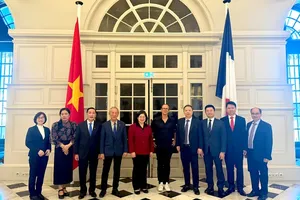
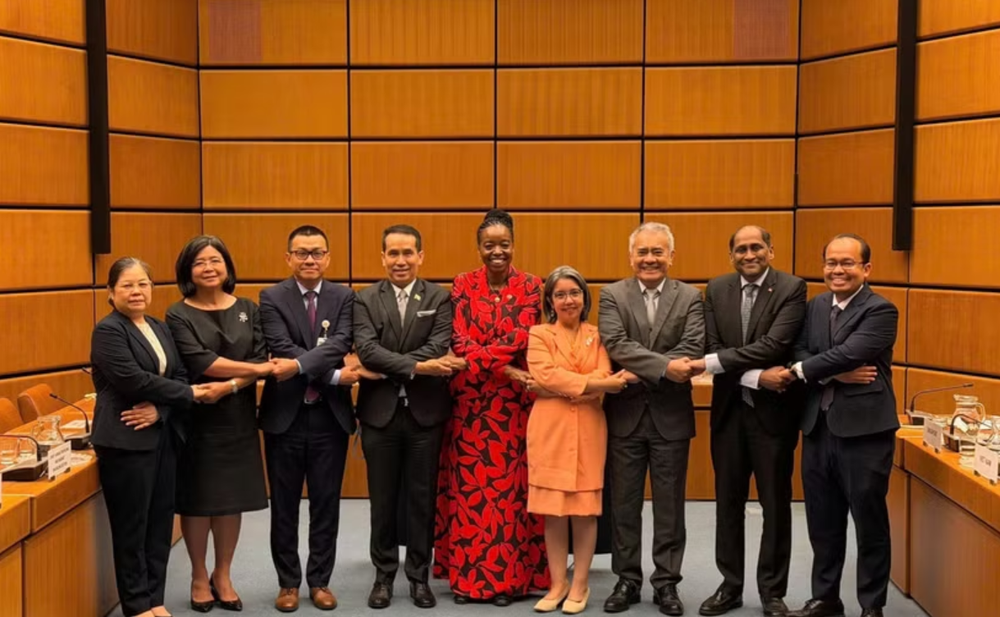
He made the statement at a meeting in Vienna, Austria, on June 19 between the ASEAN Committee in Vienna (ACV) and Monica Juma, Executive Director of the United Nations Office on Drugs and Crime (UNODC).
The ACV comprises ambassadors and chargés d’affaires from eight ASEAN member states – Vietnam, the Philippines, Malaysia, Myanmar, Indonesia, Thailand, Laos, and Singapore.
The Vietnamese diplomat also highlighted the importance of a people-centered approach and raising global awareness of the indispensable role of the United Nations in addressing current global challenges.
The meeting marked the first formal engagement between ASEAN ambassadors in Vienna and Juma since she assumed office in May 2026. It took place as UNODC is formulating strategic directions for the coming period to enhance its effectiveness in addressing increasingly complex global challenges related to transnational organized crime, illicit drugs, corruption, human trafficking, and cybercrime.
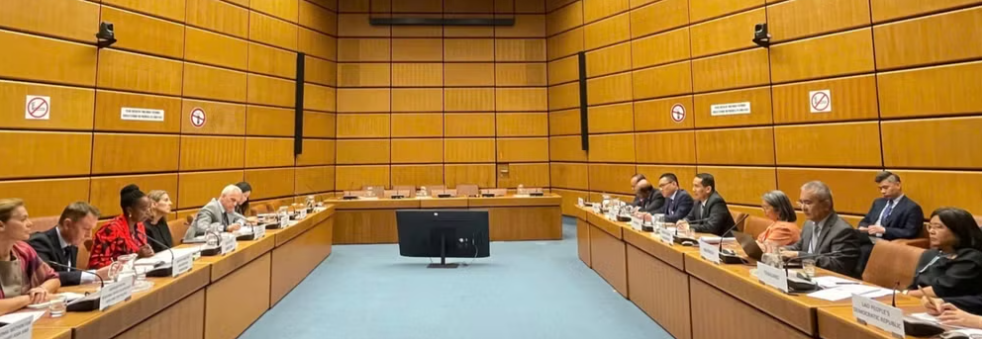
Speaking at the meeting, Juma highly appreciated ASEAN’s role and active contributions to international efforts in combating transnational crime and promoting multilateral cooperation. She affirmed that ASEAN is one of UNODC’s key partners and commended the bloc’s achievements in building regional cooperation mechanisms, advancing policy dialogue, and implementing practical initiatives to address non-traditional security challenges.
The UNODC Executive Director expressed special appreciation to the Vietnamese Government for successfully hosting the signing ceremony of the United Nations Convention against Cybercrime in Hanoi last year.
She described the event as an important milestone in international efforts to establish a global legal framework for preventing and combating technology-enabled crimes, while praising Vietnam’s active and responsible role in promoting multilateralism and contributing to the development of international law.
Juma stressed that Southeast Asia remains one of UNODC’s priority regions as it faces increasingly serious challenges, including synthetic drugs, cybercrime, online scams, human trafficking, money laundering, and the activities of transnational organized criminal networks.
Representatives of ASEAN member states reaffirmed the bloc’s strong commitment to its partnership with UNODC and expressed appreciation for the organization's practical support to the region. They called for stronger cooperation in priority areas, particularly cybercrime prevention and control, online fraud, human trafficking, synthetic drugs, and child protection in cyberspace.
ASEAN also urged UNODC to maintain regular dialogue with ASEAN ambassadors in Vienna, support the effective implementation of capacity-building programs, and strengthen links with ASEAN cooperation mechanisms.
Juma expressed her readiness to work closely with Vietnam and relevant partners to realize the initiative to establish an Asia-Pacific regional training center on cybercrime prevention and control, which is expected to strengthen the capacity of law enforcement and judicial agencies across the region to respond more effectively to growing cybercrime threats.