According to the Ministry of Public Security, the period before, during, and after the Lunar New Year 2026 is marked by a sharp rise in public demand for travel and leisure, creating opportunities for criminals to employ a range of increasingly sophisticated schemes to defraud people of their property.
In response to this situation, the Ministry of Public Security issued a public warning on January 28, urging citizens to remain vigilant.
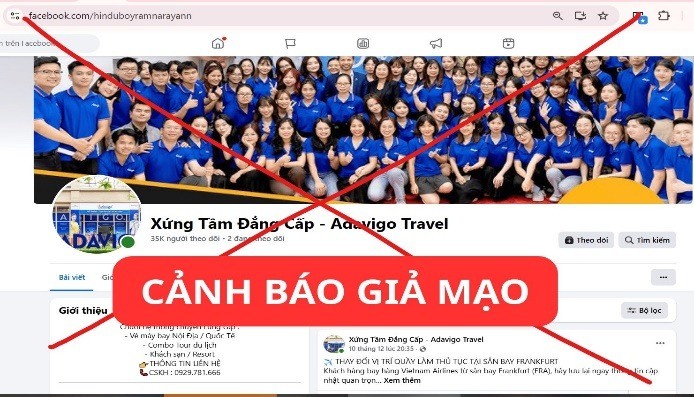
The ministry said that common fraud tactics during the run-up to Tet include criminals creating fake websites, Facebook accounts, and fan pages—including some with blue verification badges—to impersonate reputable accommodation providers. These platforms post promotional offers at unusually low prices or at rates matching official listings to lure customers into placing deposits or transferring money. Once the funds are received, the perpetrators quickly cut off contact and abscond with the money.
Another prevalent scheme involves criminals posing as tourists who have booked tours with well-known travel agencies, then posting advertisements to “urgently liquidate” those tours at prices far below market rates. To build trust, they attach fabricated invoices, images, and fake customer reviews. Initial small transactions may proceed smoothly, but once victims transfer money for higher-value packages, the scammers immediately disappear.
In addition, criminals have been sending phishing emails impersonating familiar online booking platforms to accommodation providers. These emails typically contain content such as booking confirmations, customer complaints, payment updates, or cancellation requests, and often include malicious links or attachments embedded with malware.
Once recipients click the links or open the files, the malware is activated, enabling criminals to take control of the device, steal data, monitor activity, penetrate internal systems, or siphon funds from bank accounts installed on the compromised devices.
The Ministry of Public Security advises accommodation operators, tourists, and the general public to regularly follow notices and warnings issued by police authorities, banks, and official media outlets to stay informed about fraud methods and prevention measures, protect personal information, ensure the safety of themselves and their families, and understand how to report crimes.
In particular, people are urged to carefully verify the source of emails and to never click on links or open attachments of unknown origin.
The public is also warned against installing unverified applications on devices linked to bank accounts; against publicly sharing personal information; against scanning QR codes or accessing links that have not been authenticated; and under no circumstances to provide account details, passwords, or one-time passwords (OTPs) to any organization or individual.
“When selecting travel services, consumers should thoroughly verify the service provider’s credentials, prioritize reputable and duly licensed travel companies, and remain alert to electronic invoices or payment documents showing unusual signs or sent from personal email addresses,” the ministry emphasized.