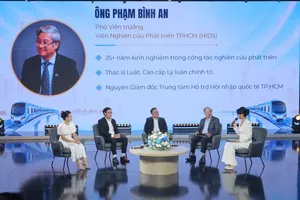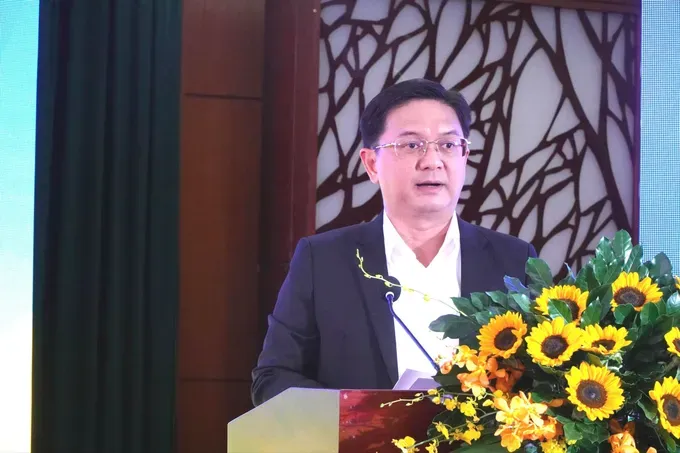
Speaking at the seminar, Vice Chairman of the Ho Chi Minh City People’s Committee Nguyen Manh Cuong said that as a hub for the economy, finance, science and technology, innovation and international trade, Ho Chi Minh City is gradually affirming its role as a key growth pole with strong spillover effects on the region and the country as a whole.
In the course of development, the city has identified smart urban development in tandem with digital transformation, digital infrastructure development and digital data as key priorities.
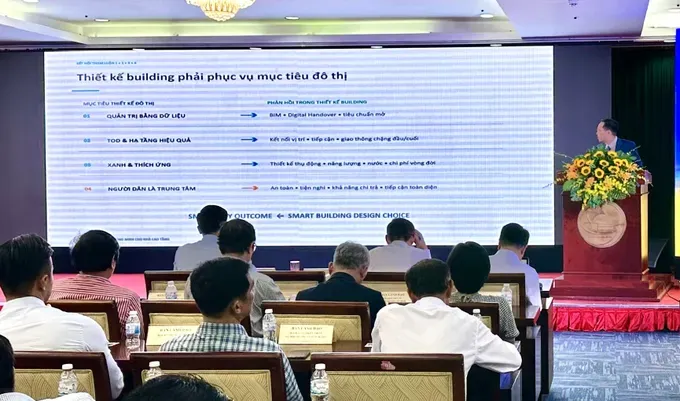
To realize this vision, the Ho Chi Minh City People’s Committee issued Decision No. 4714/QD-UBND, approving the Smart Urban Development Project in Ho Chi Minh City for the 2026-2030 period, with a vision to 2045.
The project marks a particularly important milestone, shaping the city’s development path in the digital era. Its overarching goal is to develop the city into a smart, sustainable urban area based on a green growth model. In particular, the city aims to ensure that urban governance is driven by data and digital technologies, Mr. Nguyen Manh Cuong emphasized.
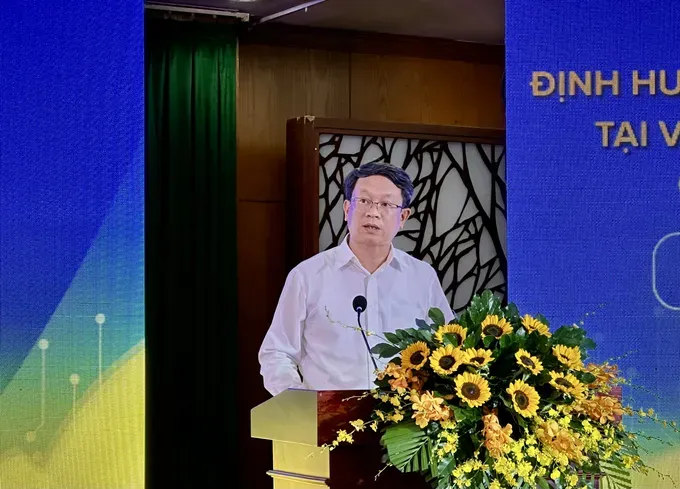
At the seminar, Director of the Department of Urban Development under the Ministry of Construction, Tran Quoc Thai, said smart urban development is no longer an experimental option, nor is it simply about investing in more cameras, sensors, operation centers or digital applications. Instead, it is a comprehensive process of reforming the way urban areas are planned, built, managed and serviced—shifting from sector-by-sector management and reactive responses to integrated, proactive and predictive governance based on data.