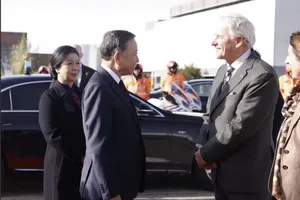
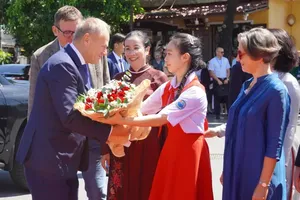
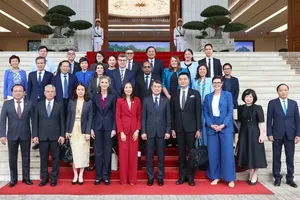
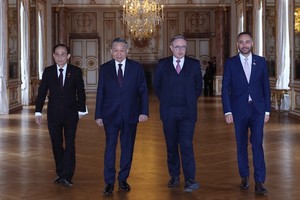
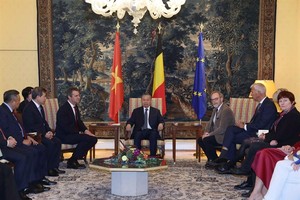
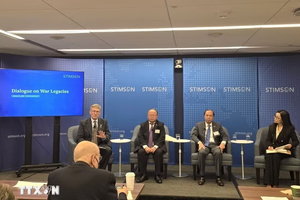
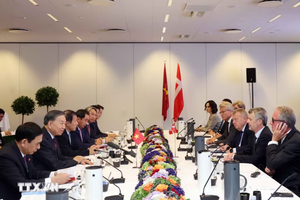
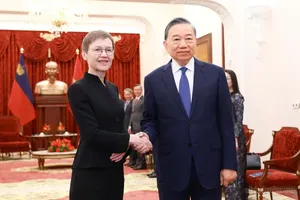
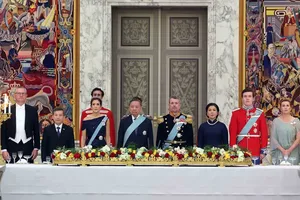
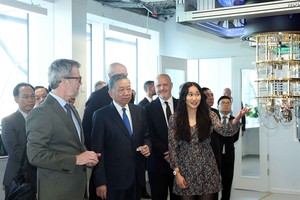
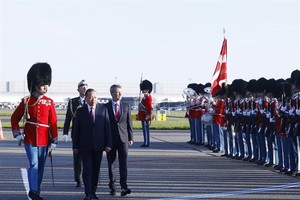
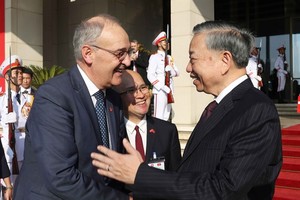
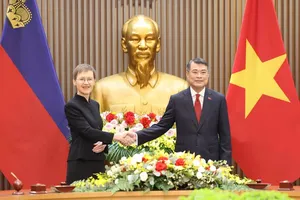
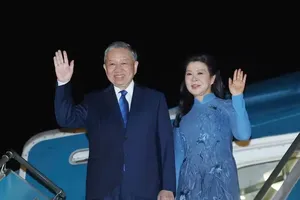
Speaking to the press about the outcomes of Party General Secretary and State President To Lam’s state visit to the Kingdom of Denmark and official visits to the European Union (EU) and the Kingdom of Belgium, Foreign Minister Le Hoai Trung described the trip as a great success that comprehensively elevated Vietnam’s external relations and opened up opportunities to attract around EUR20 billion in resources.
Plans underway to implement projects worth EUR20 billion
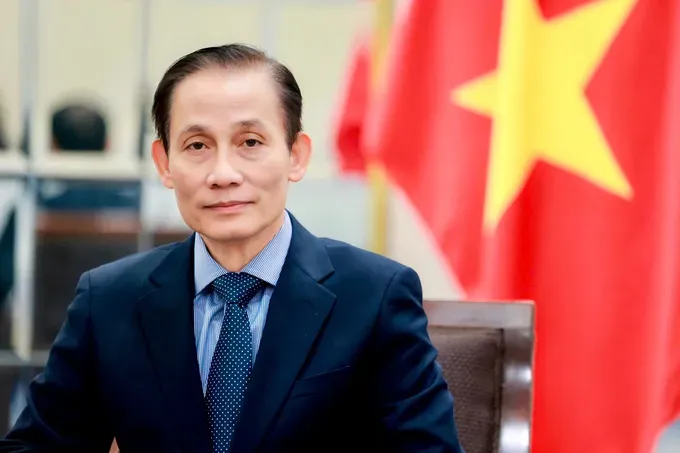
Foreign Minister Le Hoai Trung said the visit was a great success, delivering many important and substantive outcomes and comprehensively elevating relations between Vietnam and its partners, underpinned by strong political commitment and considerable alignment in strategic orientations.
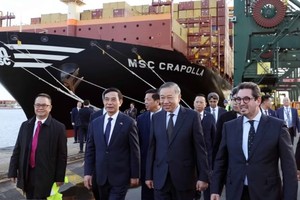
Denmark has positioned Vietnam as a leading partner and a strategic gateway to Southeast Asia. One of the visit’s key outcomes was the elevation of bilateral ties to a Comprehensive Strategic Partnership, making Denmark the second EU member state to establish such a partnership with Vietnam. With specific strategic directions in place and political trust strengthened, cooperation in areas including politics, foreign affairs, the economy, science and technology, and education and training is expected to reach new heights. Both sides identified the economy, trade, and investment as key pillars of the new relationship while also prioritizing cooperation in renewable energy, offshore wind power, green transition, seaports, logistics, and green maritime transport.
With the EU, one notable development during the visit was a broader approach to cooperation that goes beyond trade exchanges, investment attraction, and technology transfer to fostering links among research institutions, universities, and businesses. During the visit, the two sides held extensive discussions on science and technology, innovation, critical raw materials, strategic infrastructure, the circular economy, and the maritime economy, while also seeking to make fuller use of existing cooperation mechanisms. They reached a high degree of consensus on strengthening engagement and strategic dialogue, making better use of cooperation mechanisms and expanding collaboration into new areas, including defense and security, maritime security, and responses to non-traditional security challenges.
With Belgium, the Belgian Federal Parliament’s Chamber of Representatives voted to approve the EU-Vietnam Investment Protection Agreement (EVIPA) shortly before the official engagements of Party General Secretary and State President To Lam’s visit. This positive signal demonstrated Belgium’s goodwill and its regard for Vietnam. During the visit, the two countries’ senior leaders agreed on a vision of upgrading bilateral ties to a Strategic Partnership, reflecting the increasingly broad scope of cooperation beyond the existing sectoral strategic partnership in agriculture.
The visit opened up new avenues for cooperation aligned with Vietnam’s development needs and Belgium’s strengths, with a view to developing flagship projects in seaports, logistics, clean energy, science and technology, and high-quality human resource training. Discussions took place not only at the federal level but also with Belgium’s regions and local authorities, broadening and deepening the foundations of bilateral cooperation.
A notable highlight was the high regard expressed by European leaders and business communities for the development policies and orientations of Vietnam’s Party and State, particularly the Government’s efforts to improve the institutional framework with the National Assembly’s support, accelerate infrastructure development, and enhance human resource quality.
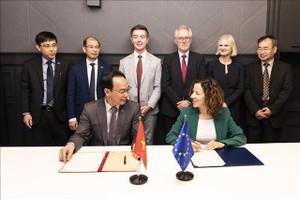
The visit helped create further opportunities to mobilize resources for Vietnam’s socio-economic development. At economic and trade forums and business meetings, numerous European corporations and companies presented plans and projects they intend to pursue in Vietnam, with a preliminary total value of around EUR20 billion discussed. In addition, various cooperation documents and agreements were signed by ministries, agencies, local authorities, and businesses, helping translate prospects for cooperation into concrete initiatives in the coming period.
Turning high-level agreements into concrete results
Foreign Minister Le Hoai Trung stressed that the most important task in the coming period is to translate shared understandings, commitments, and high-level agreements into concrete programs, projects, and deliverables.
First, the outcomes of the visit must be promptly translated into action plans with clearly defined tasks, timelines, focal points, responsibilities, and expected results. Vietnamese ministries, agencies, and local authorities will work closely with their partners to develop action plans for implementing the cooperation frameworks, specifying the lead agencies, partners, resources, schedules, and expected outcomes. They will also actively consider and address specific proposals made by partner countries to Vietnam.
Second, existing cooperation mechanisms must be used more effectively. Vietnam should make better use of the EU-Vietnam Free Trade Agreement (EVFTA), advance the ratification process for the EU-Vietnam Investment Protection Agreement (EVIPA), and strengthen its capacity to meet EU market standards on the environment, sustainable development, traceability, and social responsibility. These efforts will help businesses participate more deeply in global value chains and supply chains.
Third, priority should be given to strategic, feasible programs and projects capable of delivering tangible results. With Denmark, cooperation should focus on energy transition, offshore wind power, seaport infrastructure, and green logistics. With the EU, Vietnam should proactively propose projects under Global Gateway, the Just Energy Transition Partnership (JETP), Horizon Europe, and other strategic technology fields. With Belgium, efforts should focus on projects involving seaports, logistics, clean energy, science and technology, and high-quality human resource training.
Fourth, ministries, agencies, local authorities, businesses, universities, and research institutes should play a more active role in identifying, proposing, and implementing cooperation initiatives. Research must be better connected with businesses and the market, shifting from simply receiving technology to joint research, production, and product development. This will gradually strengthen Vietnam’s capacity to master and develop technologies.
Foreign Minister Le Hoai Trung expressed confidence that relations between Vietnam and Denmark and the EU and Belgium would continue to deepen and expand effectively for the benefit of their peoples while making a positive contribution to peace, stability, cooperation, and development in the region and around the world.