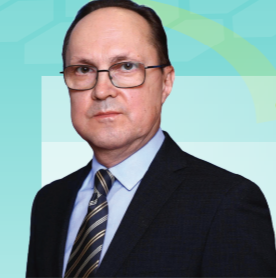
Mr. Gennady Stepanovich Bezdetko, Ambassador Extraordinary and Plenipotentiary of the Russian Federation to Vietnam, emphasized the importance of advancing comprehensive cooperation across multiple sectors.
Diplomatic relations between Russia and Vietnam were established in January 1950 and have since followed a long and distinguished path. Building on a foundation of traditional friendship and mutually beneficial cooperation, bilateral ties today continue to expand strongly and comprehensively across a wide range of fields, from politics and security to the economy, culture, and tourism, reflecting the fundamental interests and shared aspirations of the peoples of both countries.
One of the key drivers of deeper cooperation is the strengthening of transport and logistics connectivity. The two sides are currently discussing the prospects of developing a railway transport corridor linking Vietnam and Russia via China and Mongolia, a move expected to provide a strong boost to trade and investment and enable more effective use of the Free Trade Agreement between Vietnam and the Eurasian Economic Union (EAEU), signed in 2015.
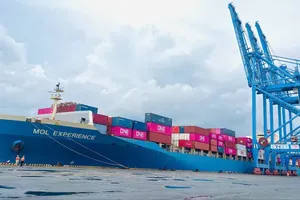
In the aviation sector, multiple direct flights now operate between Russia and Hanoi, Ho Chi Minh City, and Nha Trang, significantly supporting tourism growth. From January to October 2025, the number of Russian visitors to Vietnam nearly tripled, reaching approximately 500,000 arrivals. Maritime transport has also emerged as a bright spot in bilateral cooperation.
Another major area of cooperation lies in energy. The two countries have agreed to accelerate negotiations and preparations for signing agreements aimed at the early commencement of construction of the Ninh Thuan Nuclear Power Plant. Within the framework of the bilateral cooperation roadmap to 2030, both sides are also working to establish a Nuclear Science and Technology Center, expected to be located in Dong Nai, featuring the most advanced research reactor in the region, alongside programs to train a high-quality workforce of Vietnamese nuclear specialists.
Beyond infrastructure and energy, agriculture continues to be a field of practical and substantive cooperation. Overall, the foundation of Russia–Vietnam relations rests on a relationship of trusted political dialogue, grounded in a long-standing tradition of friendship forged through history. Having withstood the test of time, bilateral ties continue to maintain positive momentum, reaffirming Vietnam as one of Russia’s strategically important partners in the region.
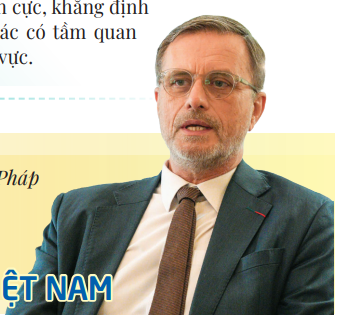
Mr. Olivier Brochet, Ambassador Extraordinary and Plenipotentiary of the French Republic to Vietnam, was deeply impressed by Vietnam’s approach.
He said that there are three “keywords” that most accurately capture the distinctive and positive momentum in current France–Vietnam relations, including friendship, partnership, and trust. France and Vietnam have elevated their ties to a Comprehensive Strategic Partnership, established following Party General Secretary To Lam’s visit to Paris in October 2024. Shortly thereafter, both sides moved swiftly to concretize this new framework through a series of major agreements signed during French President Emmanuel Macron’s visit to Vietnam.
The embassy has been particularly impressed by the scale of the reforms Vietnam is undertaking, the speed at which they are being implemented, and the encouraging initial results already visible at both the central and local levels. From the embassy and development cooperation agencies to partners and foreign businesses, there is a strong desire to make long-term investments in Vietnam, along with high expectations of seeing concrete outcomes from these reforms in the near future. He is firmly convinced that successful administrative reform will provide a powerful impetus for expanding bilateral cooperation, including cooperation between France and Vietnam.
France stands ready to support Vietnam throughout this process, particularly through the administrative cooperation programs that the two countries have developed over many years, spanning both the central and local levels.
He truly appreciated the ambitious goals Vietnam has set for itself and was deeply impressed by the rational, well-structured, and coordinated mobilization of resources aimed at turning those goals into reality.
He was particularly impressed by the way Vietnam is implementing large-scale programs in a coordinated and rational manner, notably in areas such as energy transition and transport infrastructure. These initiatives demonstrate that Vietnam not only has a clear strategic vision but also the capacity to effectively mobilize and connect both domestic and international resources in pursuit of its long-term development goals.
Vietnam is a country with immense potential and, importantly, one that knows how to harness that potential in the service of development. France highly values the development momentum Vietnam is generating, as well as the objectives it has set for itself. Within the framework of the Comprehensive Strategic Partnership, France wishes to stand alongside Vietnam on this journey, supporting the country in realizing its long-term development goals and the ambitious aspirations it continues to pursue.
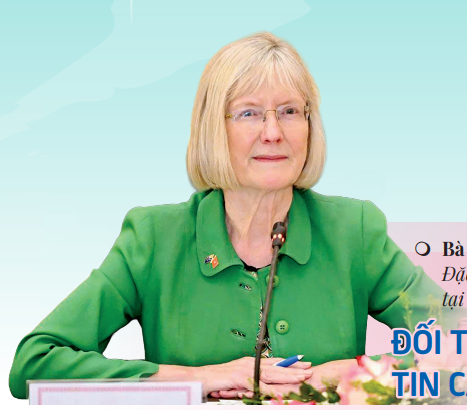
Ms. Gillian Bird, Ambassador Extraordinary and Plenipotentiary of Australia to Vietnam, said that Australia is a trusted development partner of Vietnam.
Established in 2024, the Australia-Vietnam Comprehensive Strategic Partnership is currently in its most positive stage of development. Over more than five decades, development cooperation between Australia and Vietnam has consistently evolved in step with Vietnam’s reform process and growing maturity. From the early years, when cooperation focused on building essential infrastructure such as bridges, Australia has gradually shifted toward accompanying Vietnam in addressing increasingly complex challenges on its path toward becoming a high-income country.
In infrastructure development cooperation, My Thuan Bridge—Australia’s largest aid-funded project in 2000—remains a powerful symbol of the bilateral relationship. This has been complemented by significant contributions in telecommunications, energy, and broader infrastructure connectivity. Education and training continue to stand out as a central pillar of cooperation.
Over the past 50 years, more than 7,500 Vietnamese officials and young leaders have received Australian Government scholarships, while over 160,000 Vietnamese students have pursued education in Australia. Upon returning home, many have gone on to play important roles across the public and private sectors, as well as in non-governmental organizations, making substantial contributions to Vietnam’s development.
RMIT became the first international university to establish a campus in Vietnam. Initiatives such as Aus4Skills, the Vietnam–Australia human resource development cooperation program, have marked Australia’s flagship, decade-long investment in skills development. Through these efforts, more than 15,000 students have benefited from high-quality vocational and professional training programs, helping to expand Vietnam’s skilled workforce and improve national productivity.
Australia is one of Vietnam’s leading official development assistance (ODA) partners. For the 2025–2026 period alone, Australia has decided to increase its development support to AUD96.6 million, aimed at assisting Vietnam in achieving its goal of becoming a high-income country by 2045.
The Australia–Vietnam Development Partnership Plan for 2025–2030 focuses on sustainable growth, human resource development, climate change adaptation, and the promotion of gender equality. Climate action and the energy transition are also emerging as areas of increasingly deep and substantive cooperation between the two countries.
Vietnam has set the goal of becoming a dynamic, upper-middle-income economy that is more innovative, greener, and more deeply connected to the world by 2030. Australia will continue to be a trusted partner accompanying Vietnam on this journey. For Australia, development assistance to Vietnam is a strategic investment.
A strong, inclusive, and sustainably developing Vietnam will make positive contributions to regional security while expanding opportunities for trade and investment. It will also create favorable conditions for the two countries to continue working together to promote a rules-based regional order, respect for sovereignty, and joint responses to shared challenges. Australia will remain a reliable development partner of Vietnam, standing alongside the country on the long road ahead.

According to Ms. Melissa Brown, US Consul General in Ho Chi Minh City, as Vietnam looks toward 2045 with the aspiration of becoming a stronger and more prosperous nation, this vision reflects the confidence, creativity, and resilience of its people. The United States is honored to accompany Vietnam on this journey. The U.S. Consulate General in Ho Chi Minh City is committed to further deepening cooperation with the city and the Southern region as they enter a new phase of development.
A key priority is supporting US businesses in expanding their role within Vietnam’s dynamic economic partnership. As the nation’s economic engine, Ho Chi Minh City’s ambition to emerge as a regional hub for technology, high-quality services, modern agriculture, and advanced manufacturing aligns closely with the vision of the Vietnam–US Comprehensive Strategic Partnership. The US looks forward to broadening cooperation in areas such as digital transformation, the semiconductor ecosystem, and emerging technologies.
US businesses view Vietnam as one of the most dynamic markets in the Indo-Pacific region, and they seek to enable Vietnamese consumers and enterprises to gain more effective access to high-quality American goods and services.
Promoting bilateral trade, particularly in the agricultural sector, has long been a central focus of cooperation. Expanding market access, applying science-based standards, and advancing market-driven growth will benefit farmers and consumers in both countries, while contributing to Vietnam’s goal of becoming a high-income nation by 2045. Through technical and technological cooperation, the US supports Vietnam in strengthening food security capacity and modernizing its agricultural sector, toward a safe and sustainable food system for future generations.
Energy cooperation also plays a critical role. As Vietnam expands and modernizes its energy infrastructure to support development, the US private sector stands ready to provide world-class energy products and services to meet the country’s long-term needs. Security cooperation remains one of the strongest pillars of the bilateral relationship.
Finally, investing in people remains at the heart of our cooperation. Through educational partnerships, the US equips young Vietnamese with the skills they need to succeed in the global knowledge-based economy.
On the occasion of the Lunar New Year, she extended her warmest wishes to the people of Ho Chi Minh City and Vietnam for a year of health, peace, and success. The United States will continue to be a trusted partner of Vietnam as we work together to build a prosperous future filled with opportunity for generations to come.
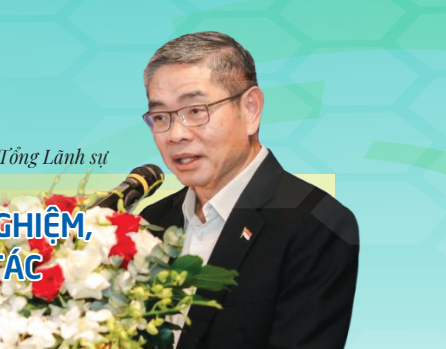
Mr. Pang Te Cheng, Consul General of Singapore in Ho Chi Minh City said that as a Comprehensive Strategic Partner, Singapore has consistently stood ready to accompany Vietnam in its new era of advancement, as the country works toward its goal of becoming a high-income nation by 2045. A major focus of bilateral cooperation is the upgrading of the Vietnam–Singapore Industrial Park (VSIP), which will mark its 30th anniversary in 2026.
The two countries have set a target to expand the current network of 20 VSIPs to 30. Over nearly three decades, VSIPs have attracted more than US$22 billion in investment and generated over 300,000 direct jobs. The VSIP 2.0 model is oriented toward the development of a smart industrial city, incorporating renewable energy, advanced wastewater treatment, waste-to-energy solutions, and circular economy practices, contributing to the promotion of green growth in Vietnam.
In the areas of infrastructure and logistics, Singapore is sharing its experience to help strengthen connectivity across the Southern region. Energy cooperation is also opening up transformative pathways. In the agricultural sector, the first rice cooperation agreement signed in October 2025 has laid the foundation for deeper linkages. Singapore is seeking to import frozen poultry and fresh eggs from farms in the Southern region while also expanding meat exports to the Vietnamese market.
Singapore is also supporting Ho Chi Minh City in the development of an International Financial Center (IFC). As part of this effort, UOB has increased its charter capital to VND10 trillion (US$387.7 million) and is constructing the UOB Vietnam Plaza in the core area of the IFC.
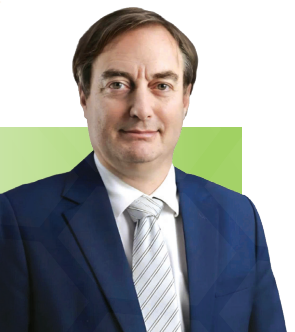
According to Chairman of the European Chamber of Commerce in Vietnam (EuroCham) Bruno Jaspaert, Vietnam’s current development trajectory underscores the resilience of a dynamic economy with strong adaptability and shock-absorbing capacity. Despite global volatility, the country continues to rank among Asia’s fastest-growing economies, while gradually shifting from rapid development toward more sustainable growth through the modernization of logistics infrastructure, the scaling up of clean energy, and the integration of ESG (environmental, social, and governance) standards into industrial policy.
International investor confidence continues to strengthen. EuroCham’s Business Confidence Index (BCI) has reached its highest level in three years, with 76 percent of business leaders willing to recommend Vietnam as an attractive investment destination. Vietnam is increasingly viewed as a strategic hub for the region, rather than merely a standalone market. The Vietnamese Government has demonstrated flexibility and reform resolve by streamlining administrative procedures, improving the investment climate, accelerating infrastructure development, and advancing visa and work permit reforms. Governance is shifting from policy formulation to effective execution, with a stronger emphasis on transparency, accountability, and tangible outcomes, while maintaining open and constructive dialogue with the private sector. Despite remaining challenges, Vietnam’s determination to improve is both evident and credible.
Having lived and worked in Vietnam for more than eight years, he has found that the Government’s openness to learning and the dynamism of the Vietnamese people are key factors underpinning long-term investor commitment. According to EuroCham surveys, 80 percent of European businesses are optimistic about the country’s five-year outlook, reflecting strong and sustained confidence in Vietnam’s investment environment.
To maintain and further accelerate this momentum, Vietnam should, in his view, focus on three core pillars, including establishing a coherent and consistent legal framework; accelerating the green and digital transitions; and developing human capital alongside a robust innovation ecosystem. People are the country’s most valuable asset, and fostering talent mobility and skills transfer will be critical to enhancing competitiveness and realizing Vietnam’s ambition of becoming a high-income, developed nation.