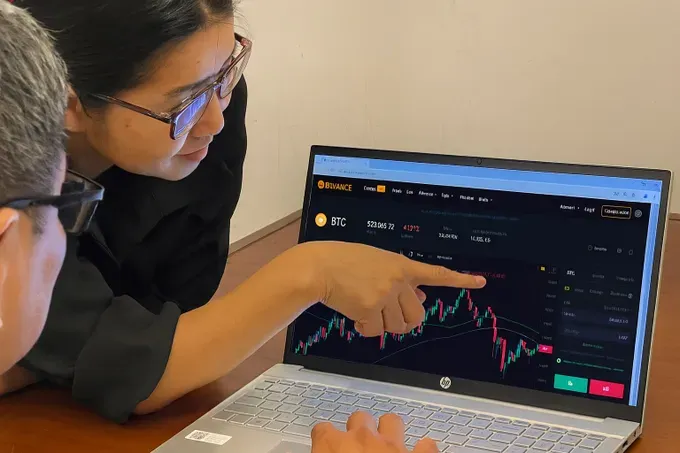
Under the draft crypto decree, the maximum proposed fine for organizations is VND200 million (US$7,800). This applies to a group of violations, including irregular issuance or offering of crypto assets; violations in organizing trading markets; and violations regarding the responsibilities of service providers.
According to Director Tran Quy of the Vietnam Institute of Digital Economy Development and Chairman of the MetaDAP Digital Asset Platform, this fine is excessively low and lacks deterrence in the current context. He argues that a scam project or token price manipulation scheme can generate millions of USD in illicit profits; thus, a maximum fine of VND200 million is merely a negligible “violation fee.”
Comparing this to the securities sector, a market with similar characteristics where maximum fines can reach VND3 billion ($113,800) or 10 times the illicit revenue, Director Tran Quy voiced concern: “This disparity creates a regulatory loophole, encouraging fraudsters to migrate from the securities market to the crypto one, where sanctions are significantly lighter, to conduct their operations.”
Pham Dong, founder of the Saigon TradeCoin community, agreed that the proposed fine for organizations is too lenient without supplementary sanctions. Since issuing crypto assets often yields millions of USD, violating organizations would be more than willing to pay the fine as a cost of doing business to secure vastly larger profits.
The draft decree also proposes fining individual investors VND10-30 million ($380-1,138) for trading crypto assets through service providers not licensed by the Ministry of Finance. Given that no exchange has been licensed in Vietnam yet, many investors fear this provision will create widespread apprehension.
A veteran investor in the crypto market stated that what investors need right now is not fines, but guidance on how to migrate assets when a domestic exchange officially operates, alongside incentives to trade on Ministry-licensed platforms.
According to Assoc Prof Dr Nguyen Huu Huan, Head of the Financial Markets Department at the University of Economics HCMC (UEH), in the market’s early stages, regulators should encourage investors to move to licensed exchanges rather than imposing administrative fines on a traditionally free market.
Furthermore, enforcement is impractical because regulators cannot easily identify the owners of personal wallets. Even major exchanges like Binance, which require the identity verification of Know Your Customer (KYC), have strict privacy policies and will not easily provide user data to regulators.
Sharing this view, Director Tran Quy recommended temporarily postponing fines for individual investors during the pilot phase. Instead, he proposed a “Safe Harbor” mechanism where the State should provide legal protection only for transactions on licensed exchanges, while those trading off-exchange bear all risks (loss, fraud) without legal recourse. This creates a natural motivation for investors to seek out official channels, rather than relying on difficult-to-enforce administrative mandates.
Head Nguyen The Minh of Retail Research at Yuanta Securities Vietnam assessed that prohibiting trading on unlicensed exchanges is reasonable in principle to ensure legal protection. However, he argued that while the market is in a pilot phase with unclear boundaries, investors are most concerned with which exchanges are licensed. Crucially, regulators must clarify the mechanism for transferring assets from foreign exchanges to domestic legal exchanges once they exist. These details should be established before issuing penalty decrees.
Statistics indicate Vietnam currently has approximately 21 million crypto asset investors with a transaction volume exceeding $200 billion, placing it in the top 3-4 globally for market participation. Therefore, regulations on penalties need to be carefully weighed to avoid psychologically impacting investors and disrupting the mobilization of this massive financial resource.