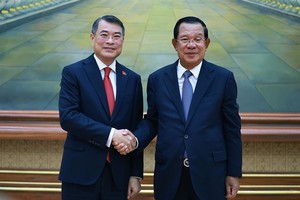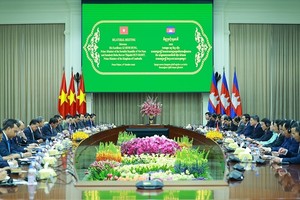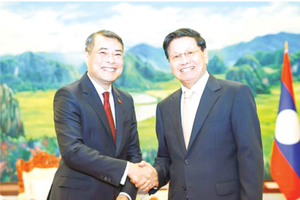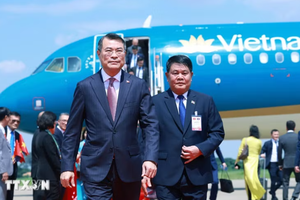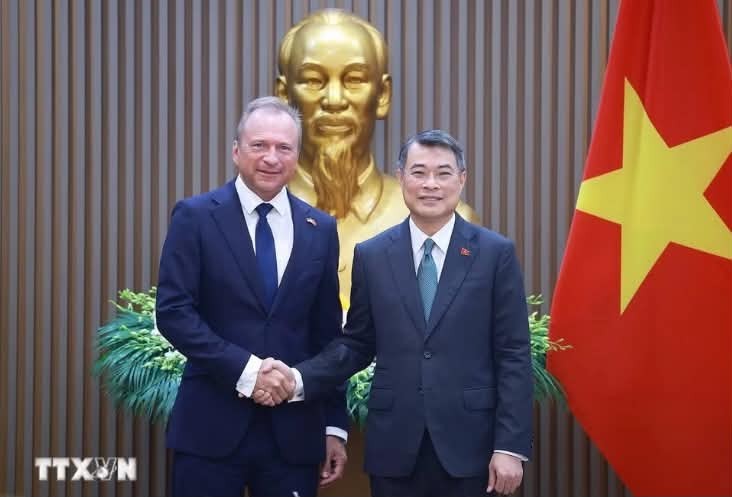
PM Le Minh Hung proposed that Luxembourg share experience in institutional development, fund and asset management, green finance and financial supervision, while supporting human resources training and connecting Luxembourg’s financial institutions with Vietnam International Financial Center’s ecosystem.
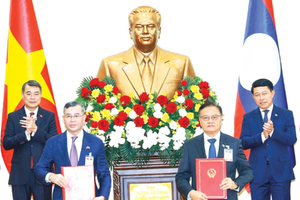
He welcomed the visit, which followed high-level exchanges between the two countries, and commended their finance ministries for concluding negotiations and signing a memorandum of understanding on economic and financial cooperation. The agreement builds on the strategic partnership on green finance established during the Luxembourg Prime Minister’s visit to Vietnam in 2023.
Vietnam highly values Luxembourg’s role and strengths in green finance, science and technology, and innovation, the PM said, welcoming its growing interest in Southeast Asia and thanking it for supporting Vietnam.
Although the number of Luxembourg-invested projects in Vietnam remains modest, their scale is considerable, with investment focused on sectors such as information and communications, processing and manufacturing, he noted.
Briefing Minister Roth on Vietnam’s socio-economic situation, PM Le Minh Hung said the country is targeting double-digit growth while maintaining sound macroeconomic fundamentals. Vietnam is mobilising resources for development driven by science and technology, innovation and high-quality human resources to boost productivity and competitiveness.
He affirmed that Vietnam would continue refining its legal framework in line with international practices to enhance transparency, predictability and investor confidence.
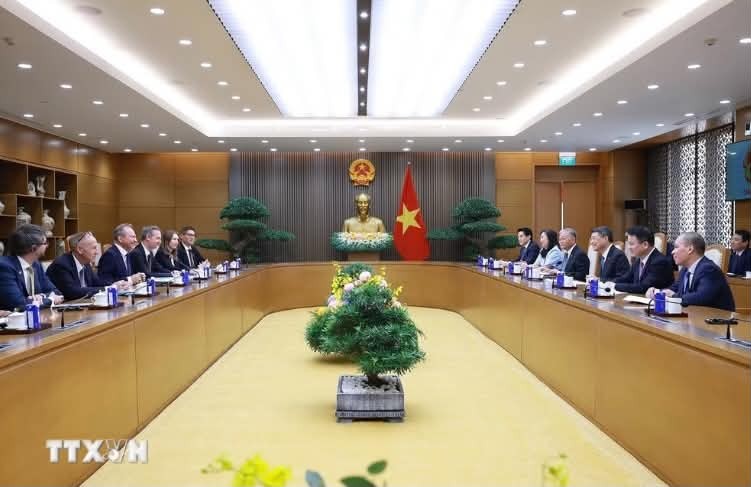
To translate bilateral commitments into practical results, PM Le Minh Hung called for effective implementation of the 2023 green finance partnership, the newly signed memorandum and the 2020 protocol on financial and banking cooperation. Priority areas should include sustainable finance, capital markets, fund management, financial technology, training and financial supervision.
He also encouraged Luxembourg and European investors to expand long-term investment in Vietnam, particularly in strategic infrastructure, renewable energy, technology, logistics, fintech, innovation and green urban development. Luxembourg could help Vietnam develop green financial instruments and mobilise funding for the green transition through its financial technology transfer agency.
The PM urged both sides to strengthen business links, and Luxembourg to continue encouraging remaining EU member states to ratify the EU–Vietnam Investment Protection Agreement (EVIPA). He also called for closer cooperation with the European Investment Bank and progress in the Vietnam–EU comprehensive strategic partnership, particularly in strategic infrastructure and minerals.
He proposed greater coordination at multilateral forums and within ASEAN–EU cooperation to advance green growth, sustainable finance and responses to climate change and global economic and financial volatility. Vietnam stands ready to serve as a bridge between Luxembourg and ASEAN, he said.
He conveyed his regards to the Luxembourg Prime Minister and invited him to visit Vietnam, expressing confidence that Roth’s trip would further boost bilateral cooperation, particularly in investment and development finance.
For his part, Roth said the visit could open a new chapter in bilateral relations. He highlighted Luxembourg’s position as a major European financial center, with extensive international banking networks and investment funds managing substantial assets.
Luxembourg stands ready to support Vietnam through cooperation between financial centers and investment funds, green finance and stronger links with the EU, he said. He also pledged to promote cooperation in legislation, human resources training, private capital mobilization, securities, bond issuance, transport infrastructure, digital finance and blockchain.
As of September, Luxembourg had 68 valid foreign direct investment projects in Vietnam with registered capital of approximately US$2.79 billion, ranking 19th among 154 investing countries and territories and fourth among EU member states. Average registered capital per project stood at about US$41 million, around 3.5 times the national average.