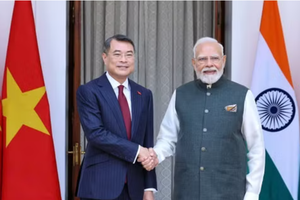
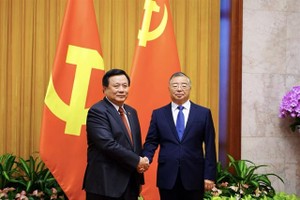
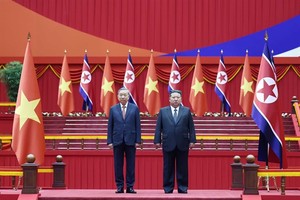
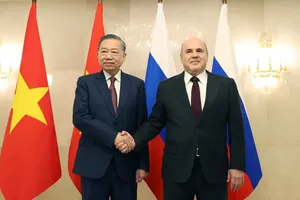
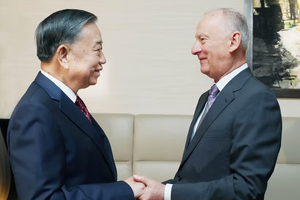
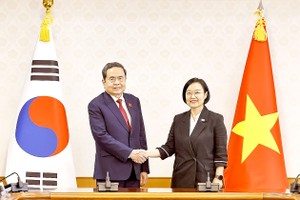
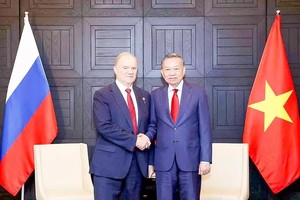
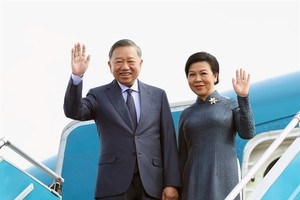
Attending at the personal invitation of Indian Prime Minister Narendra Modi, Prime Minister Le Minh Hung led a high-level Vietnamese delegation to the forum of major emerging economies, using the two-day summit to both engage with the bloc and hold bilateral talks aimed at bolstering economic and diplomatic ties.
Playing an active and responsible partnership role
BRICS was officially established at a meeting of foreign ministers from Brazil, Russia, China and India held on the sidelines of the general debate of the United Nations General Assembly in September 2006. To date, BRICS has 11 members: Brazil, Russia, India, China, South Africa, Saudi Arabia, Egypt, Ethiopia, Iran, Indonesia and the United Arab Emirates.
From its inception, BRICS has been envisioned as a policy coordination forum aimed at promoting a multipolar world order, strengthening the voice of developing countries, linking economic cooperation with sustainable development, and addressing climate change. With 11 members, BRICS has evolved into a significant grouping and multilateral cooperation mechanism with considerable scale, stature, and influence in international affairs.
As its membership has expanded, BRICS has broadened its agenda beyond economic and financial issues to new areas such as innovation, artificial intelligence, healthcare, energy and food security, addressing the needs of developing countries while strengthening the bloc’s common voice on global issues.
According to the Ministry of Foreign Affairs, the New Development Bank (NDB) is regarded as a landmark achievement of BRICS and an important instrument for supplementing funding for infrastructure and sustainable development. As of December 2025, the NDB had approved 139 projects, with total disbursements of US$42.9 billion. The BRICS Contingent Reserve Arrangement (CRA), established in 2014 with total commitments of US$100 billion, was designed to provide emergency liquidity to member countries facing balance-of-payments pressures.
A notable highlight
India has chosen “Building for Resilience, Innovation, Cooperation and Sustainability” as the theme for its 2026 BRICS chairmanship. The theme is aligned with the world’s pressing needs and also resonates with Vietnam’s development priorities in the new period.
Vietnamese Ambassador to India Trinh Minh Manh expects the summit to open up new, practical and effective avenues for cooperation for Vietnam, particularly in such areas as economic and trade cooperation, science, technology and innovation. Green transformation, clean energy, sustainable infrastructure and climate change response also offer considerable potential.
A notable highlight in Vietnam-India relations is that bilateral trade exceeded US$10 billion in the first six months of 2026. Ambassador Trinh Minh Manh said the two countries now have a favorable foundation for closer coordination. India has strong advantages in digital technology, pharmaceuticals, innovation, energy, human resource training, and digital infrastructure.
Vietnam, meanwhile, is a dynamic and deeply integrated economy, with an increasingly important role in regional production chains. The two sides can leverage BRICS summit frameworks to connect these complementary strengths.
Since June 2025, Vietnam has been the 10th BRICS partner country. According to the Ministry of Foreign Affairs, in this capacity, Vietnam has actively and proactively participated in BRICS activities, making responsible contributions to global efforts, upholding multilateralism and international law, promoting solidarity and international cooperation, and enhancing the role of developing countries. This has also contributed to deepening bilateral relations with BRICS member states.
Vietnam’s participation in BRICS has affirmed the consistent foreign policy of the Party and State, enhanced the country’s position and international standing, and deepened bilateral ties between Vietnam and BRICS member states. These efforts have been welcomed by BRICS members and highly appreciated by the international community.
At the international seminar titled “Strengthened Vietnam-India Comprehensive Strategic Partnership: Towards New Drivers of Development", Deputy Minister of Foreign Affairs Nguyen Manh Cuong said Vietnam holds an important position in India’s Act East Policy, while India is a major strategic partner of Vietnam.
The two countries also share long-term development visions. India aims to become a developed country by 2047 under its “Viksit Bharat 2047” vision, while Vietnam aims to become a developed, high-income country by 2045. Although pursued under different conditions, both goals place science, technology, innovation and high-quality human resources at the heart of their development strategies.
At the regional level, India regards Vietnam as a pillar of its Act East Policy and has consistently attached importance to ASEAN centrality.