Viet Nam, a land of fast economic development, political stability and a magnet for foreign tourists, is thriving partly thanks to comrade Vo Van Kiet, its former Prime Minister, a preeminent figure in the Doi Moi (renovation) process that swerved the country from command, bureaucratic and subsidy-based economy towards modernization and industrialization.
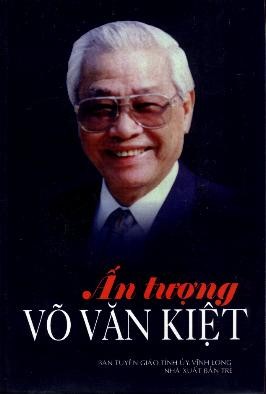
Known informally as Sau Dan (Sixth Dan), he always stood at the helm, investigating, supervising and discharging invaluable services to his people who he considered flesh and blood.
When serving as Ho Chi Minh City’s Communist Party chief, Mr. Kiet did his best to secure rice, raw materials, electricity and tackle stagnant production and low morale among poorly paid workers. Learning from President Ho Chi Minh, he personally went to one factory after another to talk to workers, listened to their aspirations to achieve an in-depth knowledge and proposed wise decisions.
It was he who built the North-South power grid which helped transmit electricity to Ho Chi Minh City.
Being well aware of his mission, Mr. Kiet strove to meet many people from all walks of life across the country, including officials, scholars, scientists, economists, businesspeople and artists. He greeted them not only as a leader but as a friend who could listen, learn and share.
He even brought food to eat together with factory workers, eventually learning enough to put forward a timely strategy to tackle raw materials shortage by granting farmers easy access to banks.
By having a deep attachment to the people, he always exerted great efforts to fulfill any task assigned to him.
In due time, he managed to abolish the ineffective coupon-for-food system, which was a real revolution in food distribution and one crucial step in the renovation process he initiated in the 1980s.
‘Sau Dan’ never liked to talk theories, not because he looked down on them, but because he believed that only reality could give birth to good policy. Those who knew him told that he never imposed his thoughts on listeners, preferring two-way dialogues and exchanges through which two sides could both benefit.
“Anyone can be angry at one time or another. They may not know all information so their way of thinking and responses could be unilateral. We must provide them with information so all Vietnamese can be united,” Mr. Kiet once told his colleagues.
The patriot
Even after stepping down from the prime ministerial post, Mr. Kiet had had no idle moments until, to the loss of the people and whole nation, he peacefully passed away last week on June 11.
National benefits reigned supreme in his diplomatic policies, which considered serving and promoting economic growth as the main task along with fostering relations with all other countries for peace, cooperation and development.
Mr. Kiet acquired his diplomatic knowledge and experience as a teenage farmer who actively took part in the Nam Ky Khoi Nghia resistance movement against the French colonialists in 1940.
Aware of the revolutionary cause from an early age, trained during revolutionary activities and practices, he was assigned to many leading posts. During the anti-French and anti-US resistance wars, he worked hard on the southern battlefields. Braving fierce wars and rains of bombs and shells, Mr. Kiet kept close touch with the people and land, fulfilling his tasks as a revolutionary leader.
For almost half a century in the wars against the French and American invasion, Mr. Kiet was embraced and sheltered by the people and naturally a genuine love for the people and country was nurtured in him.
During a party conference a long time ago, a state factory director loudly announced: “I now see a green bud in a desert”. And it was Mr. Kiet who he sowed the seeds for his successors to carry on his legacy, it was Mr. Kiet who promised the whole country something better.
BIOGRAPHY
Vo Van Kiet (Phan Van Hoa on his birth certificate, who also used the alias Sau Dan) was born on November 23, 1922 in Trung Hiep Commune in Vung Liem District of the southern province of Vinh Long.
He joined revolutionary activities in 1938 and was admitted to the Communist Party of Indochina in November 1939.
He acted as Secretary of the Party Unit at Vung Liem District in Vinh Long Province.
From 1941 – 1945, Mr. Kiet took part in revolutionary activities in Rach Gia Province.
After the August General Revolution in 1945, he acted as a political commissar for the revolutionary militia of the southwestern region.
In 1950 he was appointed Deputy Secretary and then Secretary of the Party Committee of Bac Lieu Province.
In 1955 he was elected a member of the Nam Bo Party Committee and Deputy Secretary of the Hau Giang provincial Party Committee.
In 1959, he was appointed Secretary of the Party Committee of Saigon – Gia Dinh, a post he kept until late 1970.
At the third Party Congress in 1960 he was elected an alternate member of the Party Central Committee.
He continued to serve as Secretary of the Party Committee of Saigon – Gia Dinh and then Secretary of the Party Committee of the ninth zone (southwestern region).
In 1972, he was elected an official member of the Southern Region Central Committee.
From 1973 – 1975, he was sent to work as member of the Standing Board of the Party Central Committee.
He was appointed a Special Party Secretary of the Saigon Military Management Committee.
In 1976, he was appointed Vice Secretary of the Ho Chi Minh City Party Committee and Chairman of the Municipal People’s Committee and member of the sixth National Assembly.
At the fourth Party Congress in 1976, he was re-elected to the Party Central Committee and the Politburo as an alternate member and then appointed Secretary of the Ho Chi Minh City Party Committee.
At the fifth Party Congress in 1982 and the sixth Party Congress in 1986, he was re-elected to the Party Central Committee and the Politburo as an official member.
In February 1987, he was elected to the eighth National Assembly as Chairman of the State Planning Committee, Standing Vice Chairman and then the First Vice Chairman of the Ministers Council.
At the seventh Party Congress in 1991, he was re-elected to the Party Central Committee and the Politburo.
He was voted Vice Chairman of the Ministers Council at the first session of the eighth National Assembly and Chairman of the Ministers Council at the ninth session of the eighth National Assembly.
At the eighth Party Congress in 1996, he was re-elected to the Party Central Committee and the Politburo working as a member of its Standing Committee.
At the first session of the ninth National Assembly in 1992, he was elected Prime Minister of Vietnam and Vice Chairman of the National Defense and Security Council.
He was appointed an advisor to the Party Central Committee at the fourth Plenum of the eighth Party Central Committee in 1997.
He was National Assembly deputy in the sixth, eighth and ninth tenures.
In recognition of his contributions to the revolutionary cause of the party and state, he was awarded the Gold Star Order and a 60-year party membership badge, as well as many other orders and medals.