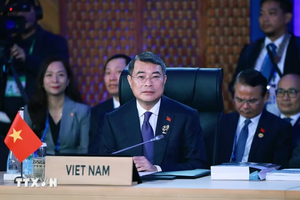
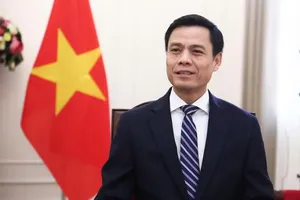
Deputy Minister of Foreign Affairs Dang Hoang Giang, head of Vietnam’s ASEAN Senior Officials’ Meeting (SOM) delegation, has proposed three priorities for regional cooperation, namely building a more accessible and business-friendly regional market, strengthening regional connectivity and resilience, and maintaining and expanding projects delivering practical results, at a dialogue between ASEAN leaders and the ASEAN Business Advisory Council (ASEAN-BAC) in Manila on November 15, within the framework of the 49th ASEAN Summit and related summits in the Philippines.
Under the theme “Advancing Prosperity for All”, the dialogue focused on the four pillars of people, environment, digital platforms and productivity, based on ASEAN-BAC’s 2026 report and legacy projects.
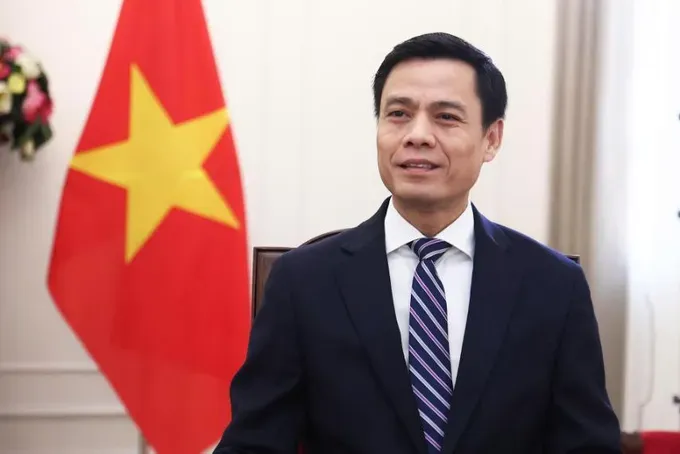
Appreciating ASEAN-BAC’s report and recommendations, Deputy Minister of Foreign Affairs Dang Hoang Giang called for simplifying procedures, reducing costs, accelerating digitalisation, upgrading the ASEAN Single Window (ASW) and effectively implementing the ASEAN Digital Economy Framework Agreement (DEFA) to make the regional market more accessible. He said that governments should also help micro, small and medium-sized enterprises (MSMEs) gain better access to finance and technology and participate more deeply in value chains.
He also underscored the importance of improving connectivity and regional resilience through coordinated development of transport, logistics, energy and digital infrastructure, alongside stronger links between regional and global supply chains.
Vietnam supports cross-border connectivity projects such as the ASEAN Power Grid (APG), Deputy Minister of Foreign Affairs Dang Hoang Giang said, calling for greater mobilisation of private resources and assistance for businesses in making better use of existing free trade agreements (FTAs).
Regarding practical cooperation, Vietnam welcomes ASEAN-BAC’s efforts to link policy recommendations with specific initiatives, including the ASEAN Food Security Alliance and the ASEAN SME Academy 2.0, and proposes maintaining and expanding these projects across successive ASEAN chairmanships to ensure continuity and tangible outcomes, he noted.
The Vietnamese official also called on ASEAN-BAC to further strengthen its role as a bridge between governments and businesses by promptly conveying business concerns and proposing feasible solutions with measurable results. He affirmed that Vietnam will continue working with the business community to implement initiatives and translate commitments into action, contributing to building a dynamic, inclusive and resilient ASEAN Community.
Against the backdrop of global economic uncertainties, ASEAN leaders highlighted the business community’s role in driving growth and innovation, calling on businesses to contribute to the effective implementation of DEFA. They also stressed the need to strengthen public-private dialogue, incorporate business feedback into policymaking and improve the business environment, particularly for small and medium-sized enterprises.
At the ASEAN Youth Dialogue 2026 themed “ASEAN Youth Navigating a Resilient, Digital, and Inclusive Future,” Deputy Minister of Foreign Affairs Dang Hoang Giang affirmed that young people are key actors in shaping ASEAN's peaceful and prosperous future. He proposed three areas in which governments should support young people in education and knowledge acquisition, innovation and entrepreneurship, and opportunities to contribute to society.
He called for young people’s wider access to open education and digital infrastructure, stronger digital and AI application skills, and a critical mindset to help them adapt to labour market changes. He said governments should also facilitate access to funding, ensure safe online working environments and promote responsible and ethical innovation.
He stressed the need to expand young people's access to open education and digital infrastructure, and strengthen their digital, AI and critical thinking skills to help them adapt to labour market changes. He noted that governments should also facilitate access to finance, ensure safe online working environments and encourage responsible, ethical innovation.
Young people should be empowered to take the lead in green transformation, climate change response and community development, he said.
Vietnam stands ready to facilitate academic exchanges and scientific and technological networking among ASEAN youth, while promoting connections among young entrepreneurs across the region, Deputy Minister of Foreign Affairs Dang Hoang Giang stated.
Delegates proposed stronger implementation of the Youth, Peace and Security (YPS) agenda, greater youth participation in conflict prevention policymaking and the development of a regional framework on digital rights. ASEAN leaders recognised young people's contributions to community-building and highlighted their pioneering role in digital transformation, innovation, inclusive development and sustainable peace.
The dialogues reaffirmed ASEAN’s shared commitment to placing people and future generations at the centre of regional development, and businesses at the forefront of efforts to advance sustainable transformation of the region.